
ROARING FORK BROADCASTING COMPANY



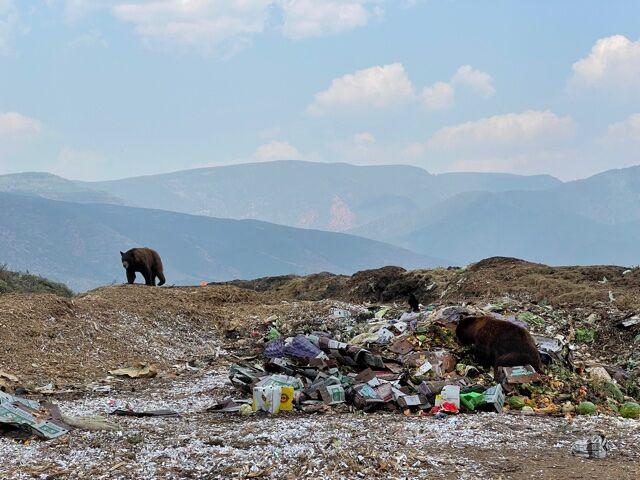
Pitkin County commissioners received a jolt on Tuesday when they learned it could cost up to $1 million to erect electric and mesh fencing at the landfill to prevent trash-addicted bears from feeding their habit.
Commissioners weren’t ready to decide on the fencing and wanted to seek other options.
“I don’t think electric fences are going to work, personally,” said Commissioner Steve Child, who has plenty of experience with fences as a cattle rancher. “The bears will figure it out eventually.”
Solid Waste Center Manager Cathy Hall agreed that the bruins, noted for their intelligence, would look for a way around the barrier to get at organic waste that goes into massive compost piles and leftovers that end up in trash.
“I see it like Jurassic Park where they test the wire until it goes down,” Hall quipped.
Black bears have been scoring meals at the landfill since the Aspen dump was moved to the current site above Aspen Village subdivision in 1965, according to county officials. Most of the time the bears hang out waiting to get at trash that is buried, Hall said. They want to pick out the goodies and will burrow through dirt placed on top. In the summer months, the bears are also attracted to an area where food is mixed in with other materials for compost, she said.
The landfill staff hazes bears when they encounter them, honking the horns of vehicles usually drives them off.
“They are typically big scaredy cats,” Hall said.
Sometimes younger bears are reluctant to flee so they get a shot in the rump with a rubber pellet. However, the landfill bruins have figured out routines and often come down from the hills surrounding the landfill to feast after the staff has knocked off for the day.
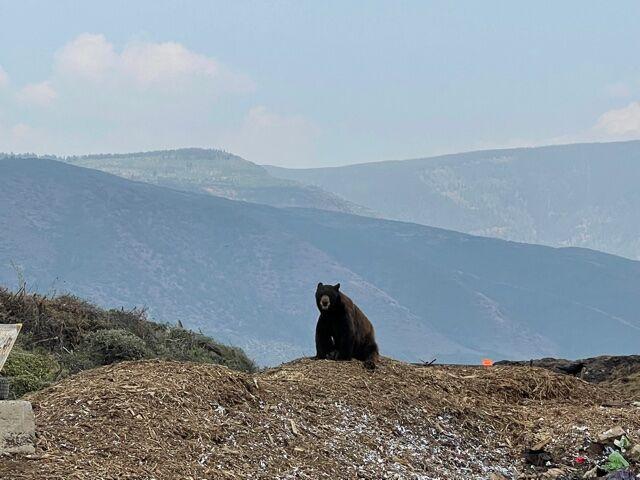
As the awareness of the problem has grown, so has the pressure for the county to address it. Kurtis Tesch, Colorado Parks and Wildlife area wildlife manager for Aspen, estimated there are 25 to 30 bears feasting at the dump because they have been habituated to easy food sources. They are “fatter bears” than those that rely on natural food sources, he said, and the sows tend to have larger litters because of that extra weight.
Euthanizing the bears isn’t an option that CPW supports. Using trained dogs is an expensive option that would require ongoing training and expense, according to Tesch. CPW experience shows that relocating the bears won’t work. The use of radio collars indicates that bears that have been relocated a 100 miles away in Colorado end up back in their favored neck of the woods within a week or two, Tesch said. Surrounding the landfill perimeter with natural food sources likely wouldn’t do much good, either.
“Once they’ve acquired this food source, they’re not going to return (to natural foods),” Tesch said. “That’s like putting broccoli out and a bowl of candy and telling a kid to go eat the broccoli. That ain’t gonna happen.”
But using fencing to prevent bears from entering also has drawbacks. The bears will continue to look for human food sources, most likely at Aspen Village and the Wildcat Ranch luxury subdivision, the two closest developments to the dump.
“Those bears would have to be dealt with one way or another,” Tesch said. “They’re going to look for a food source somewhere else. They won’t go back to natural forage.”
Hall said the landfill staff met with wildlife advocacy groups last fall, including the Roaring Fork Bear Coalition, and focused on erecting a combination of electric and mesh fences. One possibility is erecting fencing around the current work area, where trash is being buried and composting is occurring. That would require about 4,822 linear feet at an estimated price of almost $410,000. Another option would be surrounding the entire landfill with 11,951 linear feet of fence at a cost of $1,015,000.
The estimate envisioned using seven strands of electrified wire. Tesch said two stands would do the trick, one low to prevent burrowing and one “mid-level.” Less electrified fencing would reduce the price.
Hall noted the price estimate didn’t include excavating a platform, regular repair and maintenance or the price for an extra position on the staff to patrol and repair the fence.
Commissioner Patti Clapper was opposed to using electric fences in an ecosystem ripe for wildfire. Commissioner Greg Poschman countered that something must be done to save the bears from themselves.
“They’re probably eating all sorts of trash that isn’t good for them,” he said.
He wants to look at best practices used in places where landfills exist in bear country, including Yellowstone National Park.
“I’ve always heard ‘Don’t feed the bear’ and if we’re feeding them and they’re becoming super bears because they’re getting all this nutrition and they’re having more cubs, it seems like we’re just putting off a problem that’s going to keep getting worse,” Poschman said. “Nobody likes the thought of euthanizing bears and I don’t know if that’s the only option, but it seems to me that the longer we wait to figure this out, the more expensive and more difficult it’s going to get.”
While Poschman favored looking for more information, he noted that fencing has effectively kept bears and elk off the runway at the Aspen-Pitkin County Airport. He said he wants to keep searching for the best solution, one that the landfill can be “proud of.”
Michael Bair and Daniela Kohl of the Roaring Fork Bear Coalition told commissioners that they have an expert source who has helped more than 50 landfills address wildlife issues. They offered to put county officials in touch with the source for consultation on what could be done in Pitkin County. The commissioners welcomed the offer.
Kohl also said the organization’s volunteers would put boots on the ground” to work with nearby residents to minimize conflicts with bears in case fencing is erected around the landfill and the bears seek food elsewhere.
Commissioners didn’t set a specific time to revisit the topic.