
ROARING FORK BROADCASTING COMPANY


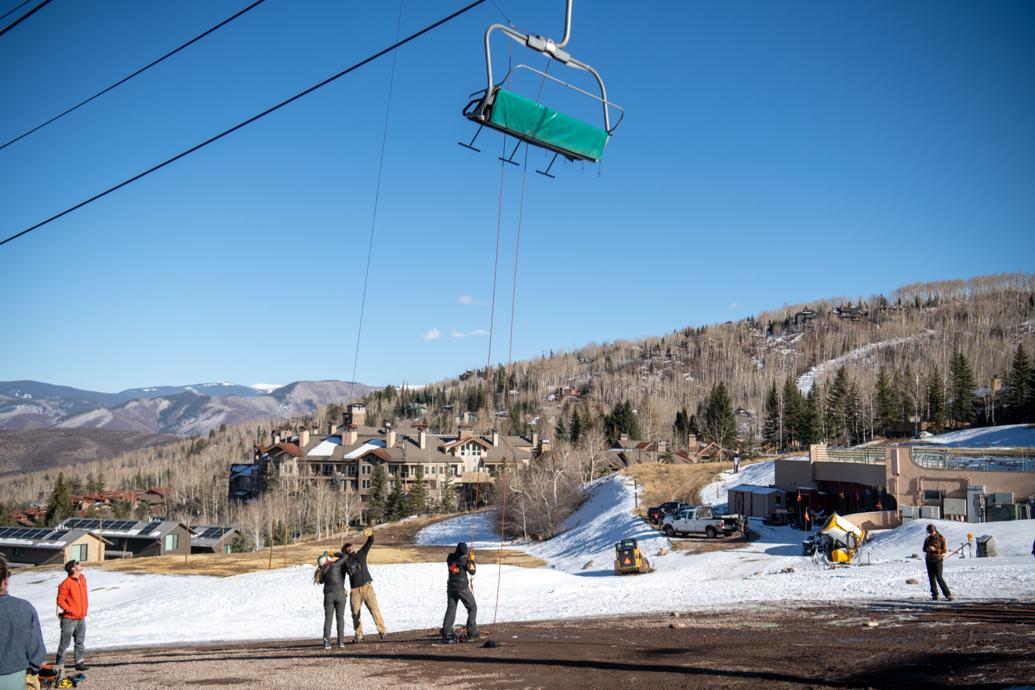
The legal significance of a young woman’s 30-foot fall from a Crested Butte chairlift in 2022 goes well beyond the mountain town 25 miles south of Aspen — the state’s ski and outdoor recreation industries also are watching closely the public policy debate that’s in front of the Colorado Supreme Court.
During oral arguments made Tuesday to the state’s highest court, attorneys representing both the woman paralyzed from the fall and the ski resort where it happened contended public policy and state law are on their sides.
That means something must give. The seven justices — all appointed by Democratic governors of Colorado — have two options. They can either rule that Vail Resorts, which owns and operates Crested Butte, can be held liable for the lift accident, or they can uphold a lower court’s dismissal of two of three negligence claims the family is pursuing in a lawsuit.
Vail Resorts is using the waiver defense. In the November before Annalea Miller went skiing on March 22, 2022, her father, Michael, signed a waiver releasing Crested Butte Mountain Resort from liability if his 16-year-old daughter were in an accident. It’s the kind of contract snowboarders and skiers enter before they buy a season or day pass, basically surrendering the right to sue. The waiver acknowledges the inherent risks that come with the sports — rocks, cliffs, obstacles, adverse weather and the like — and states that the ski area operator cannot be held liable when there’s an accident.
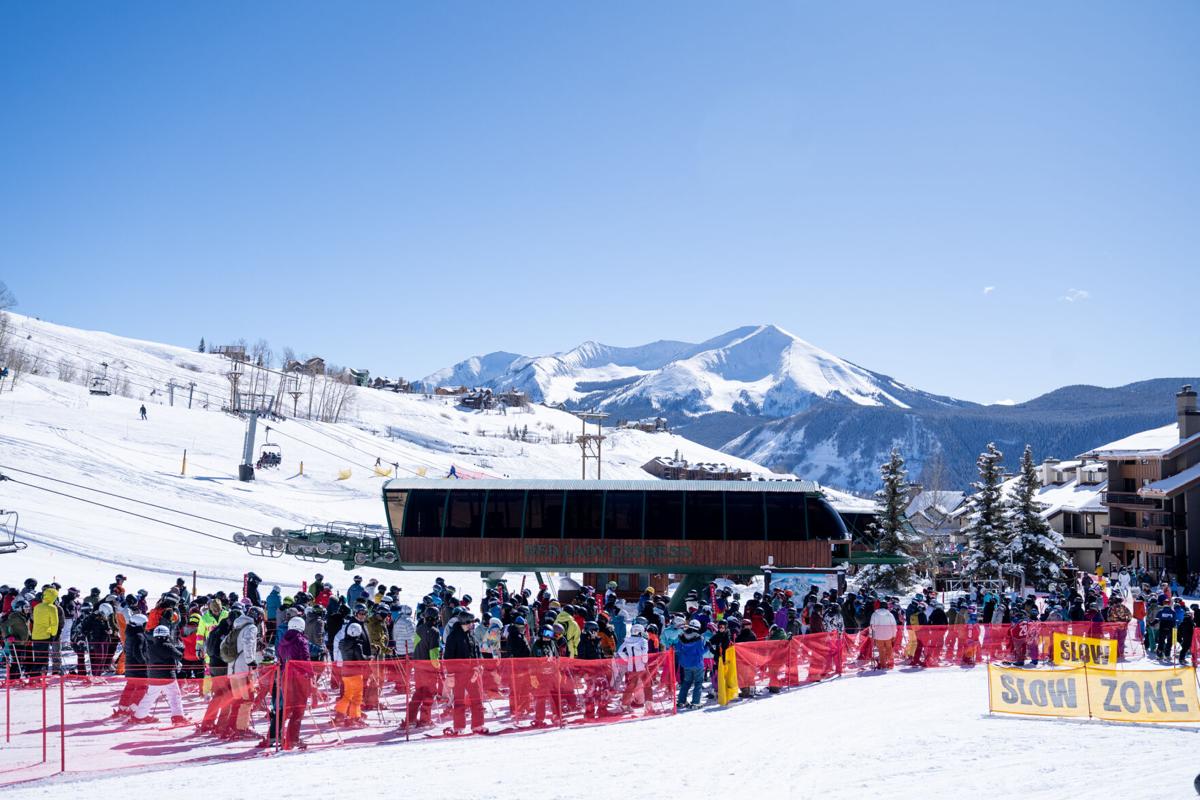
As Miller and her father, both visiting from Oklahoma on a church ski trip, were boarding the Paradise Express chairlift for a late afternoon run, “she struggled to get seated and was left hanging for her life 30 feet above the hard-packed snow below by Crested Butte employees. Instead of stopping the lift when it was clear that she was experiencing difficulties, Crested Butte continued as if nothing was wrong. Annie eventually lost her grip and fell to the hard ground below, and is paralyzed today because of her injuries. Crested Butte did not initiate any emergency evacuation procedure, nor did it stop the lift for Annie despite knowing she never boarded the lift,” according to a petition the family’s legal team introduced to the Colorado Supreme Court on July 21.
Because they weren’t in the immediate vicinity, chair lift operators couldn’t hear screams from bystanders and the Millers for help, the petition said.
The family appealed to the Supreme Court after a Broomfield County District Court judge on April 3, 2023, citing the liability waiver the father signed, dismissed claims for violations of duty of care and negligence.
“The parties do not dispute that (Miller) voluntarily entered into these agreements in order to participate in a recreational activity, or that those waivers specifically mentioned misloading, entanglements, falls from ski lifts, and potential negligence on the part of employees,” the order said. “The court finds that they were entered into fairly and that (Miller) was advised of the relevant risks.”
Miller’s claim for gross negligence, more serious than ordinary negligence because it involves reckless and intentional conduct, has remained intact. The gross negligence claim, while still standing, comes with a higher bar for the plaintiffs to meet. The lesser, simple negligence claims have a lower threshold.
Nonprofit organizations like Challenge Aspen and such trade groups as Colorado Ski Country USA fear that a decision from the high court allowing the woman’s father to pursue two negligence claims will shake up the outdoor recreation industry and squeeze out younger participants of modest means. That’s because the weakened enforceability of waivers would usher in escalating liability insurance premiums to ski-area operators, and that increased cost would be passed onto the consumers. The outcome would be a sport becoming more exclusive, they have argued.
Ski areas aren’t the only ones that could be impacted. Challenge Aspen, which is based in Snowmass Village and provides year-end programming to adaptive athletes, joined Colorado Ski Country USA, Colorado Camps Network and Colorado River Outfitters Association in filing an amicus brief with the Supreme Court on Sept. 29.
“The same is true for any type of provider operating on public lands (whether municipal, state, or federal land),” the brief said. “A loss of insurance can result in the need to stop providing services altogether. Simply, many Colorado providers will likely scale back or eliminate youth programs without the aid of enforceable releases. This is of particular importance to adaptive sports programs and low-cost youth activities. These programs tend to be the most vulnerable to the risks of litigation and the costs of insurance.”
The brief described Challenge Aspen as an organization that “fosters empowerment for individuals with cognitive and/or physical disabilities through adaptive recreation. The enforceability of releases is vital for CA to continue to provide meaningful adaptive programs for youth of all ages and with any disabilities.”
The driving counterargument is that by upholding the lower court’s decision, the Supreme Court effectively would absolve ski-area operators from any liability under the Colorado Skier Safety Act and the Passenger Tramway Act when it comes to preventable accidents involving chairlifts that were triggered by negligence. While skiers and boarders acknowledge the inherent risks by signing a waiver, negligence by a lift operator doesn’t fall into that category, they argued.
“Given the level of responsibility the operation of a ski left demands coupled with the exclusive control the operator has over the safety of passengers, it would be unconscionable to allow ski lift operators to immunize themselves from liability and shift the costs of their negligence onto the victims and the public,” said an amicus brief filed Nov. 13 by the Colorado Trial Lawyers Association.
Denver lawyer Bruce L. Braley, arguing for the Miller family, told the justices last week that ski areas aren’t entitled to use “contractual immunity from a statutory duty of care in a contract that is part of a ski lift pass.” Ski areas, he argued, are held to the “highest duty of care” when operating chairlifts.
Justice Richard L. Gabriel noted the difference between an everyday ski injury and a chairlift mishap.
“It’s one thing to say you take a risk of falling and tear your ACL on a ski slope,” he said. “It’s another thing to say you’re taking a risk when you get in a chair and you can’t control anything.”
Legislation adopted by the Colorado General Assembly in 2003 allowed parents to sign releases that waive their minor child’s (17 years old and younger) right to sue the provider of outdoor recreation.
“Children of this state should have the maximum opportunity to participate in sporting, recreational, educational, and other activities where certain risks may exist,” reads the statute. “Public, private, and non-profit entities providing these essential activities to children in Colorado need a measure of protection against lawsuits, and without the measure of protection these entities may be unwilling or unable to provide the activities; Parents have a fundamental right and responsibility to make decisions concerning the care, custody, and control of their children. The law has long presumed that parents act in the best interest of their children.”
Miller’s lawyer argued statutory duties under the Colorado Skier Safety Act and Colorado Passenger Tramway Safety Act outweigh the enforceability of a liability waiver. The Colorado Skier Safety Act also models its legalities around chairlift operations off of the Colorado Passenger Tramway Safety Act and guidelines established by the Colorado Passenger Tramway Safety Board.
“Regulations adopted by tramway board require operators (of chairlifts) to be in a position to observe and respond to conditions exactly like the one in this case that led to Annie Miller’s catastrophic injuries,” Braley said.
Michael Hoffman, a Denver lawyer who made arguments for Crested Butte and Vail Resorts, advised the Supreme Court to take a big-picture look at the General Assembly’s legislation granting parents the right to sign waivers for their minor children and how the state governs chairlift operations. Hoffman noted “there is a balance here that the general assembly struck” regarding waivers for minors, and the Skier Safety Act’s standards for lift operators.
Justice Carlos A. Samour Jr., however, noted what he viewed as a contradiction.
“That’s what causes me causes me some concern: There is this idea that if you’re going to ride the lift, you have to sign a waiver,” he said. “And yet we have a situation where the legislature is saying, ‘Hey, ski industry, these are standards that we expect that we are requiring you to keep, and yet the ski industry then turns around and says, ‘Well, that’s nice of you. Thank you but we’ll just make people waive and be done with it. Something about that is wrong.”
People aren’t required to sign waivers to ski or ride, so long as they aren’t riding a lift.
“Could Annie Miller have skied your resort without signing the waivers?” Samour Jr. asked lawyer Hoffman.
“Yes,” Hoffman replied.
“So, the waiver was optional — that people don’t have to waive.”
“It’s on a federal land, so you can what they call ‘earn you turns’ and hike up and ski down. If she wanted to ride the lift, then the answer to your question is ‘no.’ Her father would have to agree to the waiver to ride the lift.”
Hoffman reminded the justices that skiing and snowboarding are not mandatory pursuits, and people willingly take them on knowing the risks involved.
“I think it’s important to keep this in mind, this is a voluntary recreational activity,” he said. “And this court has always said that for activities like that, we allow the waiver defense. Because no one is required to ski. It’s not a practical necessity of life and it’s not something they need and as my friends point out, people can go elsewhere to ski if they want to. You’re talking about a voluntary activity.”