
ROARING FORK BROADCASTING COMPANY



Pitkin County commissioners informally agreed Tuesday to contribute up to $2 million to a program that would add deed-restricted housing without contributing to growth in the Roaring Fork Valley.
The commissioners directed their staff to come back with details on a proposed “buydown” program where buyers of free-market residences would receive aid with the purchase in return for placing a deed restriction on the property to ensure it remains affordable housing in perpetuity.
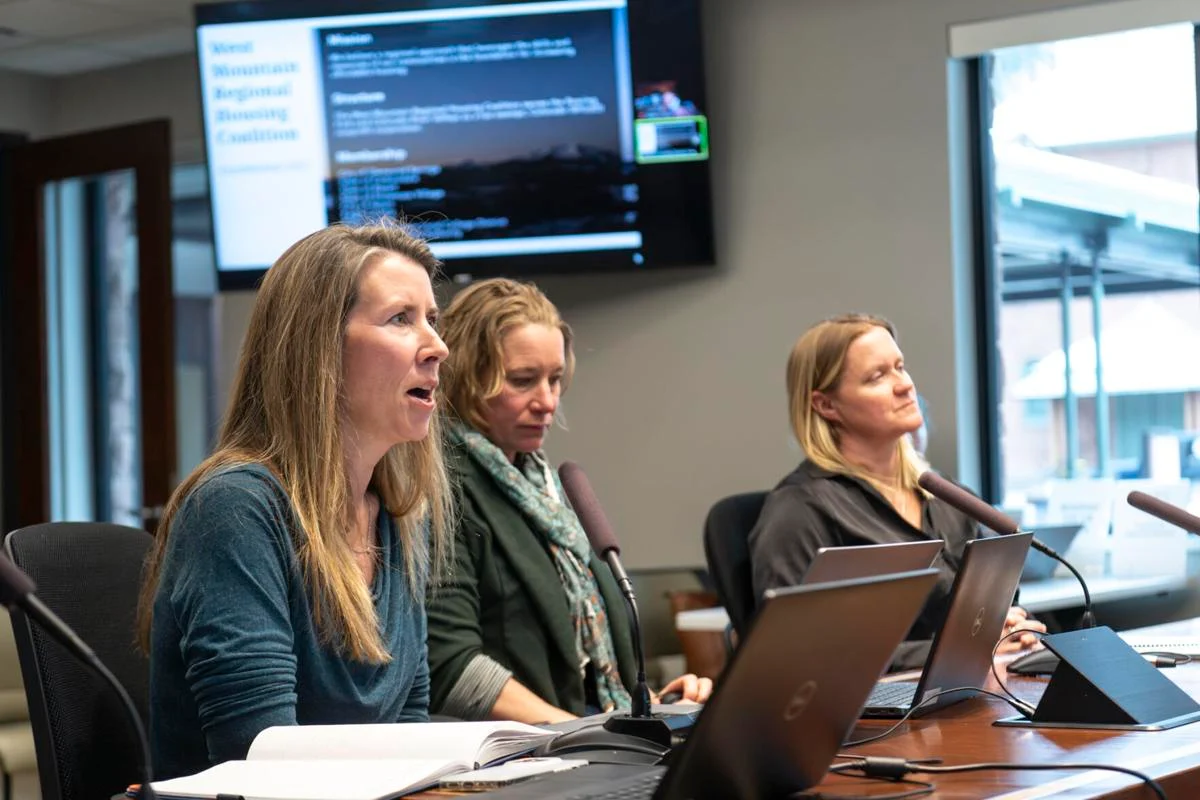
The program is being launched by the West Mountain Regional Housing Coalition, a relatively new nonprofit organization on a mission to find solutions to the regional affordable housing crisis. Part of the appeal of the program is it converts free-market housing to deed-restricted housing without major capital expenditures.
“This is your no growth solution, right?” said Mountain West Program Director April Long. “This is a quick way to get affordable homes when there’s no construction.”
The organization is optimistic that it could have the funds to convert five to seven homes this year.
Long, West Mountain board member Heather Henry and Pitkin County Resiliency and Housing Director Ashley Perl presented information to county commissioners that debunks the theory that the private sector combined with government regulations will solve the chronic affordable housing shortage afflicting the Roaring Fork Valley and Interstate 70 corridor in Garfield and Eagle counties. They said there are 2,147 residential units approved “in the regional pipeline” but 1,198 or 55% will be rented or sold at the market rate. That means they will be unattainable for most families and individuals in the area.
There are also questions about the affordability of many of the deed-restricted units. There are 206 units targeted to low-income households making up to 80% of Area Median Income, according to the presentation. There are another 336 deed-restricted units geared toward households earning between 81 and 120% of AMI. However, 419 deed-restricted units would be attainable only by households at 120% or more of AMI.
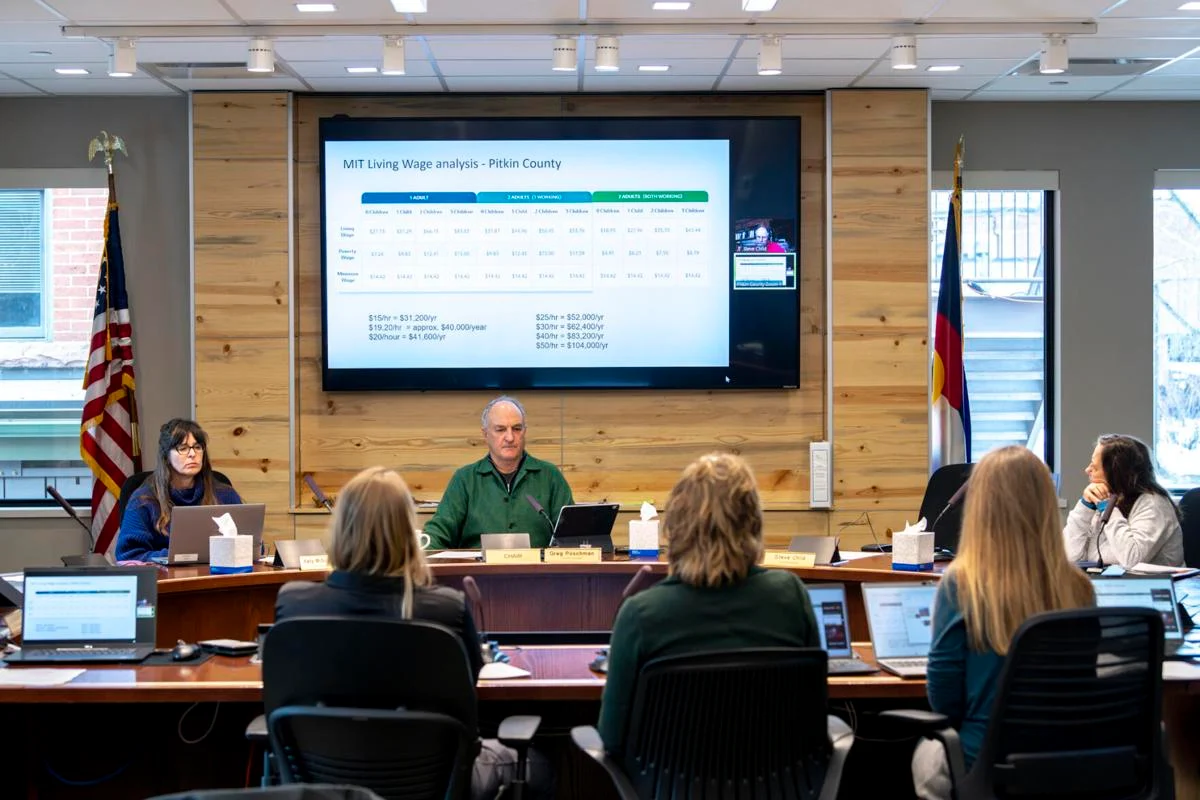
Commissioner Kelly McNicholas Kury said the development pipeline doesn’t promise much relief given more than half are free-market residences.
“Is it going to bring down costs or is it not? I don’t think it will,” she said.
Commissioner Patti Clapper asked how many of the apartments under construction or completed by the new City Market in Carbondale, for example, are deed restricted and was aghast to learn it’s only 20%. “That’s a negative to me,” she said. “Building and not restricting, to me, is making matters worse.”
Henry agreed that the region will fall further behind without tougher affordable housing regulations by municipal and county governments.
“Just building more, if we don’t change some of the rules, is not necessarily going to solve it,” she said.
That’s why West Mountain officials consider it a “big win” for the region if additional units can be brought into the deed-restricted inventory without putting new units in the ground.
Long said the buydown program would be offered to buyers who find a free-market home for their full-time, primary residence. The purchase price caps would be $1.5 million in Pitkin County and Basalt; $1.2 million in the Roaring Fork portion of Garfield County, including Glenwood Springs; and $800,000 in western Garfield County. The Roaring Fork portion of Eagle County would fall under a similar buydown program offered by Eagle County government.
West Mountain would provide up to 30% of the contracted purchase price in exchange for the buyer placing a deed restriction on the property.
“This brings down the total amount required from the buyer and bridges the gap between what is available on the market and what is affordable,” Long said.
The deed restriction would limit appreciation of the residence to 3% annually. There would be no income cap on buyers but they couldn’t own other residential property in the region or anywhere else.
Perl advised the commissioners to contribute $2 million to West Mountain’s buydown program. She said the county’s contribution could come from American Recovery Plan Act funds that the county holds as well as a $5 million housing fund the commissioners created. Pitkin County is sitting on $12 million in ARPA funds, which must be committed by the end of 2024 and spent by the end of 2026.
The commissioners had several questions about the program. Commissioner Steve Child questioned if the 3% annual appreciation cap would scare homebuyers away from the opportunity. Long said she doubted it.
“Our concern is not that people aren’t going to want to participate in this,” she said.
Perl noted that the proposal is modeled after similar, successful programs already in place. In the Colorado mountains, she said, Eagle County is a leader with this type of program.
Clapper was wary of contributing $1.2 million in ARPA funds to a program that isn’t specifically earmarked for county residents or workers. West Mountain’s program would make the funds available to homebuyers throughout the region.
“We have to be able to justify to our constituents we’re taking a million dollars but it might not go to anybody who lives in Pitkin County now, who doesn’t work in Pitkin County now,” Clapper said.
She later added, “I love being a leader but I sometimes wish somebody else could lead and we could follow but in this case we’re going to have to figure this out. I think this is something this board believes in.”
McNicholas Kury and Child signed off on pursuing the program. Child said he supports committing the entire $2 million. “I think we need to be a leader in the valley and this is our opportunity to step up,” he said.
Commissioner Greg Poschman, chairman of the board, said details will have to be worked out, but he liked the concept.
“Yes, we all have questions but let’s go forward and see how it goes,” he said. “I’m full speed with this.”
Commissioner Francie Jacober was ill and didn’t attend the meeting.
The four commissioners directed Perl to return with representatives of West Mountain when the nonprofit is ready to make a formal request.