
ROARING FORK BROADCASTING COMPANY



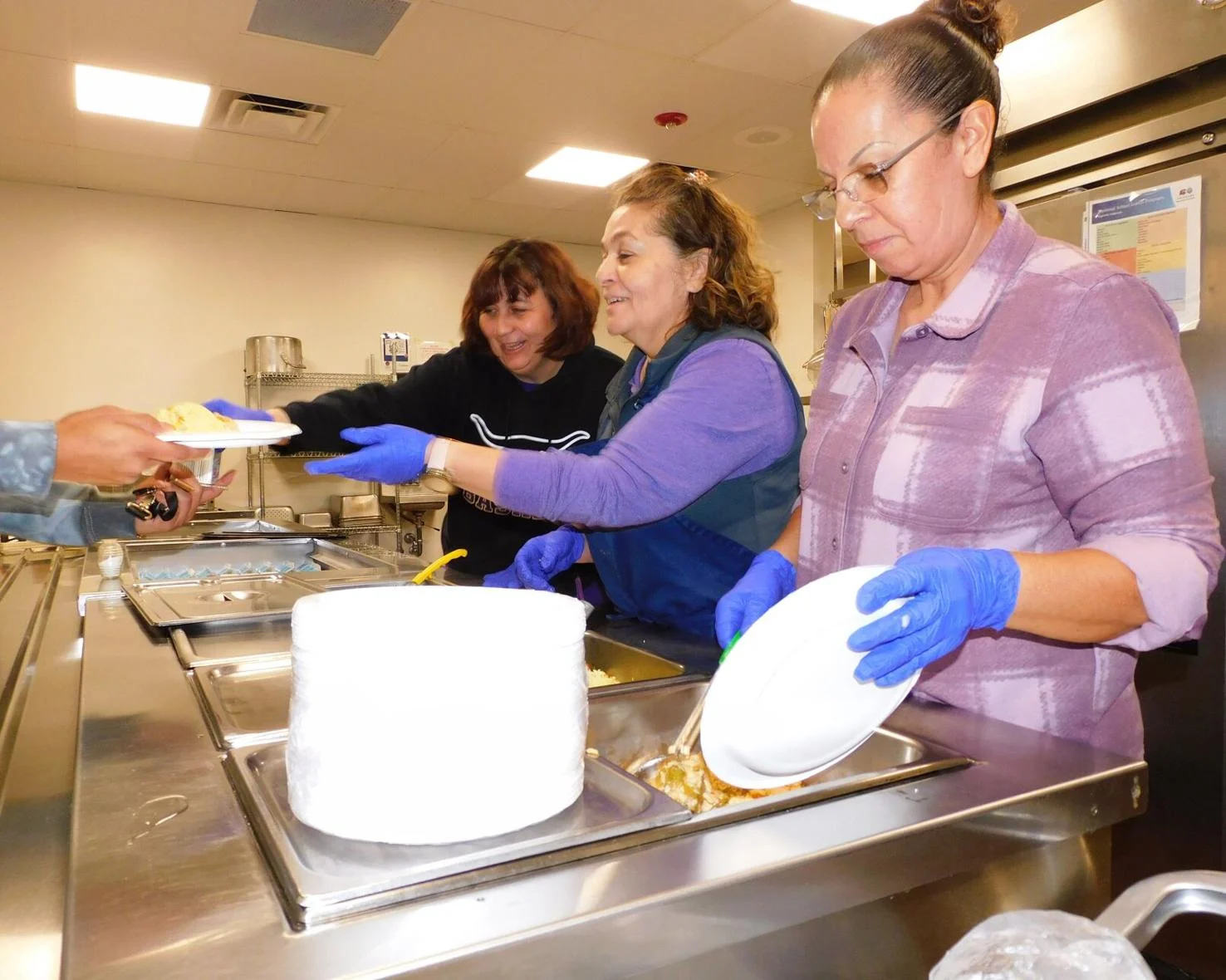
Homeless services providers in the Roaring Fork Valley area housed more than 160 clients in 2023, with some agencies and officials saying the region is experiencing a growth spurt in their capabilities and funding. As local governments plan to potentially receive continued unhoused migrant arrivals this summer, some are looking to the region’s homeless services infrastructure as a model for response.
While homeless service providers say they won’t address migrants at the expense of existing services, some have proposed using existing structures and organizations to provide migrants with necessary care in the future.
“I think we all recognize that this is a homelessness problem with a subpopulation of unhoused people who have needs particular to immigrants,” said Rob Stein at a Carbondale Board of Trustees meeting on Tuesday. Stein, a former Roaring Fork School District superintendent, was hired by the town of Carbondale in November to coordinate its approach toward over 100 unhoused migrants who have arrived in the town since last summer.
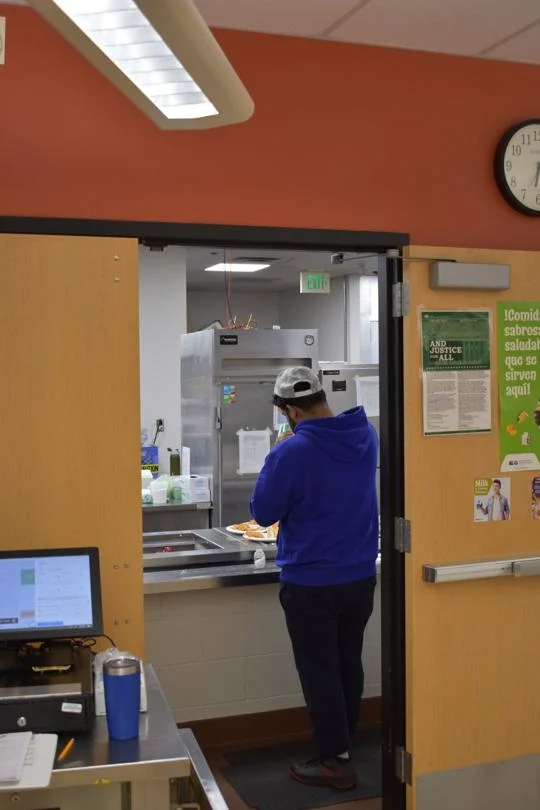
Stein said a regional approach to migrant services may be necessary as winter shelters close and new individuals continue arriving in warmer months. Starting in March, Carbondale will begin drawing down the number of migrants currently sleeping at its two winter shelters. By April 1, the shelters will close altogether. Meal services provided through the Roaring Fork School District and volunteers are set to end around March 22.
“We have a good drawdown plan, and there are some lingering questions on what’s going to happen afterward,” Stein said at a Tuesday town board meeting.
Already, Carbondale Trustee Colin Laird and Stein say they have begun conversations with local nonprofit organizations and regional municipalities to coordinate valleywide responses to unhoused migrant arrivals going forward. Stein said the Carbondale-based West Regional Health Alliance — the valley’s existing “backbone organization” for coordinating regional homeless services — is willing to host a regional response group if it takes off.
Stein said the new work would likely require WMRHA to hire two full-time staff members for a “massive” new project. Stein said services provided would likely include an approved camping area, sanitation services, legal services and case management.
“A lot like what (regional organizations) are providing to the unhoused population,” Stein said.
Pitkin County Human Services Director Lindsay Maisch has also said the region is looking for a more “programmatic” approach to migrant arrivals. Maisch said human services has prepared its emergency response capabilities to address future migrant arrivals, but that the county is already hoping to move past its emergency response and focus on a long-term regional framework.
“So if this is programmatic, then how do we support our local, robust nonprofit network to help build a social safety net for folks, so we can welcome people to our area?” Maisch said.
The demand for this framework happens to coincide with a revolutionary push in regional coordination between homeless service providers over the last five years.
Homeless service providers say a key element in that push has been the creation of the Valley Alliance to End Homelessness, a coalition of eight local entities, including five nonprofits (Catholic Charities, the Salvation Army, Mind Springs Health, WMRHA and Recovery Resources) and three counties (Garfield, Eagle and Pitkin). WMRHA hosts and administers the group. The alliance was founded in 2021 after three years of unprecedented regional coordination on projects like pandemic-era shelter for unhoused people in 2020 and a collaborative effort to join the national “Built for Zero” program starting in 2019. Formal discussions to boost regional collaboration began in 2018.
Venezuela suffered the largest documented economic contraction in the history of the Western Hemisphere between 2012 and 2020, with Venezuelans losing 71.8% of their per capita income in that time, according to data analyzed by Denver University economics professor and former Venezuelan government official Francisco Rodriguez. As of August 2023, the United Nations estimated that around 7.7 million Venezuelan refugees, migrants and asylum-seekers were scattered across the world, fleeing economic collapse.
The coalition still operates on the Built for Zero model, created by the New York-based nonprofit Community Solutions, which emphasizes regional coordination, data collection and targeted interventions. The coalition takes a “housing-first” approach, meaning clients can receive housing without requirements for their sobriety or employment. VAEH members and partner organizations meet weekly, and WMRHA hosts quarterly meetings to promote conversation between other regional entities and individuals with stakes in homeless service provision, including libraries, school districts and local therapists.
In addition to expanding outreach services to new areas of the valley, VAEH organizations launched a database in 2021, which now includes entries for over 900 individuals. WMRHA Housing Access Manager Keith Berglund said the database allows multiple organizations to coordinate case management for individual clients while also providing updates on organizations’ performance.
“Where we are now, with data and working together, is light years from where we were in 2019,” said WMRHA Executive Director Cristina Gair.
Homeless services providers say VAEH also is well-funded, having received over $5.2 million for homeless response and housing programs committed through 2026. This number does not include outside contributions VAEH member organizations gather through their own donation channels. The funds include state grants ($4.39 million), federal grants ($750,000), and an $81,000 grant from Community Solutions for data management.
Altogether, local officials and nonprofit staff say the valley enjoys a comparative abundance of services and funding streams for addressing regional homelessness.
“We’re a pretty resource-rich valley, lots of nonprofits with lots of opportunities,” Maisch said.
But homeless service providers in the valley say they have received pressure to apply their resources and services toward migrants arriving in the valley from outside the country.
“There is a perspective in the public of, ‘Why aren’t they doing anything? Their name is the Valley Alliance to End Homelessness, why isn’t that agency doing anything?’” said Keith Berglund, WMRHA’s housing access manager.
Jose Saez, WMRHA’s senior housing navigator, said VAEH saw particular pressure from Glenwood Springs-based advocacy group Voces Unidas. Voces Unidas staff could not be reached for comment. The nonprofit, which is not a client-facing organization, first identified the existence of 80 unhoused migrants in Carbondale in November of last year.
Voces began collecting information from the migrants and helped the group elect representatives to discuss their interests in conversations with local governments back in November. Voces found that the vast majority of the group had come originally from Venezuela. In their initial count, the group was almost 80% male. Seventy percent of the group were sleeping in cars, while most of the rest were sleeping outside or in tents.
By the end of November, Voces raised its estimate for the number of migrants who had arrived in Carbondale to 120, and later estimates have risen as high as 175. Currently, the number of migrants in Carbondale has seemed to decrease, with Stein saying there are around 50 migrants currently sleeping in shelters and overnight parking areas the town has designated for them. Carbondale Town Manager Lauren Gister said in a letter to Garfield County commissioners that new arrivals often leave Carbondale when they realize there is no shelter space.
In the last two years, Venezuelan migration to the United States has surged, with around 40,000 Venezuelans arriving in Denver since the beginning of 2023, according to the city and county of Denver. Denver officials say many of the migrants are arriving on buses with tickets funded by the state of Texas or the city of El Paso.
Garfield County Commissioner Tom Jankovsky said in a Board of County Commissioners meeting on Tuesday that he had heard Denver officials were telling migrants arriving there to travel to Carbondale, where they said there was work. A spokesperson from Denver Emergency Management told the Aspen Daily News that no Denver officials “played any role in pushing new arrivals to Carbondale.”
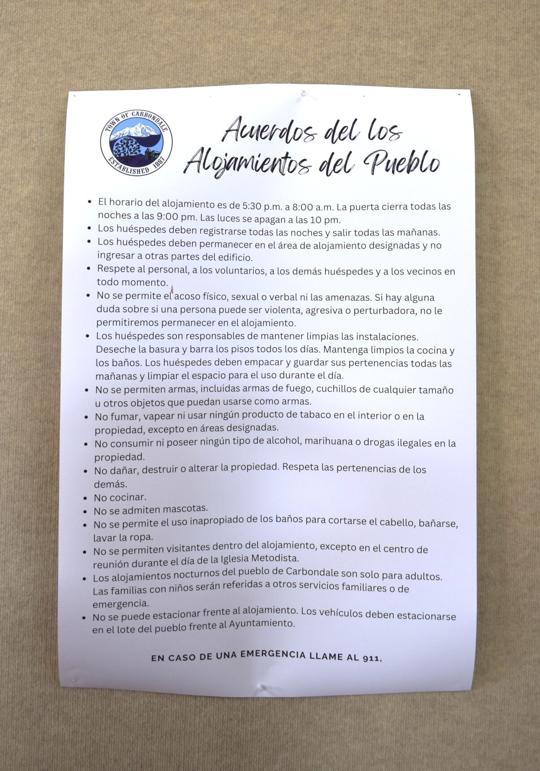
While collecting information on Carbondale’s new arrivals, Voces Unidas pressed local organizations to find shelter for migrants who were sleeping outside in freezing temperatures. Laird, who also serves as executive director of the Third Street Center in Carbondale, offered the center’s community room as a temporary shelter for 60 residents.
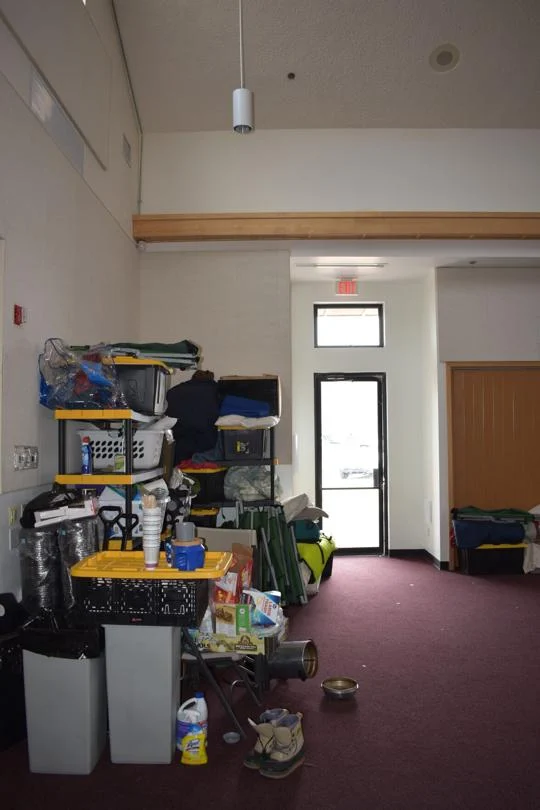
That shelter closed on Jan. 19, and the town has since sheltered 20 individuals in each of two winter shelter locations — one in a walled-off section of the town board chambers and one in the basement of the Carbondale Community United Methodist Church. The town has received a $224,000 grant from the Colorado Department of Local Affairs to operate the shelters and related services, which were meant only to last through cold winter months. The town has contracted with Western Slope-based nonprofit Recovery Resources, which also provides homeless and detox services at the Schultz Building in Aspen, to staff the shelters.
Alan Muñoz, a regional organizing manager at Voces, said at VAEH’s quarterly regional coalition meeting in January that the town’s scramble for a response indicated a lack of social emergency infrastructure in the valley. Laird agreed with Muñoz that there was “no infrastructure” for managing the migrants’ arrival.
Carbondale officials have said sheltering the migrants was a particularly difficult kind of “emergency.” During fires or floods, Gister has said, community institutions shut down temporarily, leaving schools and other public buildings available for use as shelters, but not so with the arrival of newcomers. Meanwhile, Berglund said local nonprofits’ existing systems for unhoused people are not built to handle sudden influxes of people.
“We are (going to do something about this), but there’s not an emergency service even for if 150 citizens of the United States showed up here. We didn’t have the services here in this area,” Berglund said.
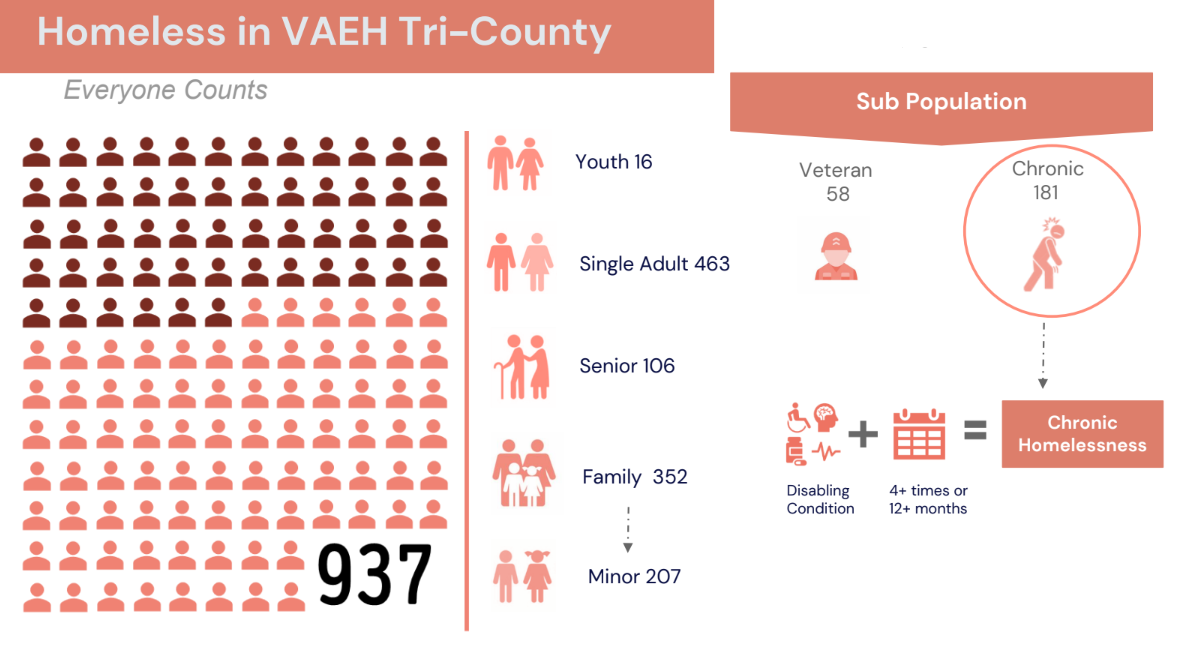
According to data from the VAEH’s database, the alliance has served an average of 137 active unhoused clients each year since the beginning of 2021 and has housed around 160 individuals yearly in 2022 and 2023.
Nonetheless, Berglund said the organization’s systems are too slow to handle sudden influxes and don’t always meet the individual needs of migrants. The average time to house a VAEH client in 2023 was 64 days (almost 50% lower than the same number in 2022).
Local nonprofit leaders also have said they were already stretched thin and did not have the resources to provide for the new population.
“Everyone’s asking, who’s going to step up? But really, everybody’s already running,” Wendee Schoon Fisher, unhoused program manager at Recovery Resources, said during the regional coalition meeting.
But since then, local organizations say they have not struggled to provide what help they could for migrants. Recovery Resources Executive Director Janelle Duhon said that managing Carbondale’s winter shelters is not stretching the organization. Recovery Resources reassigned one staff member from its homeless service facility in Aspen to staff the Carbondale shelters.
Recovery Resources staff at the Aspen facility said they have not had to turn away any unhoused clients seeking winter shelter this year because of capacity issues. Maisch said the Recovery Resources facility, operated through a contract with Pitkin County, has not received any new migrants seeking overnight shelter recently. She said she has only heard of five individuals from the new migrant group seeking food pantry services or medical services in Pitkin County.
Nonetheless, local nonprofits say it will require committed financial support from governments if they are going to actively serve unhoused migrants.
“It’s a good concern nonprofits have that if they step up to carry the ball without strong commitment from municipalities, then they’ll be stuck with it, and so they need to see some levels of commitment from funders,” Stein said.
Carbondale trustees have already committed $20,000 to a future regional coalition. Maisch said Pitkin County is also ready to contribute toward a regional effort if they are invited to participate.
Town staff in Carbondale said they are not hopeful about receiving funding from their own county. During a Tuesday meeting, Garfield County commissioners denied Carbondale’s request for $50,000 to go toward existing and additional shelter capacity, as well as future regional efforts.
Garfield commissioners said Carbondale was “enabling” migrants by sheltering them, arguing that they would rather allocate resources toward people already struggling to make a living in their communities. Commissioner John Martin, who said he has been homeless himself, argued that new migrants should obtain legal status and seek help back in Denver. He also said migrants should reduce their reliance on public assistance and become more independent.
“Nobody wants anybody to starve or freeze to death, but we have to be careful and we have to see where we’re at,” said Commissioner Mike Samson. “We have to make sure we’re taking care of the people who are already here.”
A Garfield County Human Services could not be reached through a public information officer for comment on their current workload and services.
Local homeless service providers acknowledged the tension between existing clients and new migrants, saying they will seek new funding streams and expand services to address migrants rather than taking from existing resources.
Maisch said VAEH’s $5.2 million in funding for programs serving local unhoused people will not go toward migrant services.
“There may be a place for (migrant services) in the Valley Alliance to End Homelessness, and it will need to be very clear that these efforts are different,” Maisch said.
One particular challenge the migrants face more than existing unhoused people in the region is the ability to work, local experts say. Stein said most sheltered migrants do not have legal status in the United States, though they are currently submitting applications for Temporary Protected Status. So far, no applications have been approved or denied, other than a small number that failed because of a technicality and will be resubmitted.
A letter from Gister to Garfield County commissioners said most sheltered migrants are eligible for TPS but need to work through the application process, which can take months.
For Benigno Jose Ricardo, a former social worker from Venezuela now sheltering in the Methodist church, migrants’ greatest need is employment. He said he hopes to work as a social worker in the Roaring Fork Valley someday, and he is hoping to improve his English in the meantime.
When the shelters close, Ricardo said he has no set plan, but that he will seek out new arrangements in the area and continue to look for work.
Ricky Gomero, the Recovery Resources employee staffing the shelters, said he has become close friends with most of the shelter residents. As with any group, he said the residents are a mix. Some are using resources to advance themselves and grow, while others are potentially taking advantage of a free lunch. A few, he said, are simply looking to make some money while they’re here and then travel home.
And some, he said, have even talked about moving on to Canada.