
ROARING FORK BROADCASTING COMPANY



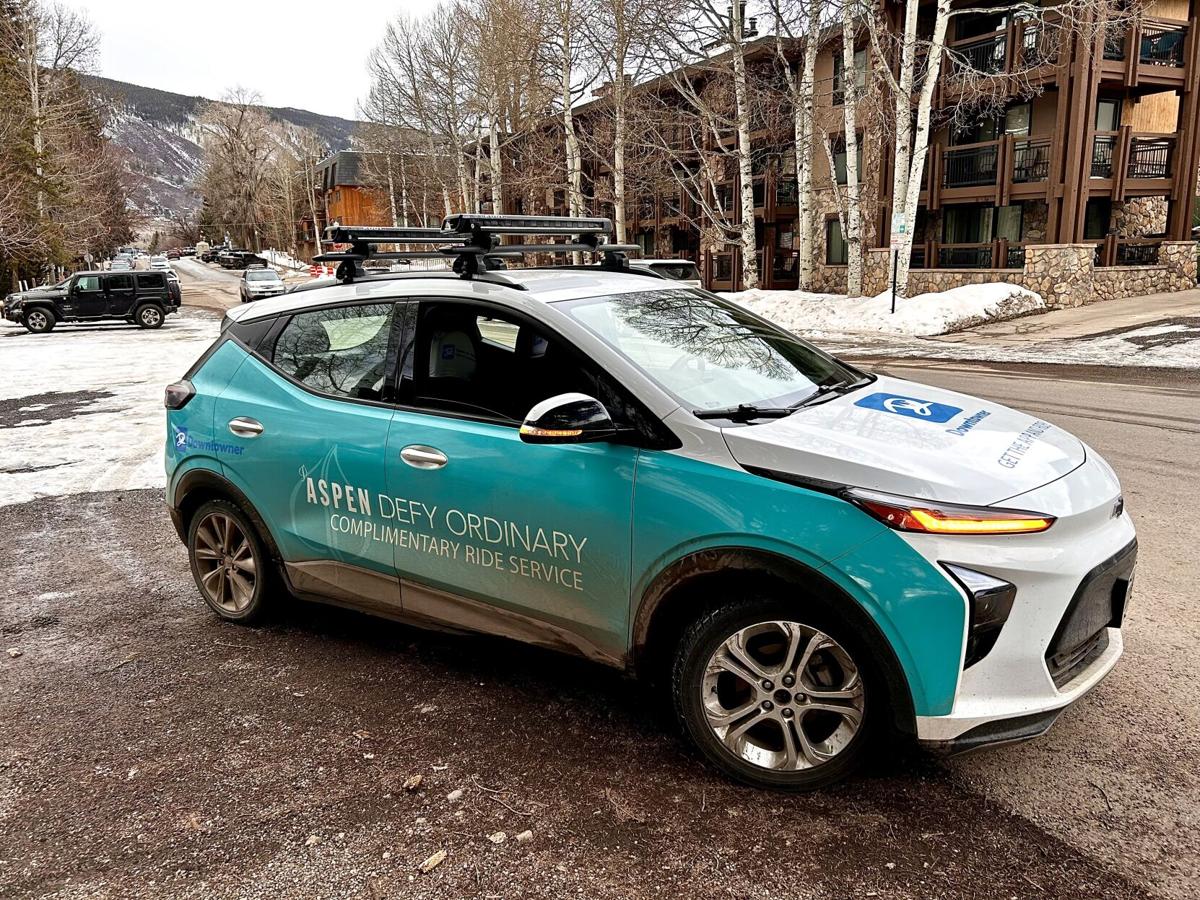
Aspen City Council discussed expanding the city’s popular Downtowner ride service during a work session on Monday.
Council members were divided on whether to expand the city’s on-demand micro-transit system to new neighborhoods. The body will discuss the issue again on April 1.
Pete Rice, the city’s deputy engineer, said a large portion of respondents in recent public outreach efforts want Downtowner service to reach farther out of the downtown core. Another portion of respondents, Rice said, is concerned that expanding Downtowner service could exacerbate traffic congestion, harm local taxi businesses and/or create environmental issues. The public outreach efforts cited are part of a broader ongoing transportation and parking study called “Aspen Gets Us There.” Staff conducted an initial outreach effort including a survey, pop-up events and focus groups from September into February, with another outreach effort planned for April.
The Downtowner, created in 2016, is a city-funded service whereby patrons can request free rides to and from any location within downtown Aspen using an app. The service currently uses three vehicles — two electric Chevy Bolts and a Ford Transit shuttle vehicle. The Downtowner is operated by Downtowner Holdings LLC, which received a five-year contract with the city in 2023. The same company won the first contract for the service in 2016. The city’s total expenditure for 2024 service is about $679,000, according to a city memo.
The Downtowner has served 480,440 riders since 2016. In 2023, Downtowner served 74,141 passengers, who traveled an average of .69 miles, according to a city memo.
The Downtowner’s existing service range extends between Aspen Mountain to the south, Gillespie and Puppy Smith streets to the north, 8th Street to the west and Midland/Crystal Lake Road to the east. The city’s transportation programs manager, Lynn Rumbaugh, said the service area had not changed much since it was created.
The city memo said staff said members of the public focused their desire for Downtowner expansion on the Mountain Valley, Cemetery Lane and the North 40 neighborhoods. They also heard requests for expanded service hours, which currently run from 8 a.m. to 11 p.m. in the winter season and from 10 a.m. to 11 p.m. in the spring, summer and fall.
Councilman Bill Guth, who had asked city staff to bring forward a special conversation on the Downtowner, said he supports the expansion, calling the Downtowner service “phenomenal.”
“The Downtowner fits a really important lifestyle need for people living near the core of Aspen,” Guth said.
Guth said the Downtowner reduces demand for downtown parking spaces and allows Aspenites and visitors to avoid driving while intoxicated. He added that the Downtowner fills a community need that Uber, taxi services and public buses cannot, or have not, filled.
“Going out for dinner or an event when you’re dressed up … my wife is not walking to the bus when she’s in high heels. It’s just not happening,” Guth said.
Guth said he supported expanding the Downtowner’s service area so that all residents within Aspen city limits have access to it. Guth also supported extending the Downtowner’s service hours to midnight or 1 a.m., even if only on weekends.
Councilman Ward Hauenstein said he was interested in discussing expansion, noting that elderly Aspenites outside the current service range can’t easily use the bus when they’re carrying groceries or other heavy items.
Mayor Torre said he would support an expansion mostly as a complement to existing bus services. He mentioned Mountain Valley as an example of a neighborhood where many residents live far away from the nearest bus stop.
Councilman Sam Rose was the only member who opposed an expansion unless it was being used to help people living far from existing bus routes.
“I don’t understand why we would expand it unless we’re going to areas that are hard to reach with our fixed bus service,” Rose said.