
ROARING FORK BROADCASTING COMPANY


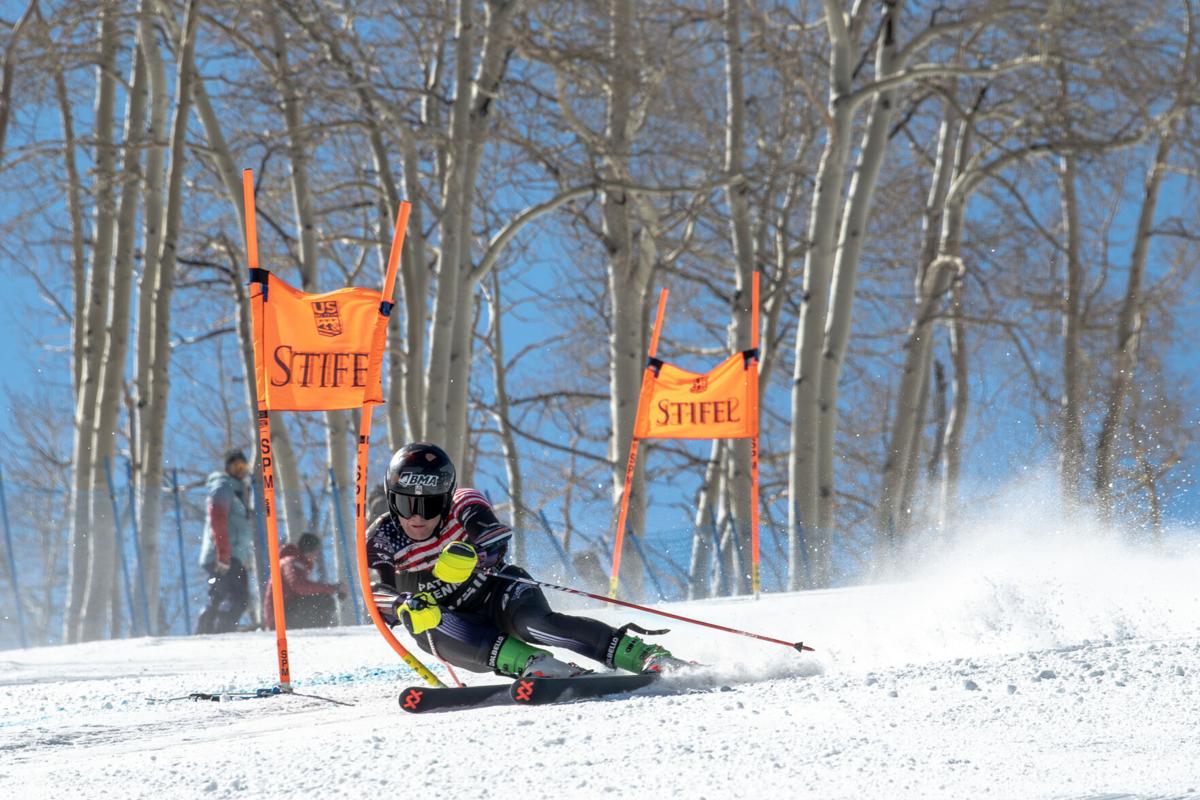
World Cup Friday had both sides of the winning spectrum: unrelenting and redemptive.
Switzerland’s Marco Odermatt climbed to the top of the podium for the 11th consecutive time in a giant slalom race, dating back to last season. But to his left, an emotional Atle Lie McGrath of Norway held back tears as he took the bronze medal, his first in a GS since 2020.
“Giant slalom has always been one of my favorite events, but also one of my toughest,” McGrath said.
The now-24-year-old earned his first World Cup podium with a silver in GS on Dec. 20, 2020, in his second full season on the circuit. The son of a U.S. Ski Team alumnus, Felix McGrath, it seemed that the trajectory for him was pointed upward. But a season-ending MCL injury in his next race derailed his season. He came back in 2021 and took a bronze in parallel and three podiums in slalom — including two golds — but a GS win eluded him. He took a fourth in December 2022 in Alta Badia, Italy, but had another season-ending knee injury. He came back this season and secured two silvers in the slalom in January in Adelboden and Wengen — both in Switzerland — and is finally feeling the momentum swinging back in his favor.
In total, McGrath had two knee injuries and 21 GS starts in between podiums.
“The rehab process has been so tough and then coming back on the slalom podium in January, then it’s been really tough these past three weeks, especially in GS,” McGrath said. “So, then to kind of pull it together and get my first podium since December 2020, it’s a lot.”
McGrath finished seventh in the first run of the day and eighth in the second for an aggregate time that was .81 seconds behind Odermatt, leading a typically strong Swiss performance.
Odermatt has been on a winning streak since March 2023, but his 11th straight didn’t come without some drama. After winning the first run by 0.12 seconds, he started hot on the second with the second-fastest time through the first sector, but quickly fell to No. 21 of the 30 finalists through the third sector after a couple of small mistakes.
He turned on the afterburners in the bottom of the course and set the pace through the fourth section by 0.12 seconds, salvaging the eighth-best second run and overtaking compatriot Loic Meillard by 0.14 seconds to close out the event.
“As soon as I do one mistake or the second one, I know in my mind, ‘This is not enough,’” Odermatt said. “So I find some power to even push a little bit more, which I definitely needed today.”
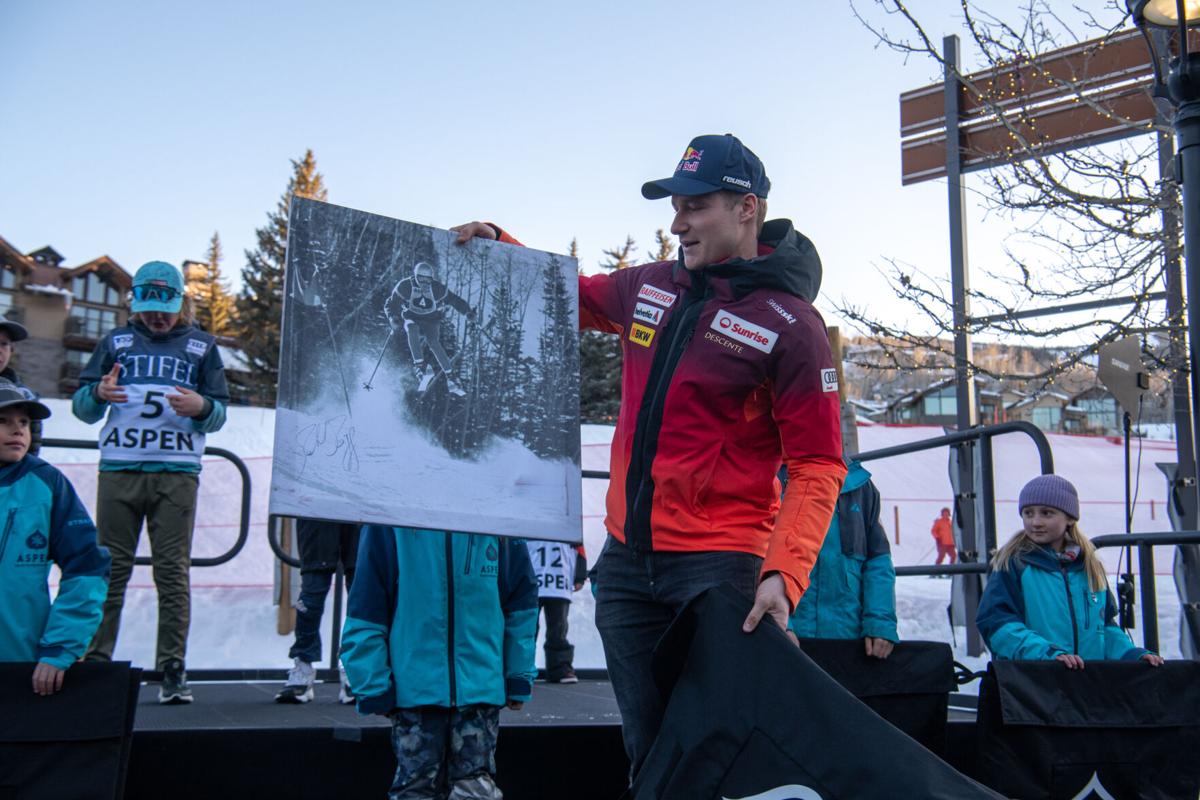
Odermatt already clinched the GS and World Cup overall crystal globes, but he said the winning streak is still plenty of motivation to perform.
“If you’re on a streak of 11 wins, it’s a long way to get there again, so it’s easier to continue winning,” Odermatt said.
Odermatt is now within three wins of Ingemar Stenmark’s record for most consecutive wins in a single discipline. He became the fourth Swiss skier to win the Roch Cup — named for Swiss skier Andre Roch — joining Daniel Mahrer, Peter Muller and Pirmin Zurbriggen.
“Thank you very much for the nice trophy,” Odermatt said at Friday night’s awarding of the cup at Wagner Park. “It’s nice to have my name next to all these legends. It was a great day, nice weather, difficult ski race but we all did well and tried to show a good performance and then tomorrow we go again.”
Meillard hung on for second place, his third overall podium of the season, now with silvers in GS and slalom and a bronze in super-G.
Other Swiss racers fared well, with Thomas Tumler just missing the podium in fourth place. Fadri Janutin took 14th and Luca Aerni won the Bibbo Award for the highest jump from his start number. The 62nd starter moved all the way up to 24th.
There may have been some overexcitement on the part of the home competitors in front of the USA faithful. Edwards’ River Radamus was one of only two finishers for Team USA, and the only American to advance to the second run, in 16th place after the first. Radamus had a strong second run that tied with Meillard for the fourth-quickest time but it wasn’t enough to lift him into the top 10, finishing 11th overall.
“I made some more mistakes the second run but I think the difference is they’re mistakes out of aggression as opposed to missed execution,” Radamus said. “Those ones, I live with every time. I think I was pushing really hard and felt more at home on the snow so I’m happy with moving up on the second run, for sure.”
Patrick Kenney finished 37th in the first run and didn’t qualify for the second.
Tommy Ford, George Steffey, Isaiah Nelson and Brian McLaughlin all exited the course in the third section, most on the same tight turn.
However, Steffey and Nelson had the quickest times through their last completed sections.
“Our whole team has the speed right now,” Radamus said. “Those guys definitely want to put down a special performance and leave everything on the line, and that’s what happens sometimes. But I think they can take some confidence knowing their speed there and bring it into the race tomorrow for sure.”
The Americans weren’t alone in seeing an early end to their race after missing a gate. A total of 24 starters didn’t finish the first run, eliminating more than a third of the 65-man starting list (Andorra’s Joan Verdu did not start). Only 11 skiers who completed the run didn’t advance to the 30-man second run, where two more skiers exited the race.
The 24 first-run exits are the most in a men’s giant slalom this World Cup season, and the 26 total trails only the season opener in Val D’Isere, France, on Dec. 9, where 22 skiers DNFed the first run and five DNFed the second.
Icy conditions at the top of the hill turned into more slushy conditions at the bottom, and many racers had to put on the brakes in the middle after some tight portions with some speed.
Among the survivors was Australian Louis Muhlen-Schulte, who punched his ticket to the second run for the first time in his career amidst all the chaos.
“The first run was for sure tricky, a bit of a tricky set,” Muhlen-Schulte said. “Kind of some variable snow conditions from top to bottom, which doesn’t make it easy, but you really have to fight. … You’ve really got to be on top of your game and do everything you can. But it’s racing, you’ve got to kind of go through with what you’ve got.”
The challenges were foreshadowed by the forerunners, which included Aspen Valley Ski and Snowboard Club standout Chase Kelly.
The 18-year-old most recently took a gold in a FIS slalom race at Loveland Ski Area on Feb. 24 after getting his first gold in the giant slalom at Winter Park in early January.
Kelly said the course was really icy after his forerun around 9:30 a.m.
“But that’s what they want here,” Kelly added. “I think definitely for these World Cup guys that’s all they want.”
Kelly also acknowledged some mistakes in his run, much like many of the elite skiers who followed.
“It wasn’t great, not going to lie,” Kelly said. “I definitely made some mistakes but I was just happy to get down.”
A chance for redemption comes for many of the athletes who saw their day end unsatisfactorily on Saturday for a second giant slalom event. And for the ones at the top, it’s just a chance to continue the momentum.
“Do well today, same slope, same conditions, I have good control of the equipment and I’m just going to go,” McGrath said.