
ROARING FORK BROADCASTING COMPANY



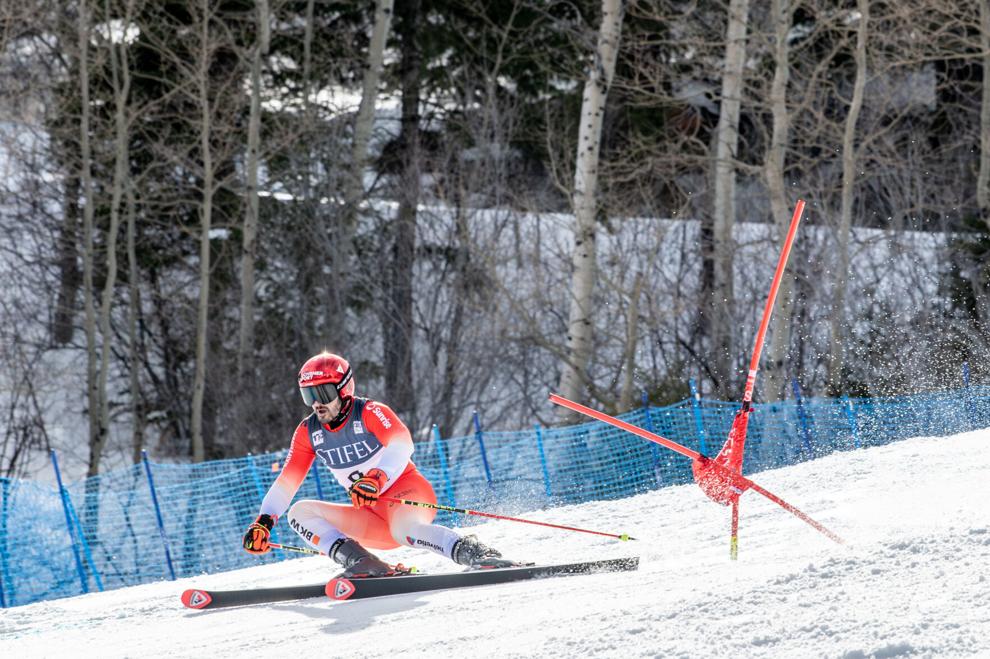
The path to Marco Odermatt’s 12th straight giant slalom win was bumpy — literally.
After falling behind the winning pace in the second run on Friday in 2024 World Cup Aspen competition, Saturday saw Odermatt not only fall to third through the first run, but make a major mistake during the second that jeopardized his multi-season winning streak and threatened to reset his chase for history.
But he made an acrobatic recovery and executed the rest of the run perfectly to keep the streak alive.
“I don’t think people really understand what he’s actually doing,” teammate Loic Meillard said. “We’re all working hard all year and at the moment, he’s just on a different planet. We like to say he can do anything he wants but he still goes fast, and that’s what’s crazy.”
The 26-year-old Swiss racer went unintentionally airborne early in his second run, requiring an athletic recovery not only to regain his footing but turn his momentum 90 degrees to reach the next gate. His split lead of 0.28 seconds jumped to a +0.50 trail as a result.
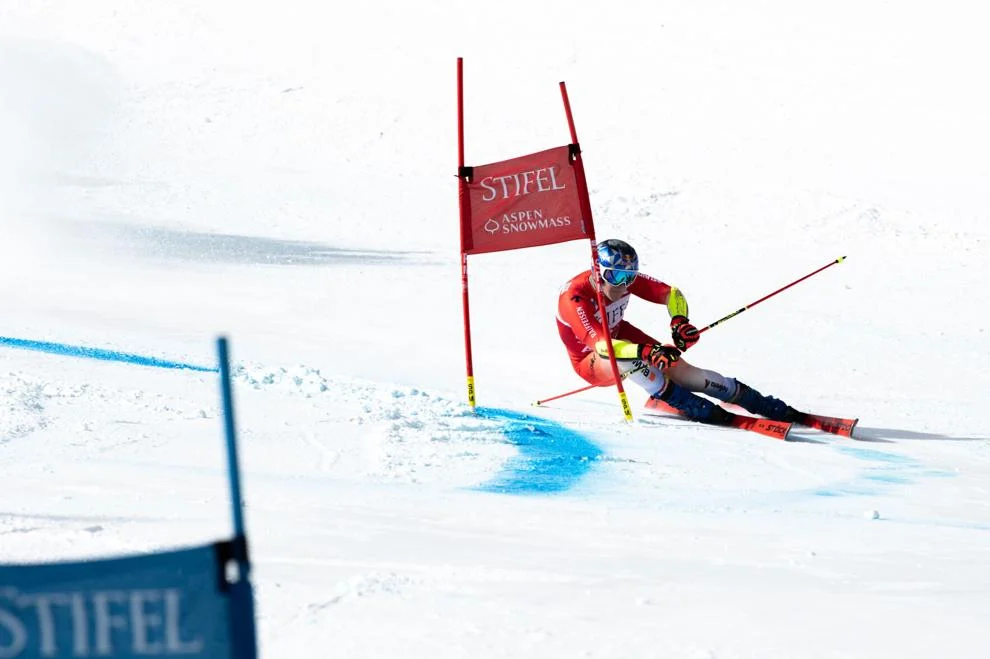
But being the skier that he is — he’s already clinched the season’s giant slalom and overall Crystal Globes — he found another gear and, like he did on Friday, closed the gap at the bottom of the course.
“I really pushed hard at the top already and then I did the mistake,” Odermatt said. “I over pushed in that section and it actually threw me out. Somehow I could get to the gate and then I knew, ‘Now I really have to push but otherwise it will not be enough,’ and I did. It was a perfect second half of the second run.”
He said that when he got to the bottom he was surprised to be the event winner.
Over the course of the 12 GS wins, it was only the second time Odermatt trailed after the first run and had to chase a leader. On Jan. 23 in Schladming, Austria, Odermatt finished a distant 11th and 0.98 seconds behind leader Manuel Feller, but put together a second run that was 0.40 seconds faster than any other competitor.
On Saturday in Aspen, Odermatt finished the first run with the third best time, behind Norway’s Alexander Steen Olsen’s 1:01.42 and Meillard’s 1:01.51 with a time of 1:01.74. Even with the slip-up, his second run was the second quickest among qualifiers at 1:01.46, behind Italian Alex Vinatzer by 0.11 seconds. Meillard posted the ninth-quickest second run and Steen Olsen posted the 24th.
Now, Odermatt is just two wins behind Ingemar Stenmark’s record for 14 consecutive wins in one discipline. There are two events remaining on the GS schedule, one in Kranjska Gora, Slovenia, on Saturday and one in Saalbach, Austria, on March 16.
Rounding out Saturday’s podium was Meillard in second — his second silver after finishing just behind Odermatt on Friday — and Norway’s Timon Haugan. It was Haugan’s fourth career World Cup podium and Meillard’s 18th, his fourth this season.
“Today was a bit easier in the sense that we knew how to interact with the snow and it was to ski it but in the GS you have to work hard and the conditions didn’t make it easier,” Meillard said.
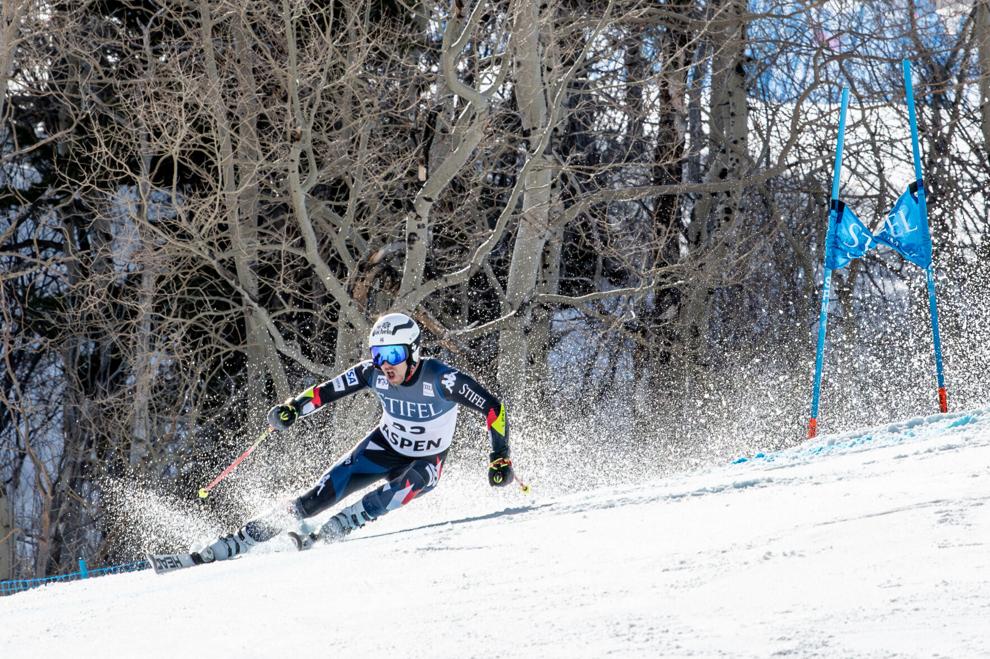
On the American side, three made it through first-run cuts — tying a season-high previously achieved twice — though that also came with drama. Teammates River Radamus and Isaiah Nelson were tied in the high 20s after the latter’s finish with about 15 more skiers to run. In the end, they ended up tied for 30th, creating a 31-man second-run field.
Tommy Ford finished 23rd in the first run and Brian McLaughlin just missed the cut with a 34th place.
Ford finished 16th overall and Radamus came in 22nd. Nelson DNFed in the last handful of gates before the finish line.
“I’ve been skiing pretty well in races, have been a little safe and cautious at times but consistent,” Ford said. “You don’t want to be that consistent in that way, but I’m starting to find speed again and getting it from top to bottom with speed is another challenge.”
Odermatt’s Aspen appearance ended on Saturday with his third overall gold in town — he also won the super-G last year.
Sunday’s race — weather permitting — will be a slalom, changing the competitor list some. A total of 68 athletes are on the start list for the first run, starting with No. 1-ranked Feller. The live bib draw scheduled for Saturday night was canceled due to expected travel complications Sunday morning due to weather, which would have impacted the athletes’ schedules. Five Americans are on the start list: Jett Seymour (bib No. 33), Luke Winters (40), Benjamin Ritchie (45), Nelson (61) and Radamus (68).
Sunday’s race is scheduled to start at 9 a.m., one hour sooner than Friday’s and Saturday’s events. It will feature two runs, with the second scheduled to start at noon.