
ROARING FORK BROADCASTING COMPANY



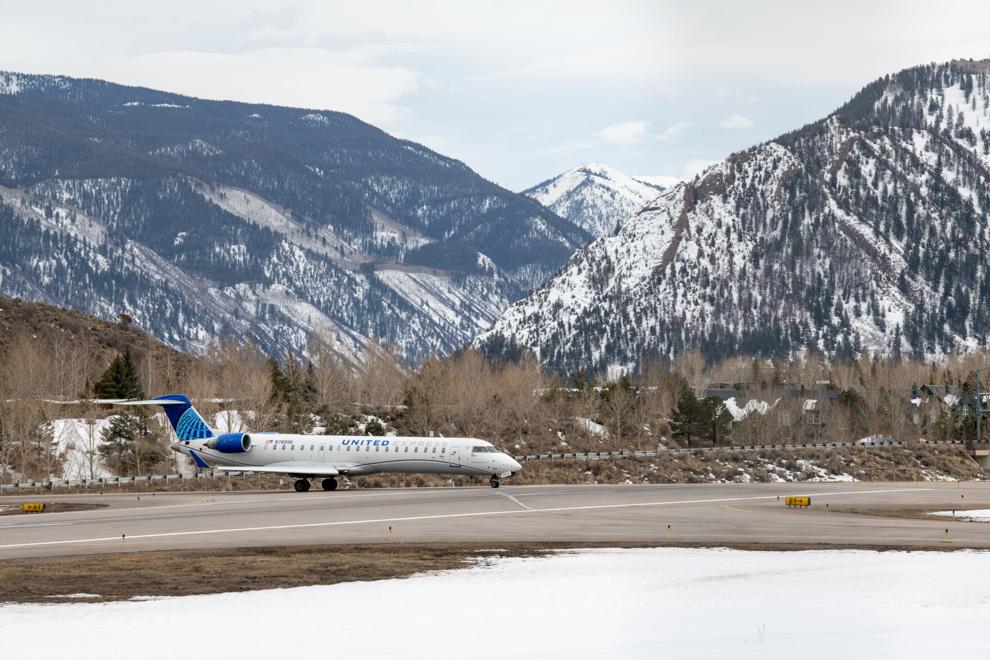
Pitkin County officials decided Tuesday they must revisit a decision to leave the airport runway where it is for fear it could have major financial implications.
The decision comes after county commissioners Francie Jacober and Patti Clapper met with top Federal Aviation Administration officials in Washington, D.C., on Feb. 29 and March 1 and heard in no uncertain terms that moving the taxiway 80 feet to the east rather than moving the runway 80 feet to the west would have enormous financial implications for the county. Jacober said FAA deputy association administrator Rich Swayze was polite but firm with his message.
“They will not pay for any further runaway maintenance until we have an (Aspen Layout Plan, or ALP) they will approve,” Jacober said. “We won’t have any money for upkeep of the airport and we all know we need some serious work at the airport — now.”
A consultant for the county reported to commissioners last fall that the airport runway is deteriorating under the surface and requires a rebuild rather than patching. An FAA official in Denver recently informed Pitkin County by email that funds would be available for runway maintenance in 2024 but not beyond until Pitkin County finalizes an ALP, a blueprint for future improvements. The message from Swayze was consistent, according to Jacober.
For the county, that means it could land back where it started six years ago. In 2018, the concept of moving the runway 80 feet to the west and widening it to 150 feet was determined to have “no significant impact” in a required environmental analysis required for use of federal funds. But the decision to shift the runway was reconsidered after significant public debate during the ASE Vision process, a lengthy and controversial series of community meetings in 2019-20. An alternative plan to leave the runway where it is and move the taxiway 80 feet to the east was promoted to achieve the FAA’s desired separation of the runway and taxiway.
Jacober said Swayze told the county contingent that moving the taxiway to the east would require relocating the air traffic control tower. That move would cost tens of millions of dollars and would have to be financed by the county without the help of the FAA, according to Jacober. The tower could stay put if the taxiway was relocated and the runway shifted to the west, FAA officials informed them.
The county contingency also was told it would be worthwhile to make decisions quickly on the airport if they want to tap funds from the federal infrastructure bill that are earmarked for airport improvements. Those funds are available for only two more years. If the county updates its current ALP it could finish the work in about six months and apply for funds, Swayze advised them, according to Jacober. But if it submits a new plan, it would take about 18 months to complete the work and get through the environmental review process. That would likely be too late for an application for infrastructure funds.
Clapper said staff members of U.S. Sens. John Hickenlooper and Michael Bennet advised them in the recent Washington trip that they would help to secure funds for airport improvements.
“Both of our senators were pretty clear on, ‘We have money in our hands that needs to be spent. You need to give us a project so we can write you a check,’” Clapper said.
She and Jacober shared the information from their lobbying journey with the other commissioners and citizens appointed to the Airport Advisory Board. Also present was Brad Jacobsen, a consultant for the county on airport planning issues. He said rebuilding the runway 80 feet to the west would save an estimated $40 million compared to replacing it at the current location.
“We’re going to be rebuilding the runway. We just need to decide if we’re rebuilding it in the current location of 80 feet to the west,” Jacobsen said.
But Airport Advisory Board member Valerie Braun said the decision wasn’t that simple.
“There’s an elephant in the room that has not been discussed at all and that’s sentiment within the community,” Braun said. “The whole reason the visioning happened is when the ALP from 2018 was presented to the public, people’s hair caught on fire. There was a lot of blow back.
“Now we’re looking at the same thing again,” she continued. “It hasn’t been discussed here but I think it’s something everyone should contemplate between now and (March 21, the next Airport Advisory Board meeting), and that’s that we still have plenty of people in the community who are very concerned about bigger aircraft coming in and an overall growth at our airport continuing to make growth in our community. So I don’t think we should be doing this decision-making in a vacuum because we don’t necessarily know what the community would vote on if they were given an opportunity to do so.”
The advisory board members decided to take up the issue on March 21. The meeting will include an opportunity for public comment. The board’s goal will be to forward a recommendation to county commissioners, who will formalize the direction after holding public meetings.
Clapper said the need to replace the runway and the FAA’s warning that funds for the runway will dry up after this year have thrown a new wrinkle into the debate.
“There’s been a definite change in conditions,” she said.