
ROARING FORK BROADCASTING COMPANY


Scientists and water managers are keeping their eyes on a “nasty” layer of dust deposited in the Roaring Fork watershed’s snowpack during two windstorms in late February and early March.
The storms (Feb. 26-27 and Mar. 2-3) were western Colorado's first major dust event this year. Windstorms carrying dust from the arid Four Corners region commonly hit the Colorado Rockies in spring, depositing dark layers in the local snowpack. The dust often causes snow to melt faster, meaning there is less water available in local rivers and streams by late summer and fall. Rafting companies and recreators have less time to play, and some farmers and ranchers must stop irrigating earlier.
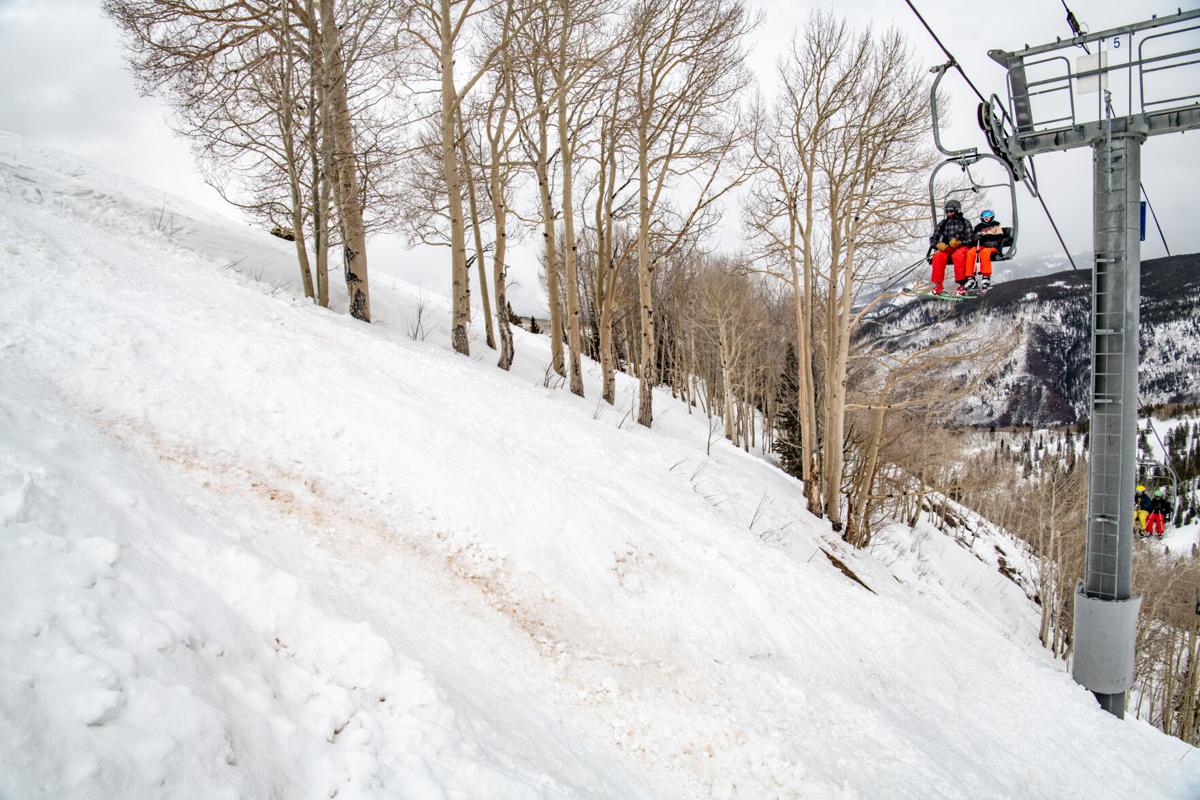
Snow researchers say the combined event was relatively large and may have hit the Roaring Fork watershed harder than other areas. The dust has been visible on Aspen ski mountains, including at the bottom of this year’s FIS Alpine World Cup course on Ajax.
“I skied on the Sunday morning (Mar. 3) after the big dust storm came through, and on Aspen Mountain (the dust) was quite prevalent,” said Jeff Deems, Carbondale resident and chief technical officer for hardware at Boulder-based Airborne Snow Observatories. “And the next Monday, I could actually feel the snow changing in response to it — kind of thickening up.”
Jeff Derry — executive director of the Silverton-based Center for Snow and Avalanche Studies — said the event was widespread, depositing dust in an area spanning from the San Juan Mountains near Telluride to Rabbit Ears Pass near Steamboat Springs. Andrew Temple, a field assistant at CSAS, said McClure Pass south of Carbondale received more dust than any other site he visited for snow observation this week, including Park Cone east of Crested Butte and Spring Creek Pass south of Lake City.
Temple said McClure Pass was as dusty or even dustier than sites in the San Juan Mountains, where dust storms usually hit the hardest.
“It was a pretty dirty event,” Derry said. “It’s a pretty noticeable, distinct, bad dust layer in there.”
Snowmelt from McClure Pass runs into the Crystal River and ultimately joins the Roaring Fork River in Carbondale.
Derry said there is still time for spring snow storms to cover the dust and reduce its impact on snowmelt. The closer the dust comes to the snow’s surface, the more sunlight it absorbs and the faster it causes snow to melt.
In April, a dust storm arrived just as local snowpack was hitting its peak, meaning it remained high in the snow layers and affected almost the entire runoff process. Even with last year’s wet, cloudy spring conditions, Deems estimates the dust cut a month off the spring runoff season.
Derry said that while “El Niño” conditions in the Pacific Ocean are fading with the approach of summer, those conditions could still bring a snowy spring.
Researchers are hoping the spring brings more snow, but not more dust. Deems said there is also still time for more dust events to occur in April as they did last year. If the Roaring Fork watershed sees a dry and/or sunny spring, that dust could seriously limit summer runoff.
“Here we are in the middle of March, and we've already had a pretty good (dust event) with plenty of snow accumulation and melt season and dust season yet to go,” said Deems. “So clearly, the Desert Southwest is primed for dust emission after this recent episode, and I think we should expect some more dust with commensurate impacts on snowmelt.”
As of Thursday, snowpack in the Roaring Fork watershed was sitting at 110% of normal for this time of year, according to the Basalt-based Roaring Fork Conservancy. Across Colorado, snowpack came in at 102% of normal, according to the U.S. Department of Agriculture.
In addition to its impact on water supply, dust can also affect water quality. Steve Hunter, utilities resource manager at the city of Aspen and doctoral candidate in snow water supply forecasting at Colorado State University, said the dust can also cake filters at the city’s water treatment facility once it flows downstream in Castle and Maroon creeks. Hunter said the dust can more than double the number of times city employees have to clean the filters. He added that the dust is distinguishable from regular river silt.
“It’s just additional manpower and expertise to clean filters and make sure none of that is getting through,” Hunter said. “If you had a filter wash two times per week, this might bump you to five times per week.”
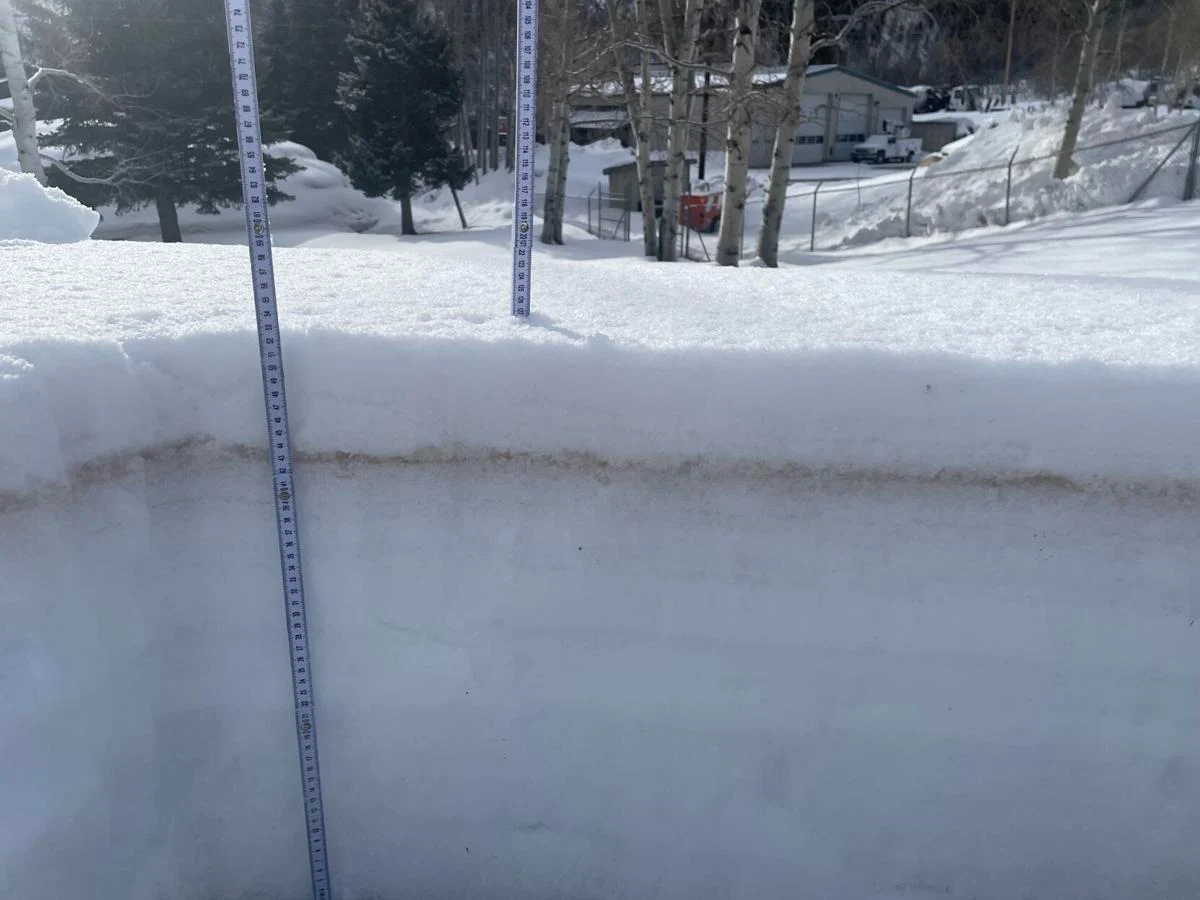
Hunter dug into the snow at the city’s water campus and took photos of the dust layer on Mar. 12.
“It’s a pretty nasty dust layer,” Hunter said.
Researchers could get a better idea of local dust levels starting in April, when the Airborne Snow Observatories begins its second-ever round of aerial snowpack surveys in the Roaring Fork River basin.
During survey flights, ASO uses a pair of imaging spectrometers to measure the watershed snowpack’s “albedo,” or the amount of sunlight that reflects off the snow’s surface. Typically, clean snow reflects at least 90% of the visible sunlight that hits its surface. Last April, that percentage for some dusty snow in the watershed dropped as low as 55%, meaning some dusty snow was absorbing 40% more sunlight than clean snow.
So far, Hunter said snowfall has mostly kept the dust layer hidden from the surface of undisturbed snow this spring. If the snow stays hidden, the spectrometers will not detect the dust as clearly. Still, Deems said there is time for that snow cover to dissipate.
“We don’t know what will happen between now and then, but that dust layer could easily be on the snow surface by that time,” Deems said.