
ROARING FORK BROADCASTING COMPANY



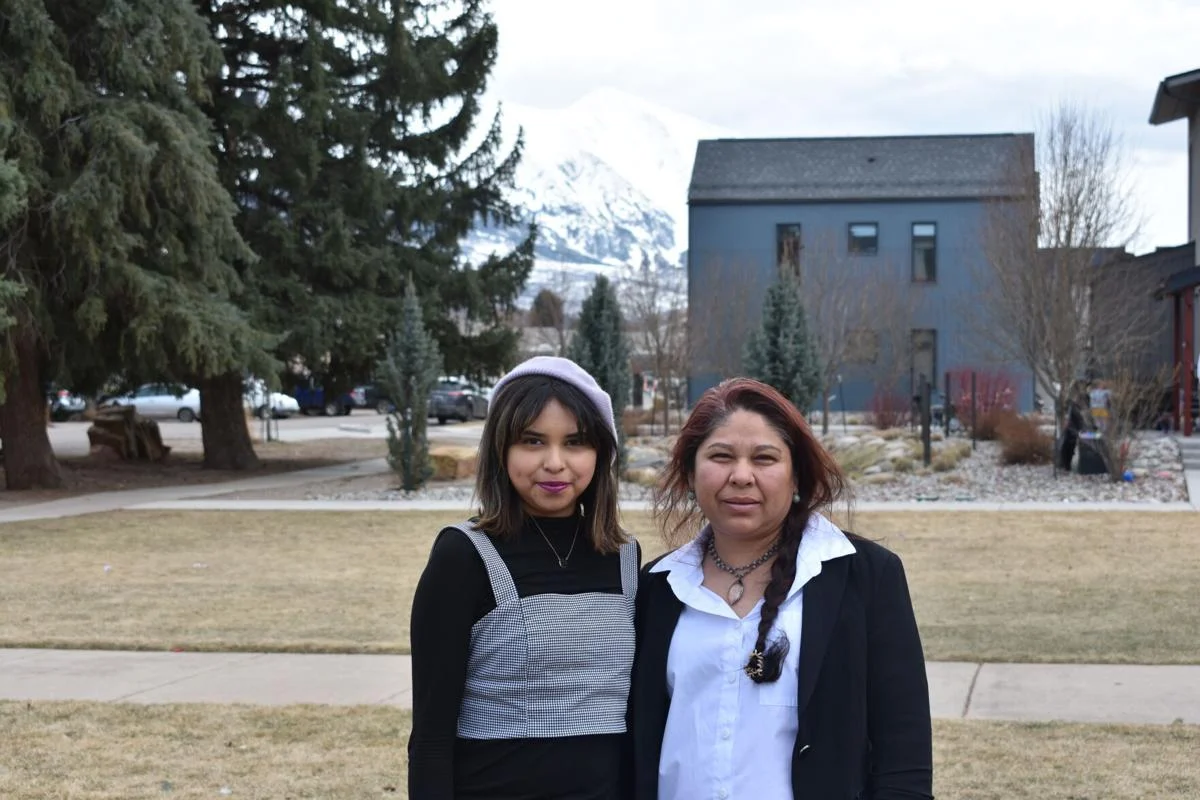
Laura Segura lost her housing in Aspen in 2006. At the time, she was 15 days from giving birth to her daughter. After scrambling to find shelter, Segura moved from one housing arrangement to another, often working two or three jobs to support her children. In the meantime, addictions, mental disabilities and physical abuse blew through her many homes.
Today, her family is scarred but secure. “I did it. I don’t know how, but I did it,” Segura said in an interview. Segura’s comments have been translated from Spanish by the Aspen Daily News.
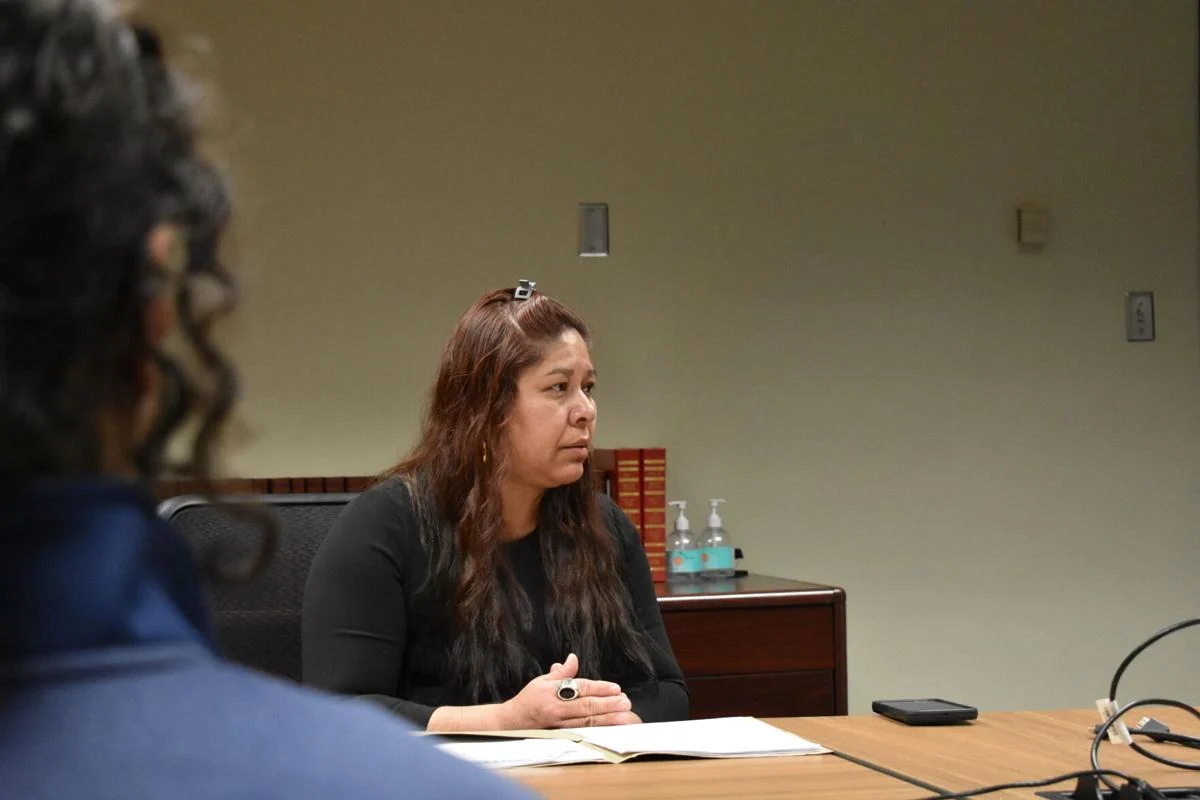
Segura’s story is well-worn with use, and yet it summons fresh tears every time she tells it. Frustrated with the instability of her children’s lives, and even with some of her own choices as a mother, Segura uses her experiences to advocate political change on issues ranging from mental and physical health to education and immigrant rights. In addition to advocacy with Roaring Fork Valley organizations, Segura visits the state capitol around three times a year to tell her story to legislators and press them on issues she considers important.
Now, when she speaks about her daughter born into a maelstrom of uncertainties, she can point to the result. Laura Gonzalez, Segura’s 17-year-old daughter, attends almost all of her mother’s lobbying efforts with her, and her dream is to become a legislator herself.
Segura first came to the United States from Mexico City when she was 16, leaving much of her all-male family behind. At the time, she was pregnant with her first son, Fritz. In the next two-and-a-half decades, she would face moments when she was unsure whether she or her family would survive.
Segura gave birth to Fritz and her second son, Cesar, in California. She and the boys then moved to Aspen in 2000 after her then-husband, father of both boys, found work there. At the time, Segura said her marriage was already under strain, held together by a mutual desire to be present for their sons.
Shortly after Segura arrived in Aspen, she began working full-time. Segura worked as a babysitter for several Aspen families, adding to her husband’s income to support their family.
“I had work constantly, seven days per week. It was one family to another, and I didn’t have time to care for (my youngest son),” Segura said.
At the same time, Segura said she was financially supporting extended uncles and other family members who came to live in their apartment with them. Segura said she invited one of these family members to help with child care.
“I was the one that sustained the house. I paid for everything,” Segura said.
Segura said conflicts in the crowded apartment eventually led to a “very intense physical fight,” traumatizing her sons.
“My son Cesar wanted to talk to the police and we didn’t. We stopped. We told him, ‘No, everything’s going to be OK,’” Segura said. She said that at the time, she and her husband were undocumented and feared deportation if police became involved.
Eventually, Segura and her husband found a housing arrangement through her husband’s employment at an Aspen hotel that allowed the immediate family to live together without other relatives — but the fights between her and her husband continued.
“The fights were because I was putting the kids in programs. At that time (between 1996 and 2000), there weren’t scholarships or grants to go to Aspen Valley Ski Club, which cost around $5,000,” Segura said.
To afford educational programs for her sons, Segura said she sometimes worked more than 18 hours per day. “I brought that hunger of wanting to give more to my children.”
At the same time, Segura began finding opportunities for herself, including taking educational classes at the Aspen Institute on cardiovascular health (Segura said heart problems ran in her family) and courses by the Aspen-based nonprofit Response on domestic violence and sexual abuse.
Continuing tensions over child care, home life and finances progressed until she said learned that her husband had a new partner. The couple then began divorce proceedings.
With the divorce, Segura lost her ability to live in their apartment — the unit was provided through her husband’s employer and he wanted his new partner to move in with him. Simultaneously, Segura discovered she was pregnant with another child. Though her husband encouraged her to abort the pregnancy, she said the impacts of two previous abortions on her physical and mental health made her reluctant. She decided to keep the child. So in the summer of 2000, Segura found herself facing homelessness with a baby on the way.
Looking back on those years now, Segura says she is overwhelmed to think that she and her children survived them.
“The feeling, more than pain, is gratitude. Looking back and saying here it is, this is the result. We are all OK, we are healthy, we are strong, we are together. Wow,” Segura said.
The story is now part of her efforts to change children’s lives for the better through activism, organizing, and advocacy. Segura is not working but she plans start a consulting business in which she will gather advisors from different professions to help teach children the skills they need to become community leaders.
As she was working and striving to care for children, Segura was also developing her love of advocacy and activism. She began her first advocacy effort in 2005, when she said she pushed to expand Aspen Valley Ski Club programs and make them more accessible for low-income children. After that, she continued engaging with local nonprofits on a range of efforts in the valley, ultimately working over two years as a full-time employee at the Colorado Immigrant Rights Coalition ending in 2023.
Segura has also been active in advocacy at the state level. Since first attending a citizen lobbying session at the state capitol with Denver-based organization Colorado Blueprint to End Hunger in 2019, Segura has consistently returned to Denver with numerous other organizations, and legislators now embrace her with familiarity when she walks into their offices.
Segura ultimately found free-market housing in Woody Creek where she could raise her new daughter, but her life there quickly became unstable. She worked multiple jobs, often requiring her to leave her newborn daughter in Cesar’s care. Sometimes, Segura would finish work after public bus service to Woody Creek had ended for the night, leaving her to sleep unsheltered in parking lots until morning bus service began. She would arrive home in the early hours, check in on her sleeping children, sleep a little herself, and then leave again.
“Those years were very, very difficult and very cruel for my children,” Segura said.
On one occasion, Segura said Cesar opened the door to their Woody Creek mobile home because he thought he heard her knocking on the door. When he looked outside, he came face to face with a bear that had been pawing at the door.
“I talked to him on the phone. He said he closed the door, turned out the lights and opened (the boiler room door) and said, ‘If the bear comes in, I’m going in here with my sister,’” Segura said.
Segura later moved with her children to units in Aspen Village, Carbondale and Glenwood. She took other partners, some of whom brought alcoholism and more physical abuse into her life. She continued working with local families. Fritz continued helping his mother and siblings whenever he could.
Cesar continued caring for his younger sister, except for a year when he went to live in California with a relative. But as he aged into adolescence, Segura said her son started showing signs of behavioral problems. In 2015, Cesar was diagnosed with schizophrenia and bipolar disorder. In 2022, he went to live at a mental health facility in Pueblo.
“I used to say he was just a rebellious kid like all teenagers,” Segura said. “He was starting to show symptoms of his disease and I didn’t have the time to stay home and say ‘something is going on with my child.’”
Having lost her brother for reasons she could hardly understand, Segura’s daughter, Laura, began to experience depression and went on antidepressants. She moved to Rifle in 2020 to live with Fritz and attend Rifle High School, where she could access its International Baccalaureate curriculum. With Laura in Fritz’s care, Segura was flexible to leave the valley at any time and tend to Cesar’s needs. She now lives with her current husband in El Jebel.
Segura’s daughter has joined her for lobbying sessions from the beginning, and now she is a full-throated participant. When Segura tells legislators the story of her struggle to remain housed with a newborn baby, she can point across the table to her adolescent daughter, who is there also to speak her mind.
Laura Gonzalez, like her mother, is the only daughter in a family of boys. She has never met her father, her mother was often too busy to be at home, and her brother who cared for her is now far away.
Despite the whirlwind that blew around her as a child, Gonzalez said she had never truly heard her mother’s story before they started lobbying together. When Segura finished recounting her story in a joint interview with the Aspen Daily News, Gonzalez said she had never heard the story in so much detail before. Being the youngest, Gonzalez said she was always the last to know what was happening in her family. Even when Cesar left home for the facility in Pueblo, Gonzalez said she wasn’t certain what was going on. Cesar was the family member with whom she had the closest relationship, and one day he was gone.
“Everybody called me the crybaby because I would just cry. I didn't even know what I was crying for but I just knew that I needed to cry,” Gonzalez said.
Whether she knew her mother’s story or not, she said it has still become part of her story. Gonzalez faced bullying in school, which she attributes to her mother’s reputation as an advocate. Her brother’s departure was part of what led to her mental health challenges during her sophomore year of high school. Those challenges have since caused her to struggle in her classes.
Now older than Segura was when she first became an immigrant and a mother, Gonzalez says she is beginning to find a sense of who she is. In part, she said learning the stories of her family has redefined her self-perception.
“I have really found out who I am as a person even if I don't know my mom's life. I've kind of stopped asking questions about her life and started looking forward in my life and how I take my experiences and how I want to grow them,” Gonzalez said.
Though different from her mother, Gonzalez is also active in her community. She is part of her high school’s student council and participates in mock trial programs. This winter, she led an effort to push her student council to begin announcing and celebrating the Day of the Dead at Rifle High School. She said she used close relationships with her teachers and school administrators to achieve that goal.
A junior, Gonzalez is preparing to apply for college. After university, she said she will do everything she can to achieve her dream of becoming a state legislator. As a legislator, she said she would boost her community’s voice in the state capitol and try to increase the available social resources in Rifle.
“I just feel like our community is not represented in the way that we need it to be,” Gonzalez said. “I'm just tired of always hearing a lot of complaining, but nobody stepping forward.”
Nonetheless, Gonzalez said in a later interview that she has sometimes chafed under her mother’s constant pushes to be more outgoing.
For her part, Segura said she has not always made the right decisions in raising her children. Having grown up with all-male siblings and raised two sons before her daughter, she said she was ill-equipped to raise a young woman. She said she was able to provide Gonzalez with more opportunities than she could provide for her sons, but Segura’s focus on enrichment and advocacy, both for herself and her children, has not come without consequences.
Sometimes, Segura’s advocacy work has torn her from her children. Last year, when Segura was attending an event as an employee at Colorado Immigrant Rights Coalition, Gonzalez and a friend called the police because Gonzalez was experiencing intense suicidal thoughts. At the time, there was no child care infrastructure available at the conference to supervise Gonzalez, and Segura had to manage the situation on her own.
But while some of these consequences may stem from her own decisions, Segura said she sees structural issues in society that exacerbated her parenting challenges. Enrichment programs for children should be more affordable and major conferences with parent-aged professionals who must travel far from home should provide child care, she said (Conservation Colorado provided lodging and child care for attendees at their lobby day).
“I was working as an advocacy job, and my needs as an advocate for the community were not being covered,” Segura said.
In the end, Segura believes she didn’t always make the right decisions, but she made the best decisions she could as a young and single mother in a new country.
When asked what her ideal world would look like, Segura said it would be a place where children would be free and adults would be responsible. Too often, she said she has seen children taking on burdens created by the irresponsibilities of their parents.
“We think of young people as pained rebels, which is not really the truth. We make those things for them. We are not providing a safe space for them,” Segura said.
Segura said she was hardly prepared to offer that safe space to her own children given her background and circumstances. Coming from a large and sometimes abusive family, Segura said she never knew what it really meant to be a little girl until she witnessed her own daughter’s childhood.
“I didn’t have that childhood. I had to grow up very fast in my family because my mother had so many children.” Segura said. “With my sons, I was learning to be a mother, but with my daughter, I was also learning how to be a little girl.”
On March 3, both Lauras attended a public lobby day hosted by the Denver-based environmental organization Conservation Colorado. Attendees, mostly concerned citizens from across the state, gathered in the basement of the First Baptist Church next to the state capitol for breakfast, lunch and an educational session on lobbying. Among the attendees from the Roaring Fork Valley was Roaring Fork School District Board Vice President Jasmin Ramirez.
Conservation Colorado staff told attendees that for their lobbying efforts to be successful, they should tell legislators their “stories of self.”
“Your story is the most important thing for making change,” Conservation Colorado staff member Patricia Ferrero told the crowd. Ferrero is the leadership development manager for Conservation Colorado’s Protégete program.
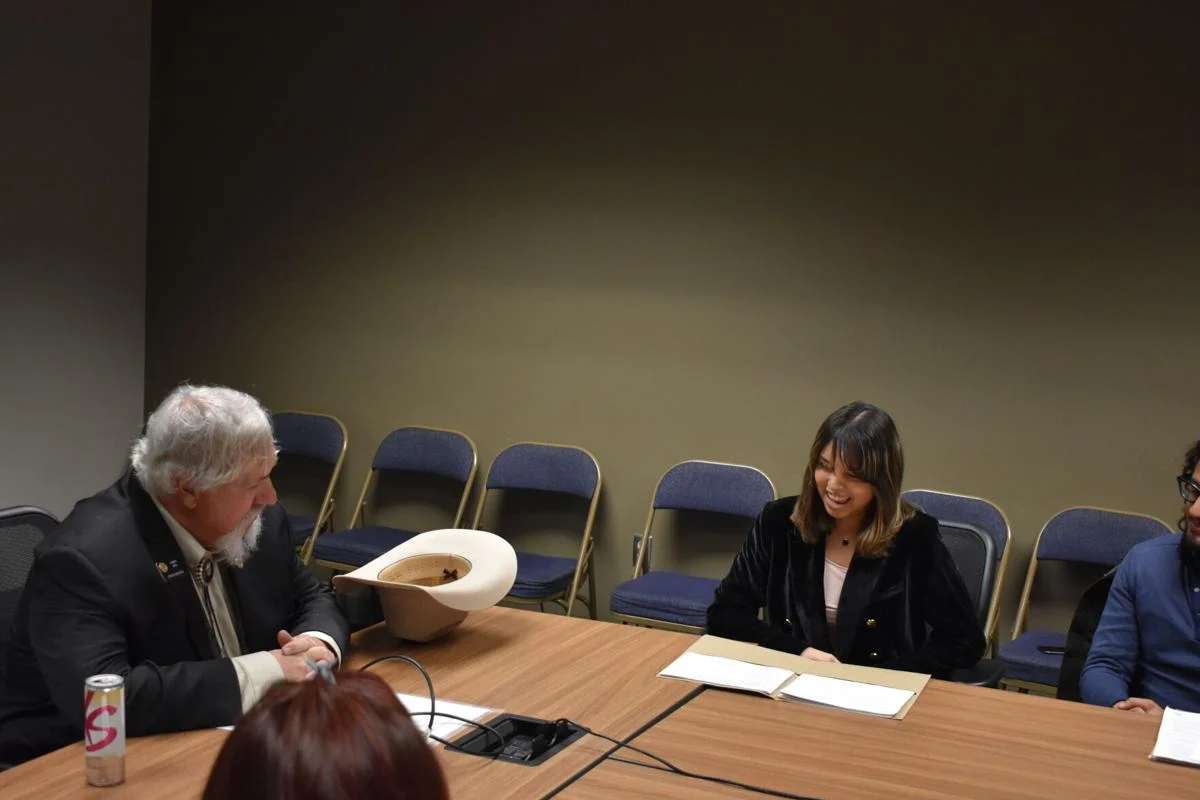
Segura and Gonzalez met with three state legislators that day, including State Rep. Elizabeth Velasco, D-Glenwood Springs, and State Sen. Perry Will, R-New Castle. Segura repeated her story to each legislator. At first, she ventured a telling in English. As the day wore on, she began utilizing a translator so she could tell the story in Spanish. Among the bills Conservation Colorado promoted that day was State House Bill 1098, which prohibits a landlord from evicting a residential tenant without cause.
Gonzalez would speak shortly after her mother, though she made her own arguments. Gonzalez advocated for a series of three bills (House Bill 1330 and Senate bills 165 and 166) meant to improve air quality in Colorado, pointing to the negative health impacts of air pollution.
At the end of the day, Gonzalez stepped into the office of Rep. Tim Hernandez, D-Denver. After a brief conversation, she arranged to shadow the representative during his work day on Wednesday. Walking out of the state capitol, Gonzalez said she wishes more students her age would seek the change they want to see in the world.
“We need more stories out there,” Gonzalez said. In particular, she said young people need to share their perspectives on how issues affecting their parents have also affected them. “A mom can say one thing about a daughter, but it’s not the daughter’s story.”