
ROARING FORK BROADCASTING COMPANY



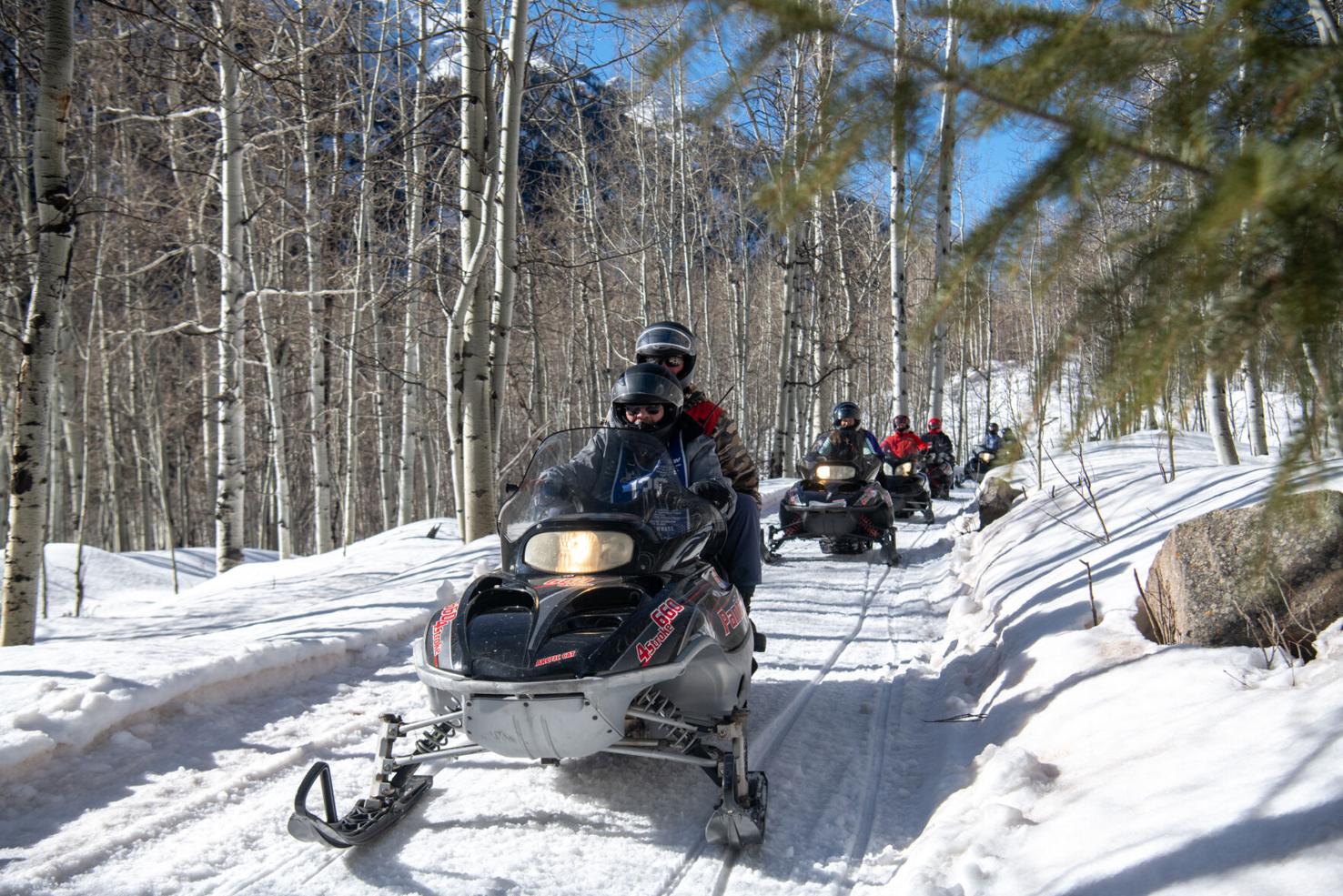
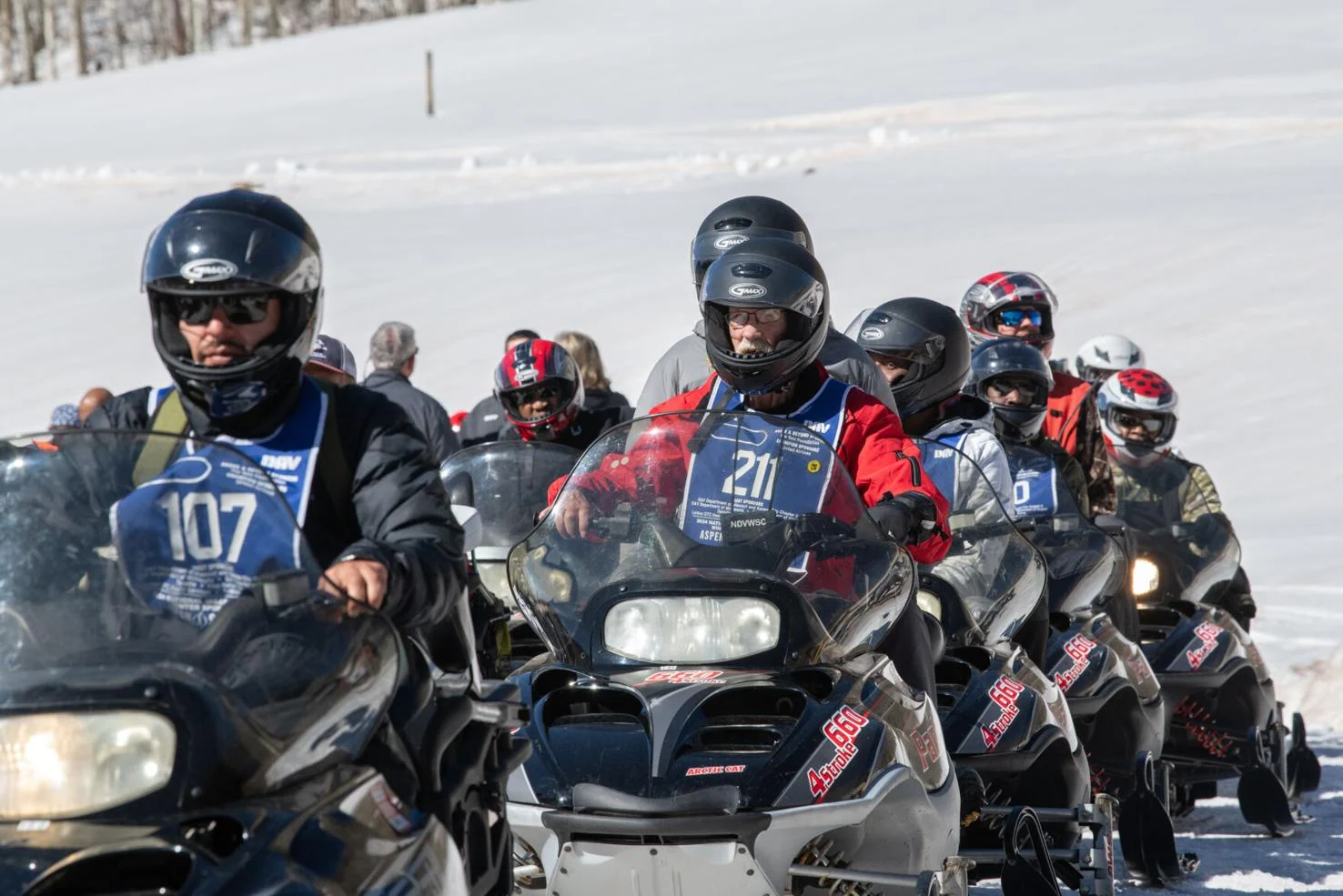
He was stuck in the back of a line of about 10 snowmobiles due to a timid driver right in front of him. But he stayed calm and goosed the throttle when there was a clear passing opportunity on Maroon Creek Road. His sled threw a rooster tail as its track dug into the soft snow.
“The rest of the group was nowhere in sight when I started out and I just kept going,” Bailey said. “It was good to have the speed and the space.”
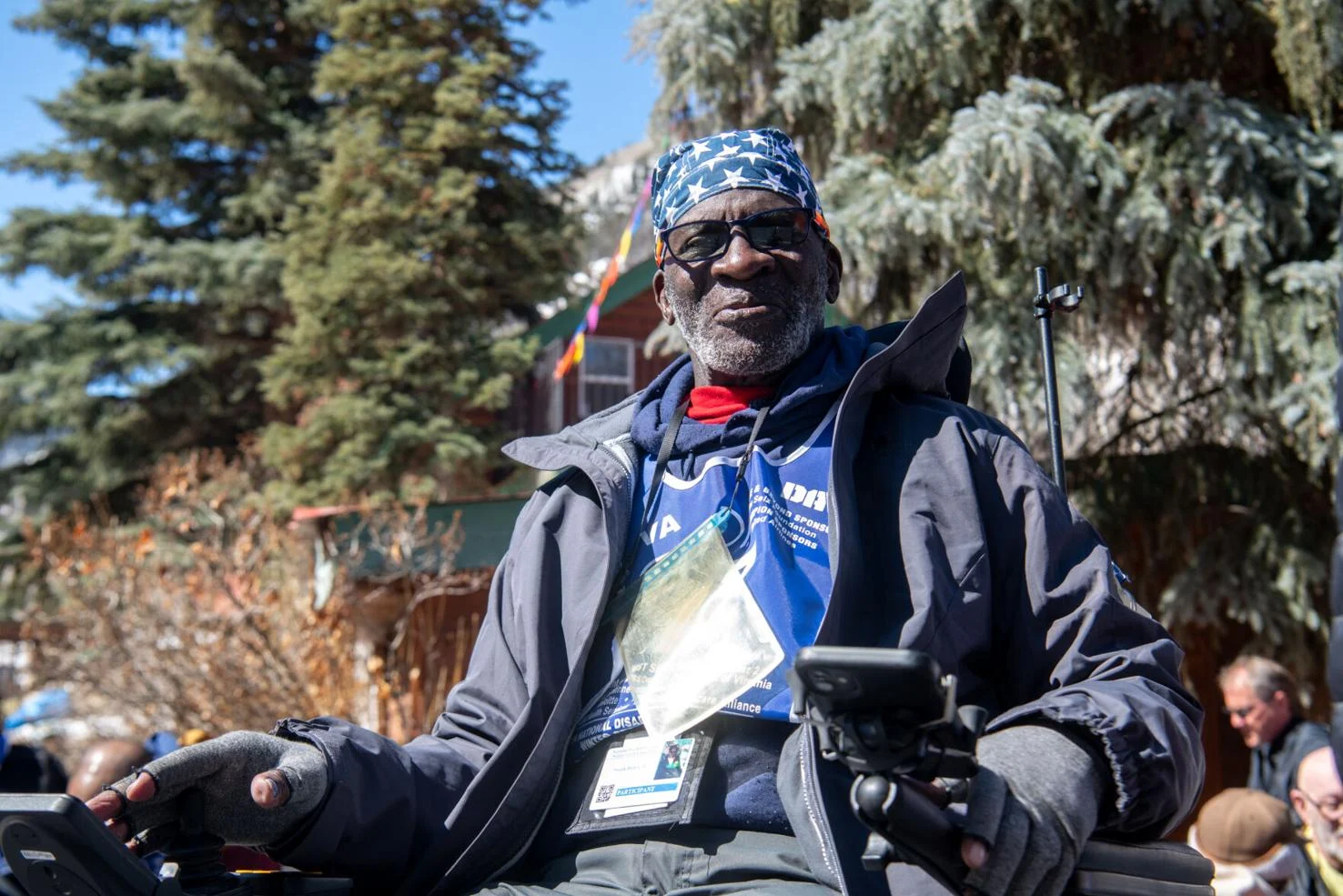
Bailey is one of nearly 400 veterans attending the 38th annual National Disabled Veterans Winter Sports Clinic, which is centered in Snowmass Village but holds activities throughout the Roaring Fork Valley. The participants have spinal cord injuries, traumatic brain injuries, visual impairments, amputations or other severe disabilities. The five-day event lets veterans participate in activities of their choice among alpine skiing, cross-country skiing, sled hockey, rock wall climbing, fly fishing, curling and snowmobiling.
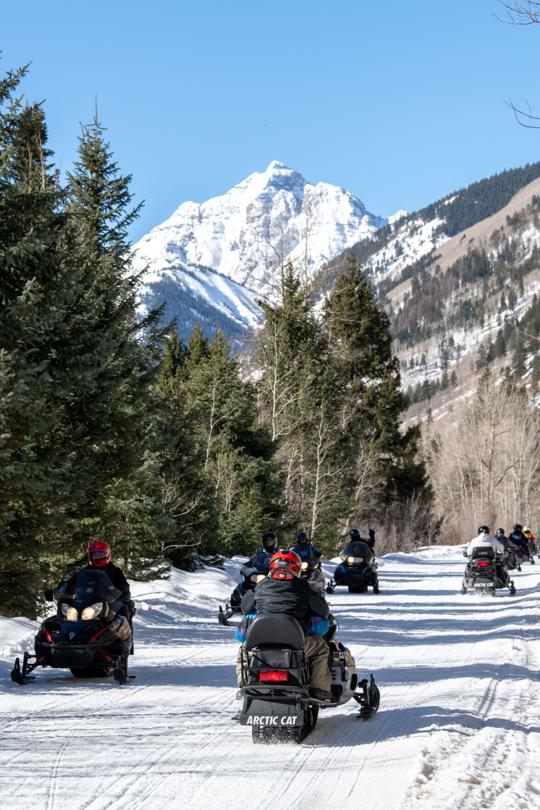
“I’m able to open this up and fly with it,” he said while sitting on a parked snowmobile in the meadow where veterans and volunteers congregated for a hot chocolate break. “You have total control of what you’re doing. You sit up straight, hold on and press that throttle. You have to be ready for the dips. I think that’s the most important part, flying across that ice the way we do.”
T Lazy 7 Ranch has hosted the veterans for 28 years, as near as anybody can remember. After a long season of guiding rides, the veterans’ event is a great way for the staff to conclude the winter, said ranch owner Rick Deane. He recalled that a friend of his who was involved in helping operate the event in the mid-1990s asked, “Is there anything we can do with snowmobiles? I said, ‘Yeah, we’ll make it happen,’” Deane said.
They winged it that first year, he said, but quickly got dialed in. About 40 veterans were riding on Thursday. Equal numbers were there on Wednesday, Friday and Saturday.
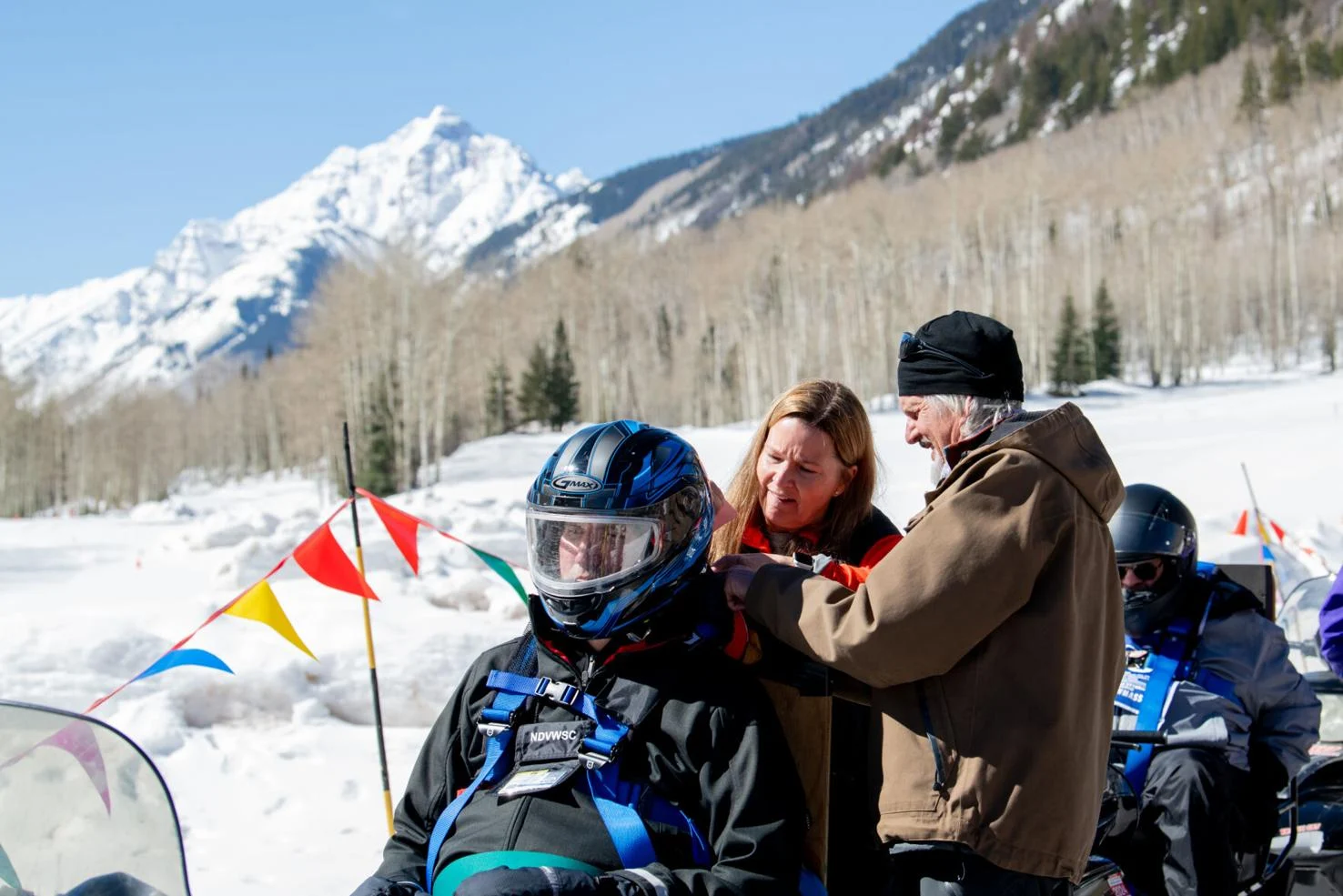
About 20 employees of the ranch along with about as many volunteers from the community help out by fitting the veterans with helmets, giving quick lessons on snowmobile operations, guiding the tours, doing troubleshooting as needed and providing hot chocolate or apple cider during a break. The majority of the veterans drive themselves. Those with visual impairments ride with a guide. T Lazy 7 guides and some volunteers lead the strings of snowmobiles and one guide is last in line to make sure all goes well.
Deane said the reaction of the veterans helps put life into perspective. They are dealing with severe challenges yet are thankful for the assistance in getting out and enjoying the Colorado mountains.
“They are so appreciative,” he said. “You see these guys grinning from ear to ear.”
Dan Grady, a U.S. Air Force veteran from 1988 to 1998, has attended the winter sports clinic for four years and makes sure he signs up for snowmobiling.
“I have a lot of history on this ranch,” Grady said.
His best friend from high school in Philadelphia lived and worked on the ranch for 10 years. Grady came out and lived at T Lazy 7 for a couple of summers. He’s got a good rapport with ranch staff. He is familiar with many of them; they greet him by name.
“The best part of this event is the people who live on the ranch, from Rick Deane on down,” he said. “Everybody makes this event happen.”
“Every time I come, you hear veterans say it’s life-changing,” he said. “And a lot of times when that gets said, people don’t think they really mean it, but they really mean it. This event is life-changing for people. They come here. They think they can’t do anything anymore, and they come and they go snowmobiling and they go skiing and whatever else — all these things that we can still do. That’s the benefit of it. You have a life to live still and you can be active and happy doing it. You’re not stuck on your bed. It’s a lot better than being in the hospital. That’s for darn sure.”
He noted that there are roughly 400 veterans, 1,000 volunteers and numerous staff from the U.S. Department of Veterans Affairs and the Disabled American Veterans organization — maybe 2,000 people in total involved.
“You never see a frown all week,” Grady said. “Everybody is smiling the whole week. That’s my favorite thing about this program.”
In a separate conversation, Bailey also touted the invaluable opportunity the clinic provides. He had a spinal cord injury that made him, in medical terms, an incomplete tetraplegic. The movement of his left side is impaired, but he stays busy back at home in Arizona with horseback riding, going to the gym and cruising rocky terrain in his all-terrain wheelchair.
“I don’t shy away from doing it, just as you see with all these guys. Look at ’em,” Bailey said. “There’s guys with no limbs out here. Do we let our disability really become a disability rather than just understanding it is a disabled function and we’re working on it?”
For him and many others, the answer is they won’t let a disability hold them back. But Bailey lamented that more than 20 military veterans die of suicide per day on average. The value of the winter sports clinic is “it keeps them going,” he said.
“The camaraderie is seeing people another year. Unfortunately, we miss faces and we miss them because they passed away. Their disability might have caused them to pass away, the strain of it. But you see everyone out here smiling. You don’t see anyone wincing from the pain they’re going through, and believe me, these guys have pain,” Bailey said.
“If you get into a sports device and you’re not supported well, you’re not going to have a good time,” said Russell, a physical therapist from Pittsburgh.
Hamelin is an occupational therapist who previously worked for the Veterans Administration, where she became familiar with the winter sports clinic. She continued her affiliation with the event as a volunteer.
“This is something I value so much and I see so much benefit in that I’ve continued with it. I come as a volunteer,” she said.
She marvels at the bravery and the sacrifice that abounds in the veterans’ stories.
“There are hidden heroes among us,” Hameline said. “We have a veteran here who is the sole survivor of a Blackhawk training crash. We have people here who were injured while fighting in Afghanistan.”
Some of the older veterans served in Vietnam, she noted. “They have stories that we don’t know, so we can’t make assumptions,” she said.
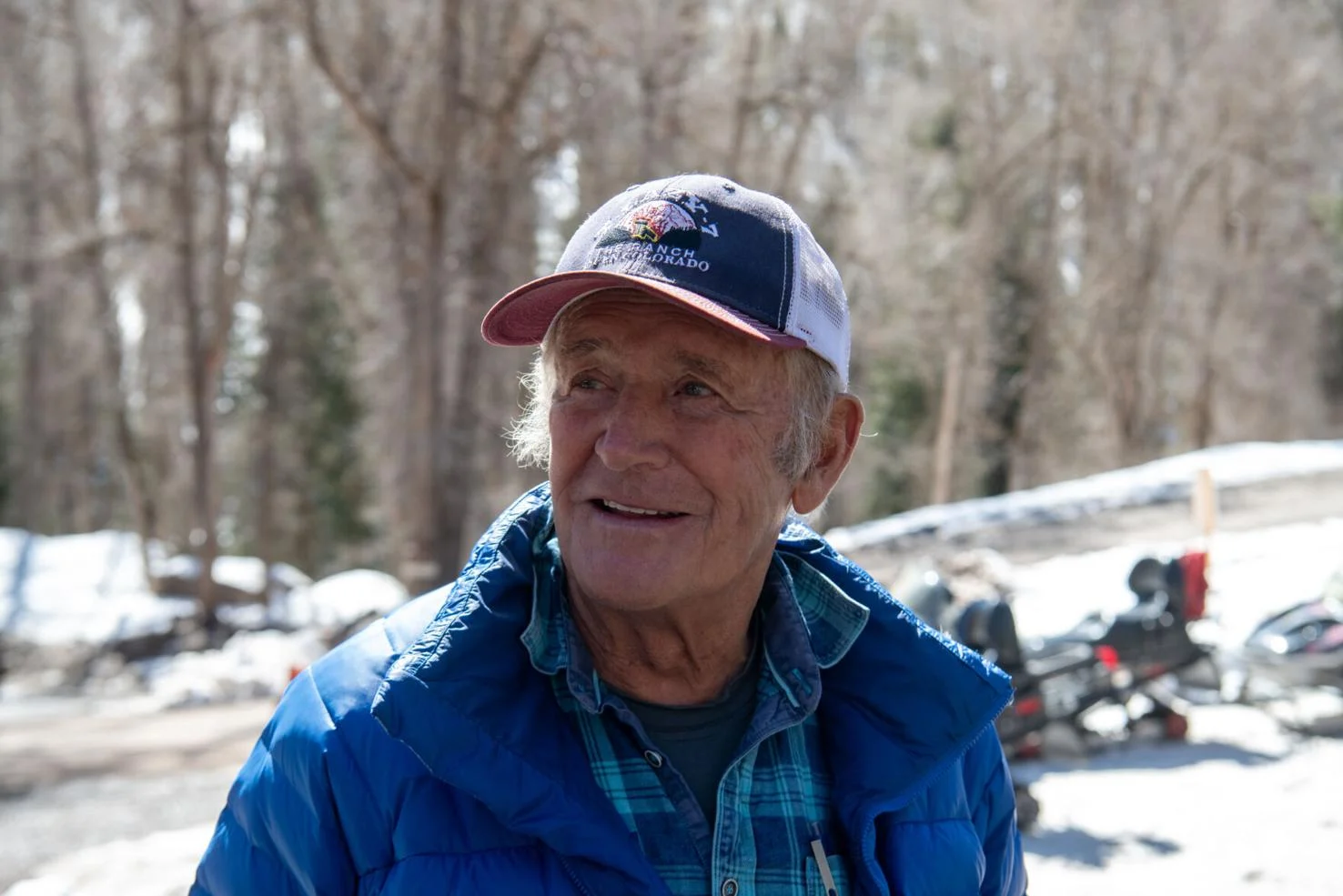
After the snowmobiling session was finished on Thursday, John Schilling, a U.S. Navy veteran from Columbus, Ohio, was sitting in the sun waiting for a bus ride back to Snowmass Village. Schilling received special recognition at the opening ceremony of the clinic as the oldest participant this year at age 92.
“They just clapped and carried on,” said his daughter and caregiver, Barbara. John was given a special challenge coin from the U.S. Department of Veterans Affairs.
“He’s supposed to carry it with him at all times,” Barbara said. “If he’s ever at a bar and somebody asks to see this and he doesn’t have it, he has to buy the round. So he’s been carrying it with him everywhere he goes.”
John is legally blind but he can see enough that he was impressed by the natural beauty of the Maroon Creek Valley while on his snowmobile ride. The density of the aspen trees was impressive, he said. Barbara drove him while on her first time on a snowmobile.
As for the event on the whole, John said he will be back if invited again.
“Last year when I came it was so great that I committed to myself that as long as I’m physically able to come here, I’m coming every year,” Grady said. “So this is my fourth of maybe 50 to come. We’ll see.”