
ROARING FORK BROADCASTING COMPANY



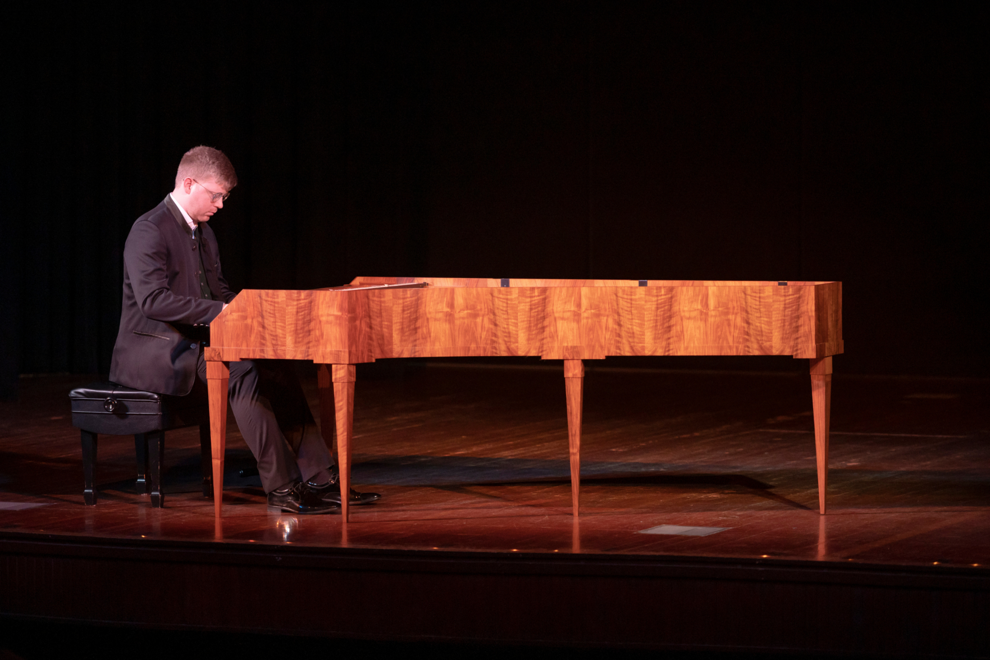
To say Daniel Adam Maltz is “old school” would be an understatement.
The 29-year-old pianist from Vienna inhabits the musical world of the late 18th and early 19th centuries. He is considered the foremost performer in the world of the fortepiano, the instrument that Viennese classical masters Wolfgang Amadeus Mozart, Ludwig van Beethoven and Thomas Haydn composed and played.
Maltz is currently on a 70-city U.S. tour, which includes performances and lectures at 20 universities. He will be performing tonight at The Arts Center at Willits for an intimate evening of classical piano.
Aside from the music, the event includes a supper club featuring the cuisine of guest chefs Julia and Allen Domingos. Dinner will be served to 50 guests at 6 p.m. The concert starts at 8 p.m. Visit tacaw.org for information on tickets.
“I am excited to have Daniel Adam Maltz at TACAW,” said Kendall Smith, director of programming at TACAW. “We rarely get to hear the works of Beethoven, Mozart and Haydn on a Viennese fortepiano — the instrument on which these works were composed. Daniel's expertise and eagerness to share classic Viennese culture will make for a terrific evening and continue TACAW's mission to create unique and inspiring experiences for the community.”
The fortepiano is smaller than a classical piano. It has 61 keys as opposed to the 88 keys on a Steinway. A concert piano weighs over 1,000 pounds, while a fortepiano weighs roughly 200, allowing Maltz to travel with it on the road.
“The fortepiano is a very different instrument,” Maltz said in a phone interview. “It is much more intimate and subtle. The touch is 10 times lighter than the modern piano. It doesn’t have pedals like a piano, but rather has two knee levers, which opens up more expressive capabilities. The fortepiano has a delicate sound because 2,000-person concert halls didn’t exist back in the 18th century. It was meant to be played in smaller, more intimate rooms. Because the instruments are so different you have to change your whole expression of what music means.”
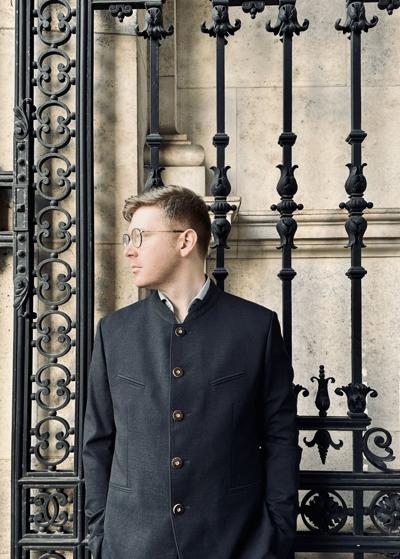
Maltz was born in South Carolina. His father is a composer and his mother is a cello player. He grew up immersed in the sounds of classical music and it was clear from a young age he would grow up to be a classical pianist. Upon graduating high school, Maltz moved to Australia to study piano and got his first taste as a touring musician.
He made his debut at Carnegie Hall’s Weill Music Institute at age 22. He studied historical performance at the Royal Academy of Music in London and the Universität für Musik und darstellende Kunst in Vienna.
“I moved to Vienna because Haydn, Mozart and Beethoven all lived there,” Maltz said. “I wanted to walk the streets that they walked, immerse myself in the culture and align myself with their ethos so I could be a vessel to bring their music to the world.”
Viennese classicism harkened back to the ancient ideals of balance and harmony during the Age of Enlightenment. It embraced the concept that humanity can explore the world through their own reason instead of that which was imposed upon them by the church.
The pursuit of knowledge was encouraged. The arts flourished. It was a period of excitement and passion.
Vienna enjoyed a cultural renaissance in the 18th century because it was the center of the Habsburg Monarchy, a powerful and wealthy monarchy in Europe. Aristocrats flocked there to be near the power and the wealth of the Austrian empire. Those aristocrats in turn ensured that the most talented musicians in Europe came to Vienna to entertain them. It subsequently became the center of classical music and remains so until this day.
After moving to Vienna, Maltz continued his career as a concert pianist until one day his partner Renee suggested he take a class in historical keyboards and it was there that he discovered the fortepiano.
“The second I started playing on the fortepiano, it just came to life in an extraordinary way,” Maltz said. “I understood the music in a way I couldn’t when I played the modern piano. I knew that was how I was going to play the piano moving forward. I knew my life was never going to be the same again.”
Maltz was 24 when he began his love affair with the fortepiano and he has spent the last five years dedicating his life to mastering the instrument. The fortepiano is not just used as a solo instrument. Hayden led symphonies, operas and orchestras from the keyboard. Maltz also has had the opportunity to lead an orchestra from behind the keys.
“I’ve had the pleasure to lead orchestras and it’s one of my absolute favorite things to do. Leading the orchestra as you play is thrilling,” he said.
Haydn is the least well-known of the three aforementioned Austrian composers of the late 18th and early 19th centuries, but Maltz has a special spot in his heart for him.
“Haydn’s music is just fantastic,” Maltz said.”He is credited with being the father of the symphony and the string quartet. I will perform two of his pieces tonight as well as Mozart and Beethoven.”
Improvisation in classical music was encouraged during this era. Eventually, classical music would become more rigid and music was expected to be played exactly as composed. Maltz honors the improvisational approach of the late 18th century players, even as he keeps his playing mostly to script.
“On top of the score there was a certain amount of freedom,” Maltz said.”Why would you play the same thing twice? That’s not how we communicate as human beings.”
When asked what he hopes people will take away from one of his concerts, Maltz said, “Classical era music has this stigma as being unapproachable. I hope to show that’s not the case. These were living, breathing people with deep emotions and their music is still here for us to hear today. I see myself as an evangelist for these instruments and the classical style. My concerts offer a chance to hear something very unique, something you might never hear again. I’m so grateful there’s so much interest in what I do. Whether you like history or classical music, there’s something here for everyone.”