
ROARING FORK BROADCASTING COMPANY



Tyler Christoff, the city of Aspen’s new public works director, says a large part of his job is to unearth and maintain the work of his predecessors.
“While sometimes hidden from daily view, our stewardship of the infrastructure builds upon the foresight of past Aspenites,” Christoff said in a news release.
Speaking in an interview, Christoff held that former government officials have typically left the city with blessings. He counts Aspen’s affordable housing system, transit system and reliance on renewable energy among them. Occasionally, they have left difficult legacies, like Main Street’s unusually thin asphalt. Regardless, updating Aspen’s existing infrastructure is busy work, and the city is as busy as ever.
When he assumed his new position on May 6, Christoff became responsible for a press of concurrent projects addressing Aspen’s aging infrastructure. Elements of the city’s electrical grid, stormwater drainage system, bridge infrastructure, buildings and street network are all hovering around the end of their useful lifetimes.
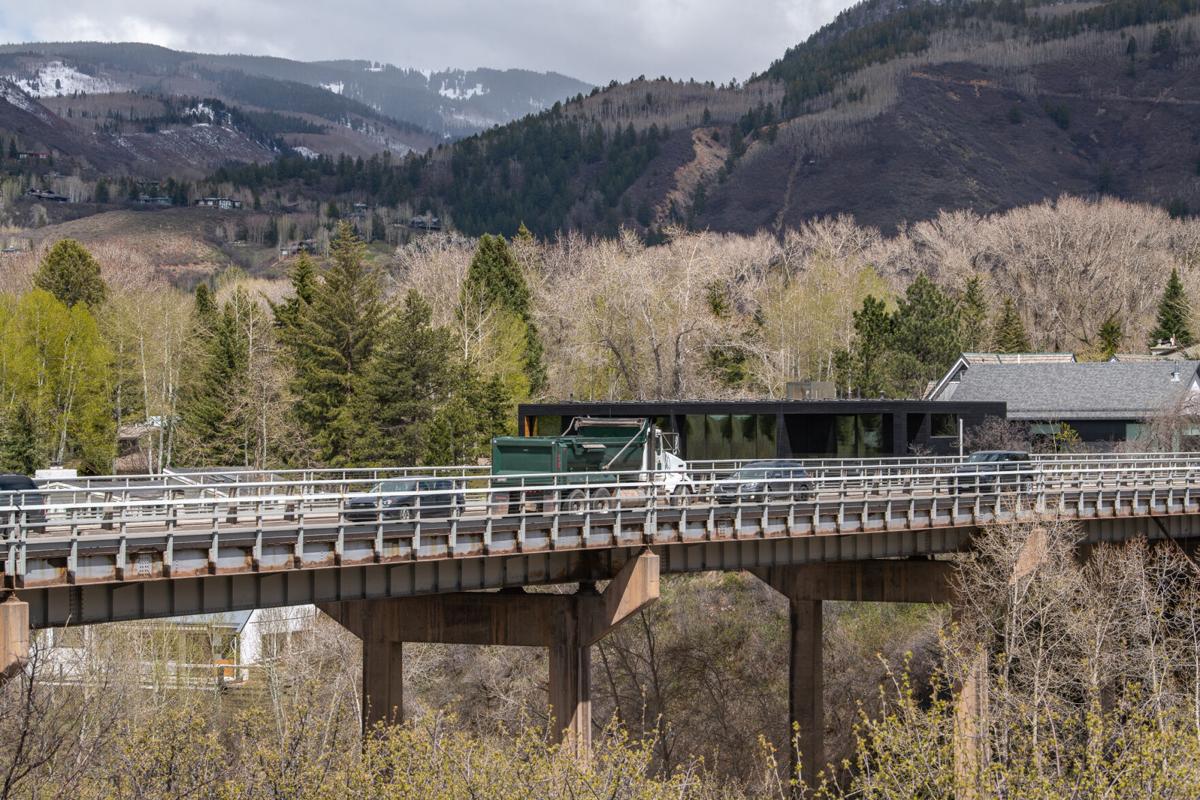
Aspen’s aging infrastructure components have a range of birthdays and lifespans. Castle Creek Bridge was built in 1961, while the city’s current electrical grid was installed in the mid-1980s. Both are now due for replacement.
Some of the city’s ongoing or upcoming infrastructure replacement projects are easy candidates for approval. For instance, the city utility’s current effort to replace its entire electrical grid has drawn little public attention.
“There's been a lot of great coordination with businesses and other city departments,” said Justin Forman, the city's utilities director. “The project is running on schedule right now. We're happy with what we’ve gotten. We have a long way to go, but it's been a great construction season so far for that particular project.”
The city is in its third year of a 15-year process of tearing out old lines and burying new ones. When the city buried the old lines, they became Aspen’s first underground electrical grid — the previous system running above ground on poles.
Forman said the new lines will have conduits making them easier to repair, but they won’t last longer than the old ones. Around four decades from now, the city will replace the grid again.
Other projects, like replacing the Castle Creek Bridge, are more controversial. The bridge, which serves as the main entrance to town, lies at the heart of sensitive discussions over highway congestion and preservation of the Marolt Open Space, a largely undeveloped meadow skirted by Highway 82 west of town. City officials and consultant engineers say the bridge, which has lasted over a decade beyond its 50-year design life, is seeing “major deterioration and corrosion of structural steel and concrete bridge components” and requires rehabilitation or replacement.
The decision of whether, and how, to replace the bridge has sticky legal and cultural ramifications. Successive city councils have contemplated a federal- and state-approved overhaul to the entrance of Aspen (which would reroute the highway through the open space). If the city builds a new bridge in line with the overhaul, it would sacrifice more of the open space, but a new bridge in the existing highway alignment could mean abandoning valuable federal funding for the project. The bridge’s deterioration is now pushing council members to finally make a move.
Jacobs Engineering, a global firm with offices in Colorado, presented the council with a range of options for how to deal with the bridge during an April 15 work session. Council members have requested more information from city staff and Jacobs before they make a decision.
The city also is involved in a strained dance over state funding regarding Main Street’s deteriorating surface. Christoff’s predecessor, Scott Miller, has said Main Street needs a “complete rebuild” given its weak asphalt surface, which now requires regular and expensive maintenance.
Because Main Street is part of Highway 82, the state is responsible for it; but city officials say the state doesn’t have funding to make the street more durable. In the meantime, the city has committed to maintaining the existing roadway, spending about $1.5 million toward maintaining Main Street in 2023, with the state contributing $213,000.
City Engineer Trish Aragon said in an interview that the street held up well this winter and likely will make it through 2024 without resurfacing work. That said, Aragon said the street likely will require more maintenance in 2025.
Aragon said the city hopes to replace the intersection between Main and Mill streets, one of the city’s busiest crossroads, with cement — a more durable surface than asphalt. Aragon and Christoff both said in interviews that Main Street has an unusual makeup, with a comparatively thin asphalt layer that gets battered with heavy use and winter weather.
In addition to these projects, the city is completely replacing its corroded stormwater drainage system and is contemplating or pursuing projects to renovate aging buildings like the former city hall (commonly known as the Armory) on South Galena Street and the “Old Power House” building on North Mill Street.
Christoff said prioritizing timelines and funding for all of these projects is a complicated but well-established process. The city manages several “asset management” systems that track infrastructure components’ physical condition, lifespan and even related community sentiment. Computer algorithms then sift through these factors and spit out priorities for when the city should address certain maintenance projects. The city builds long-term budget plans around these priorities and actively saves money in specified funds to address them.
The city recently increased revenue streams for infrastructure projects after it ran up against budget constraints in its asset management plan fund. That fund has shrunk from $47 million in 2020 to $33 million in 2024. The fund relies on city property tax revenue, which it shares with the city’s general fund.
While the city’s overall fund balance has grown by more than 50% over the last five years, Finance Director Pete Strecker has said officials still need to be judicious about scheduling and prioritizing projects, noting the recent squeeze on the asset management plan fund.
Christoff said he hopes to keep working on the city’s host of infrastructure projects for the foreseeable future. He has been working for the city for almost 20 years, and has no plans to leave.
Christoff said he also hopes to continue working with the more than 100 city professionals and thousands of community members who keep Aspen’s systems running.
“Managing assets for the community is a complex problem,” Christoff said. “It's not a one-person job. It's the whole public works team, it's myself, it's our city council and it's our community. So, do we have a huge workload? Absolutely. But just like my predecessors, that prioritization and that collaborative group work is really what allows us to address critical projects and work to make sure we’re creating a resilient future.”