
ROARING FORK BROADCASTING COMPANY



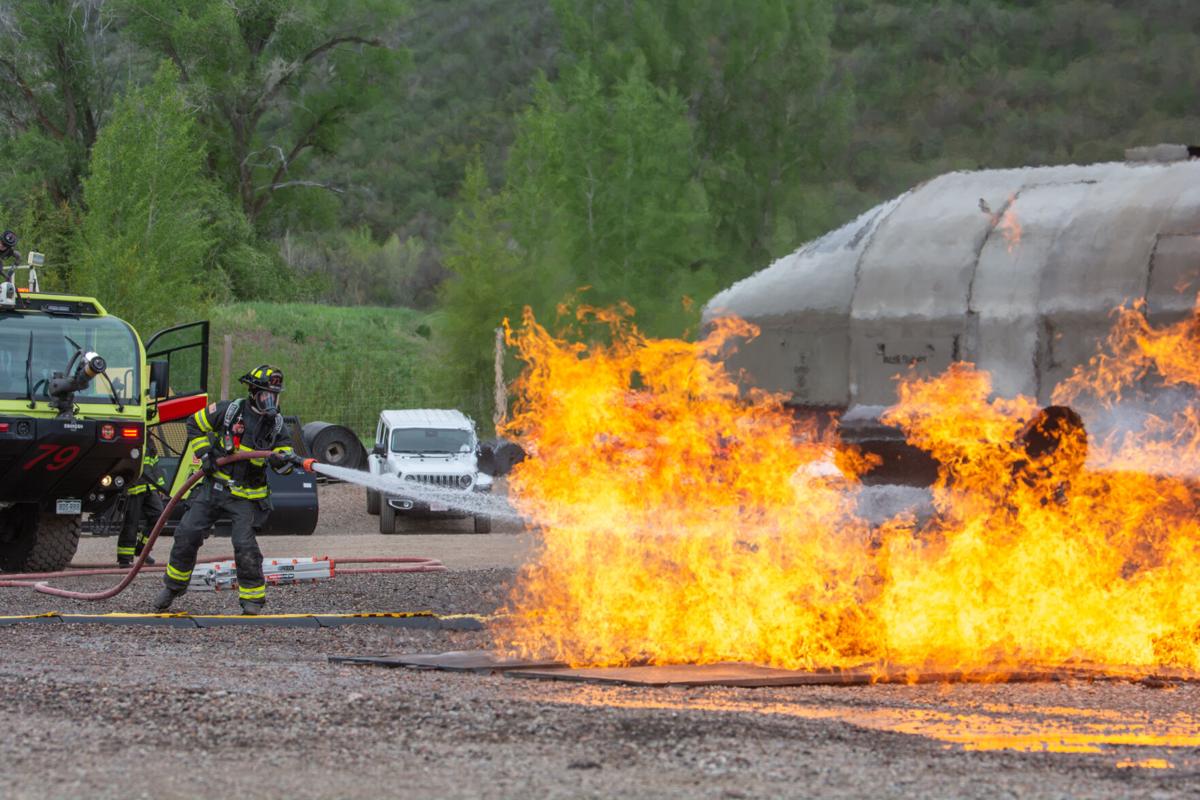
At 11 a.m. sharp Friday morning, an imaginary Cessna Citation X collided with a hypothetical CRJ-700 on the Aspen-Pitkin County Airport runway, sparking a fire in the Cessna and causing catastrophic damage to the CRJ. The fictional incident tested the triage, communication and speed capabilities of Roaring Fork Valley first responders.
The collision was only a drill, and the 46 souls in danger were a mix of crash dummies and community volunteers in costume makeup. But the local airport exercise illuminated the strengths and weaknesses of fire, medical and law enforcement personnel responding to a mass casualty incident.
The airport held its triennial full-scale exercise of an Alert 3 incident, an aircraft crash. The exercise tested the emergency protocol for the airport’s own Sardy Field Fire Department, plus a number of mutual aid partners, including Aspen Ambulance, Aspen Fire Department, Roaring Fork Fire Rescue Authority, Carbondale & Rural Fire Protection District and the Pitkin County Sheriff’s Office.
The Federal Aviation Administration-required drill is meant to test the airport’s capacity to respond to a catastrophic event, like a plane crash.
Aircraft Rescue Captain Andrew Treat said the biggest boon of experiences like the triennial exercise is the opportunity for first responders to work with real people. The airport solicited community volunteers to act as victims, and about 30 showed up Friday morning.
“When you simulate these things, you can only use your imagination so much,” Treat said. “Now we have a real prop out there that's actually going to be on fire. We have real people with simulated injuries that we have to look at when we have to triage.”
At the last triennial exercise in 2021, an actual crash derailed the day’s events. No casualties were reported and the airport reopened in a few hours, Treat said, but without a real exercise in about six years, he was anxious to find the kinks in the plan.
Ainsley and Parker Loeb, both 14, and Harry Spitteler, 13, heard about the event through Parker’s future aviation teacher at Aspen High School or through the airport’s newsletter. With a smattering of costume makeup to portray injuries like broken ankles or lacerations on their heads, the kids planned out the screams of despair they’d use when acting out the crash scene.
“I love acting and I love planes,” said Spitteler. “It’s the perfect combination.”
By 10:30 a.m., the volunteers walked over to the training site, west of the Airport Operations Center off Owl Creek Drive. The first responders drove over to the airport’s cell phone lot, to arrive on “the scene” in a staggered manner that imitates likely real-life arrival times.
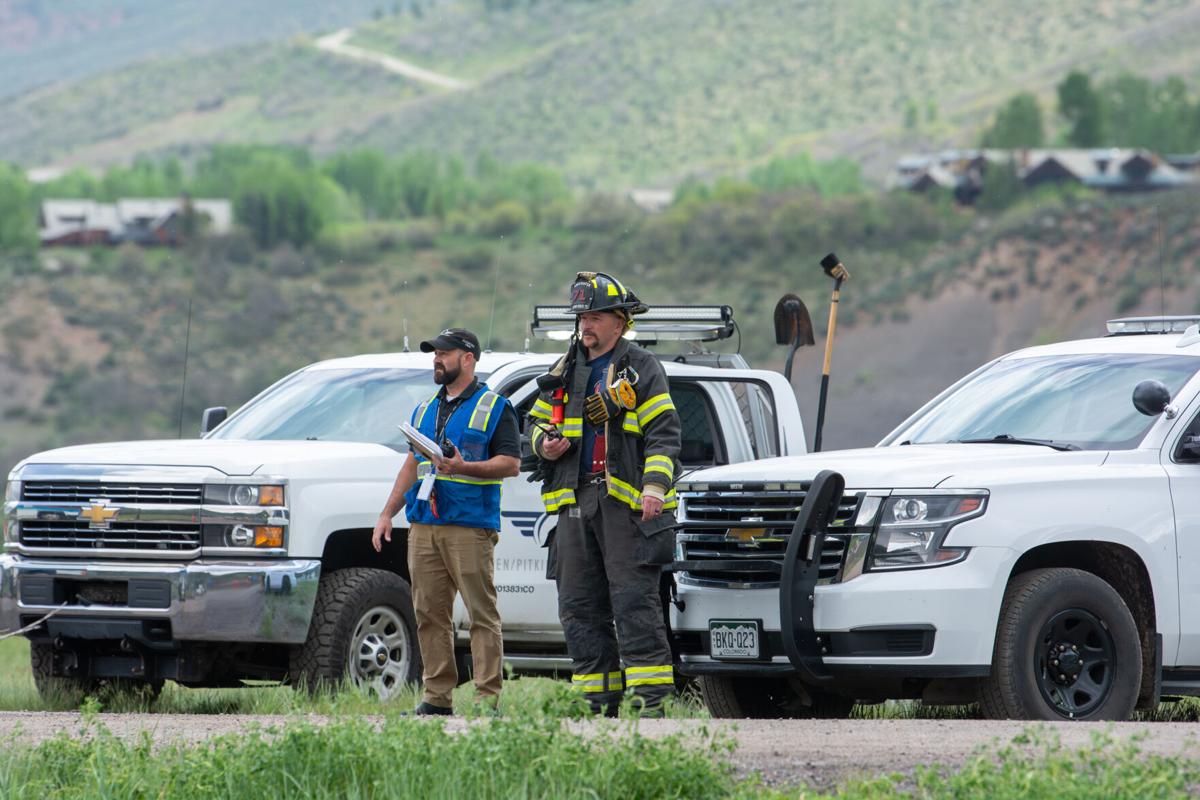
At 11 a.m., the alarm sounded for the collision. In a real-life emergency, air traffic controllers would alert the responders of the incident.
Sardy Field firefighters have a three-minute window to respond to a call on the airfield, regulated by the FAA. Apparatus manned by two firefighters made it to the scene in time and immediately began extinguishing the burning prop — an old fuselage that represented the Cessna with five souls on board.
In a real world emergency, the firefighters would likely first extinguish the largest fire, Treat said.
“We could (extinguish) a pretty large fire within about 60 seconds,” Treat said. “If we have two aircraft that are on fire, most likely we'd go for probably the bigger one that holds more life, knock out that fire, mobilize, move and begin fire suppression on the other aircraft.”
But Sardy Field usually only has one or two firefighters in the station whenever the airport is open. To address the wounded, the team needed to wait for the next wave of responders.
After about 12 minutes, Aspen Fire and Aspen Ambulance arrived, allowing responders to address the 41 passengers of the CRJ-700, who were strewn about the ground, waiting for EMS and firefighters to assess their injuries and properly triage by severity.
“It feels like an eternity,” Treat said of the minutes that pass between Sardy Field’s arrival on the scene and the arrival of mutual aid, with the resources to address wounded.
After the sheriff’s office, RFFR and Carbondale Fire arrived, airport staff and a sheriff’s deputy worked together as “unified command” to keep track of assets and personnel while directing arriving and departing resources, like ambulances.
An hour passed, then Treat called the exercise over. Of the 46 souls, six were unaccounted for by the end of the exercise — a blip they attributed to having some volunteers double up on injury cards.
The others had been triaged out to ambulances or RFTA buses for the “walking wounded.” In a real-world emergency, the transport of victims to nearby hospitals would be a coordination of the ambulance services and law enforcement, which have the authority to close roads.
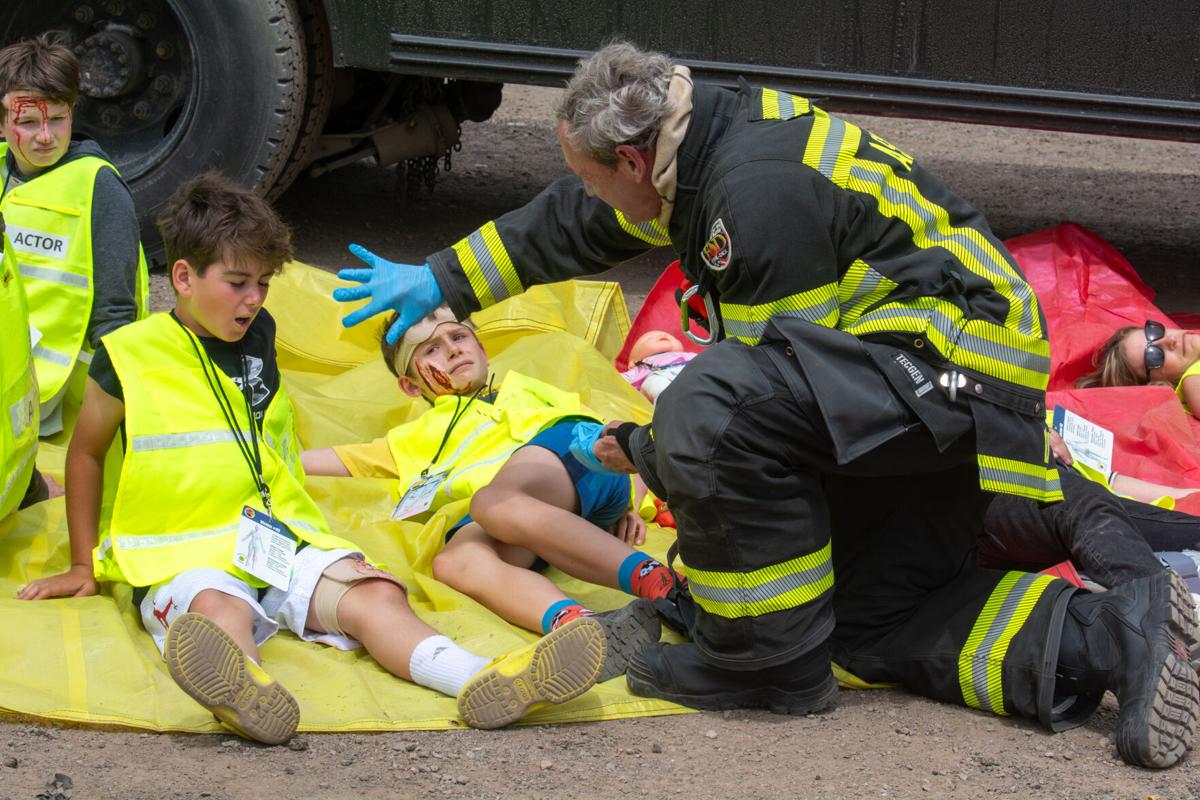
At the following “hot wash” meeting, personnel debriefed successes and areas of improvement. While teams clearly executed their individual roles well, resource coordination and communication seemed to be clear areas of improvement.
Jed Miller is a firefighter with Sardy Field. Friday was his first triennial and he stepped into role of operations section chief, overseeing the fire and EMS groups.
“For me personally, I need to improve communications and not get tied up in one (incident),” Miller said. “I’m a firefighter, so I want to be out on the line and assist with the firefighting. Being in the communications role is new for me.”
With feedback from a handful of industry expert evaluators who were on the scene and participants in the exercise, airport staff will author an “after-action plan” that identifies specific areas for improvement and strategies to improve.
“Three years from now, we will look at the things that needed improvement from this exercise,” said David Schneider, operations and security manager at the airport.