
ROARING FORK BROADCASTING COMPANY



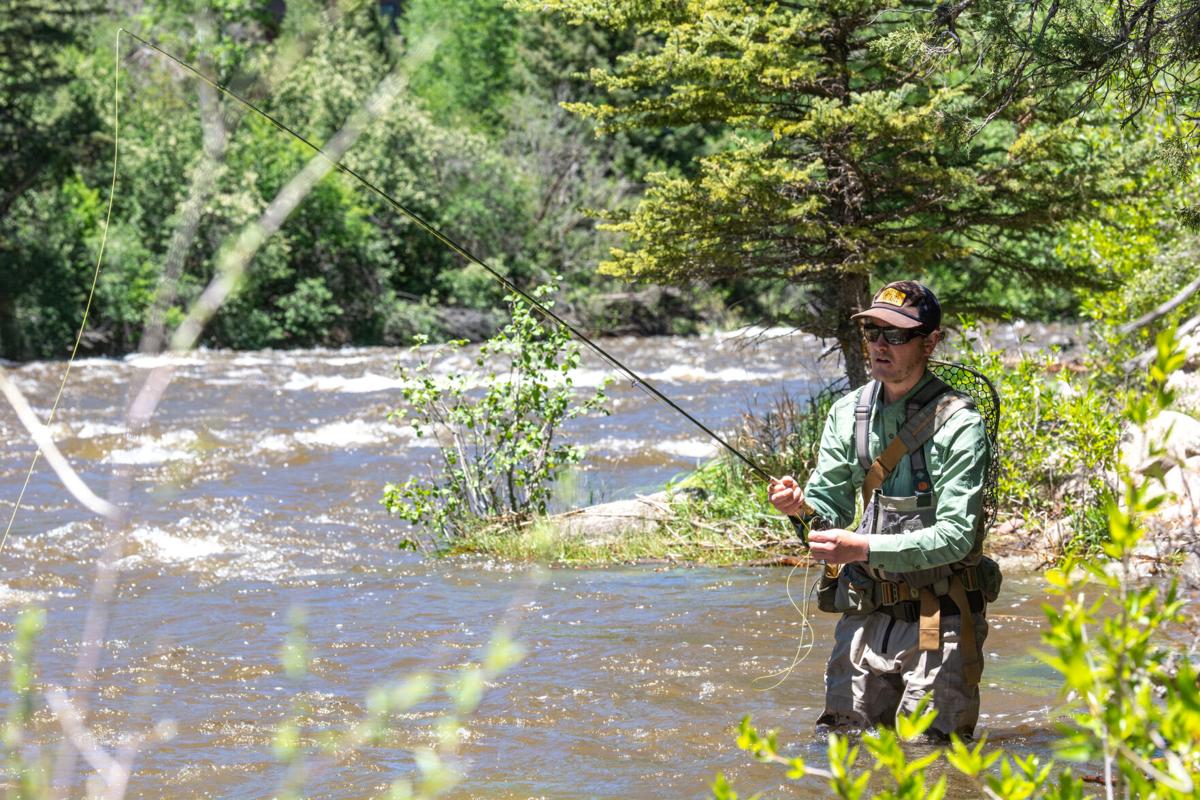
When Aspen resident Joey Carlson talks about the healing power of fly-fishing, it isn’t a theoretical, abstract claim. As a former drug addict, he attests to fly-fishing playing an important role in his recovery from years of being in the grip of heroin and cocaine.
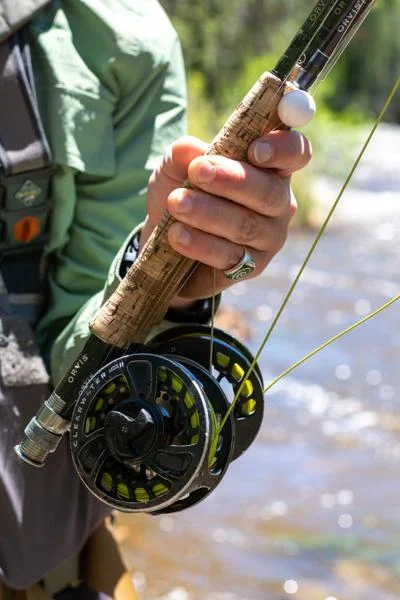
There’s a calming influence from being on the water and falling into an enchanting, rhythmic spell of casting and mending a line, said Carlson, a therapist at MidValley Family Practice in Basalt and a fly-fishing guide at Aspen Outfitting Co.
Fly-fishing teaches people to take stock of their environment and the constantly changing conditions on the river. If a person lets it, the experience will allow them to slow down and set aside the pressures of life for a while.
“It can be therapeutic and healing,” Carlson said. “You add into that curiosity and fresh air and all the other things that are healthy and good for us. But I do lean into the curiosity piece. I think a lot of people have the idea (about fishing) of sitting on a dock watching a bobber and it’s pretty boring. When it comes to fly-fishing, we are observing on a daily basis — what is present, the water levels, what changes on a day-to-day basis.”
Fly-fishing, he said, has a “gently forceful way” of making sure a person slows down. “The river is slick, you have to go slow,” Carlson said. “The river is a teacher in that way. If you don’t listen, observe and pay attention to those lessons, you’ll have a hard time.”
Carlson, 39, who was born and raised in Aspen, has experienced his share of hard times after an idyllic childhood. He attended Aspen Community School and graduated from Aspen High School in 2003. He loved nearly all things outdoors and was particularly passionate about hockey. He never had any issues with addictions while growing up. “I liked to smoke weed, for sure,” he said.

Treatment for hockey injuries introduced him to opiates and a feeling he enjoyed. During his senior year at Fort Lewis College in Durango, he “spiraled out” after his dad died of alcohol poisoning after returning to drinking following 25 years of sobriety, he said.
Carlson went to addiction recovery programs in Colorado and Florida, but he retained a powerful curiosity about harder drugs. He wanted to escape the self-imposed guilt of living a life of privilege.
“I wanted to know what it felt like to be on the streets, broke and hungry, downtrodden and worn out,” he said.
He got into IV use, building a tolerance to heroin and getting absorbed by the ritual of shooting up. Once he added cocaine to the mix, he was in the grip of a very strong addiction, particularly between 2008 and 2014. He drifted from the Roaring Fork Valley to Albuquerque, Flagstaff and Taos, when his mom intervened and helped him get on track for a slow recovery.
In the condensed version of his journey, he suffered through bouts of withdrawal that he said were the worst things he ever experienced. He credits therapy and the use of Suboxone, which uses drugs to decrease opioid withdrawal symptoms, as being tools that helped him treat his addictions.
But it was neither quick nor easy. The love and support of the woman who is now his wife was the critical piece he needed, he said.
Carlson earned a master of fine arts for creative writing at the Institute of American Indian Arts in Santa Fe, but after taking his lumps as a struggling writer, he decided he needed to pursue something different to earn a living. He earned another master’s degree in addiction studies from Grand Canyon University.
He wanted to give back and use his experiences to help others with their addiction recovery. He did his practicum during graduate school with MidValley Family Practice and was hired part-time in March 2020. He feels his background sets him up well as a therapist.
“I didn’t come from a psychology background, I came from a background of lived experience and also of writing and plants and nature and all these other pieces that I think are really comforting in a way for people to hear,” he said.
He also was hired as a fly-fishing guide by Aspen Outfitting Co., feeding his passion for being on the river. His time on the water has dwindled as his duties at MidValley Family Practice expanded.
“We developed the outpatient detox program, I run two groups every week, I run the open gym time for people in recovery,” Carlson said. He also works with clients from court-mandated therapy.
MidValley Family Practice works with a nationwide program called The Phoenix, which promotes building community and belonging to help people with recovery from addictions. The Phoenix organizes hundreds of weekly sober events and activities. Through that program, Carlson has taken between 25 and 30 people fly-fishing in five trips in recent years, with the support of Aspen Outfitting Co. That has reinforced that fly-fishing can be therapeutic for others as well as himself.
“I think group therapy is a tough thing for people to come into but if you say, ‘Hey, do you want to go fishing?’ Most people would say, ‘Heck yeah,’” Carlson said.
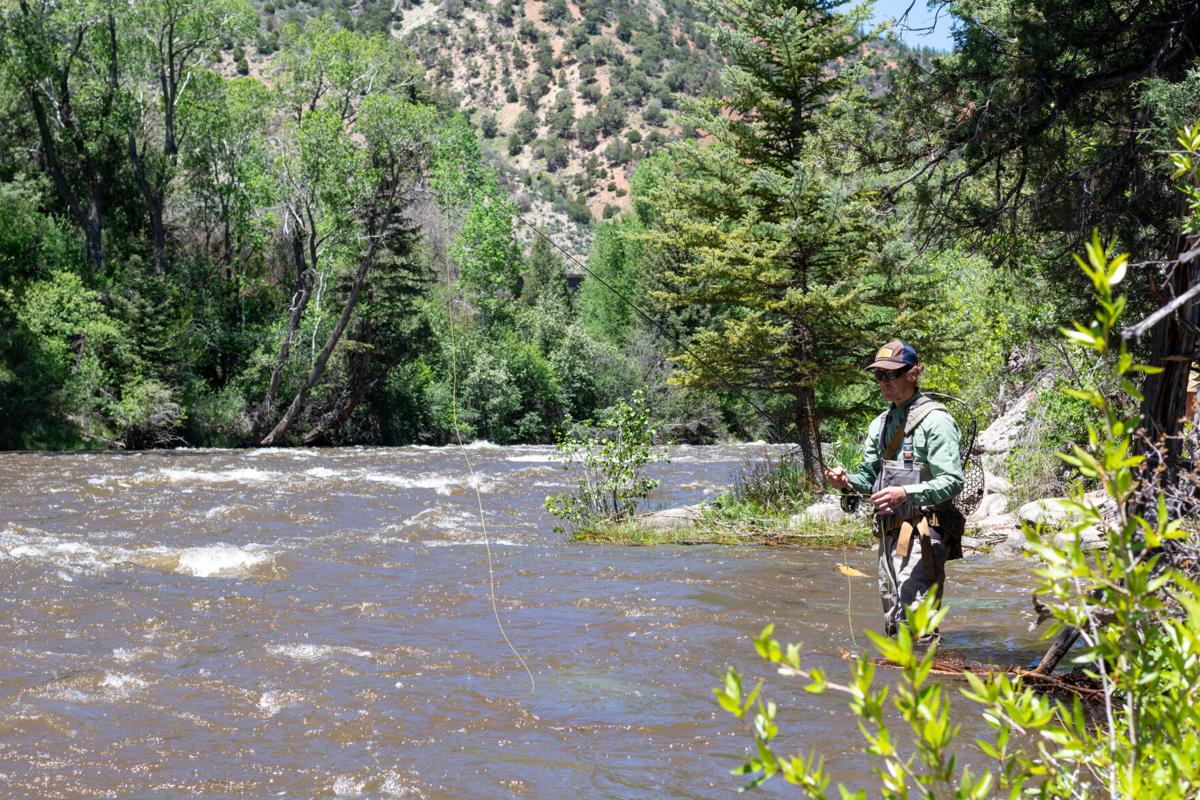
Some people become enthralled with fishing. For others, simply being on the river is therapeutic.
“Another part of this is the healing nature of the river itself, the sounds and the sites and everything,” Carlson said. “I think also there is a natural active movement piece where you are tying flies, you are doing something that is repetitive and in a way ritualistic, which are all themes that we know in addiction that are rituals that we’re so tied to.”
There’s also an addictive nature of trying to catch a fish that’s jumping around. “You can’t be forceful,” he said. “We always say it’s a dance and the fish leads the dance. If you fight that, you’ll lose every time. You have to let ‘em go, take ‘em in and be calm and patient in those moments. It all ties in really well with what we need in recovery.”
As his work as a therapist grew, Carlson cut down to two to four guiding trips per week. But he fishes the Roaring Fork River, a hop and skip from his office, every day during his lunch hour at MidValley Family Practice. It’s a critical part of his ongoing therapy.
Carlson hopes to build off early successes he’s witnessed of bringing fly-fishing into the therapy. He hopes to tap into grants to introduce more people in therapy to fly-fishing, where the price of entry can be prohibitive. He also aims to start a program for fly-fishing guides where they could come for up to nine sessions for mental health or addiction help. Guides face challenges of seasonal work, an occupation that often goes hand-in-hand with drinking, and the usual pressures and temptations of life in the Roaring Fork Valley, he said. He’d like to assist them.
MidValley Family Practice and Aspen Outfitting Co. are highly supportive of his ambitions, he said. Anyone interested in helping get the broader effort started can contact Carlson at jcarlson@mvfpsportsmed.com.
Being a creative writer, Carlson eloquently wrote down his thoughts on why fly-fishing melds so well with therapy: “When I daydream about fly-fishing, which is often, of course I think about catching that big fish, but more often I think about just standing in the cool river, that feeling, or of exploring a new riffle, a new bend, a new river altogether, or floating the lower Fork with Sopris lit up at sunset during the drake hatch, I’m catching myself daydreaming now … but what all of that provides is a space for healthy curiosity — which is a central tenet/foundational piece of my beliefs around recovery — of finding something to get curious about, because in addiction we often lose sight of our passions, those things that once drove our curiosity, our motivation. And the addict-alcoholic is no stranger to overthinking things. So again, to get out of oneself and into something that fills that space of self-loathing, that shame and guilt, is extremely important.”