
ROARING FORK BROADCASTING COMPANY



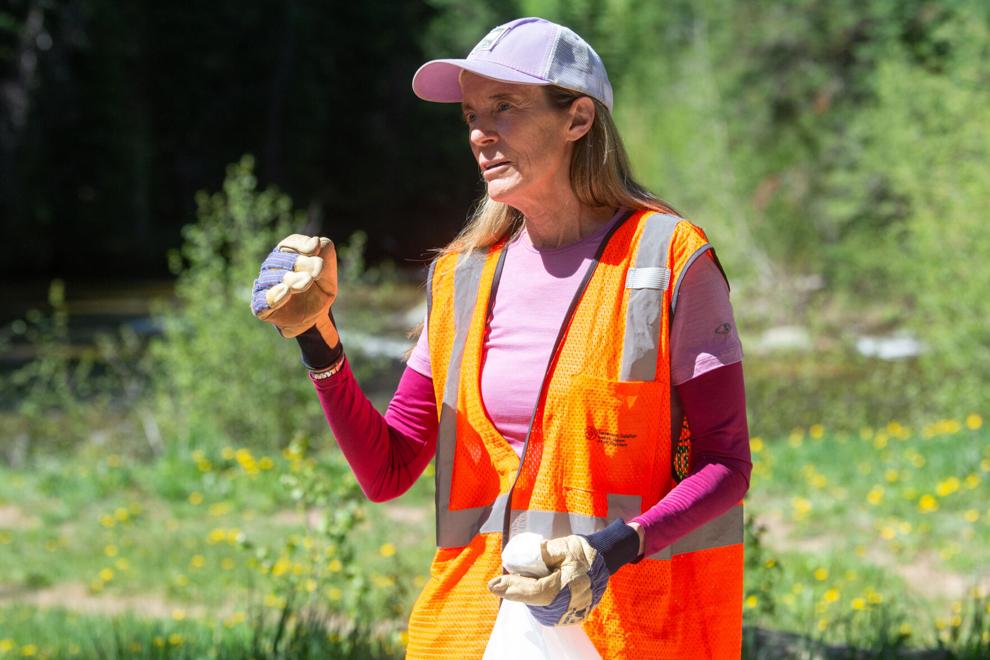
It’s 10 a.m. Wednesday, June 12, and Karin Teague has already been putting out proverbial fires since 7 a.m. The director of the Independence Pass Foundation received a somewhat frantic call from the Leadville Ranger District at 7 a.m. to alert her that the toilets at the summit of Independence Pass need emergency pumping. They couldn’t be pumped last fall because of a series of snowstorms in October. They need to be pumped as quickly as possible this spring but only after the sludge is unfrozen. The problem is the Forest Service office in Leadville cannot get a contractor up there until July. They ask if Teague can help from the Aspen side of the Pass. It’s a new priority on her list of tasks.
Shortly after that she was alerted to a rockslide on the east side of the Pass closing one lane. She can’t do anything about it but she likes to be aware of all things Pass-related. Speaking of which, a wildfire by Twin Lakes on the east side of the Pass is also cause for concern.
Teague has headed the Independence Pass Foundation for 10 years. She’s not the office type. She does everything from picking up trash to cleaning bathrooms at the Forest Service facilities on the Pass. She isn’t afraid to get her hands dirty.
“If people see trash on the side of the road they’re more likely to add to it,” she said.
She coordinates the organization’s key fundraisers — Ride for the Pass which takes place prior to Memorial Day weekend along with a midwinter Ski for the Pass. She oversees data collection efforts which, over time, will help gauge if and how the vegetation and wildlife on the Pass are being affected by climate change.
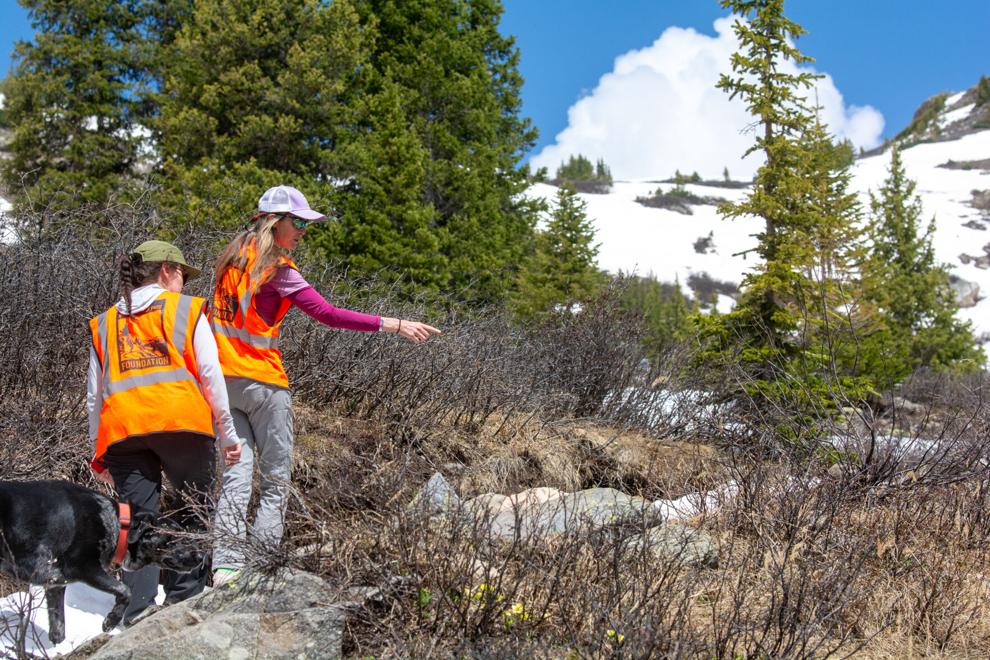
It’s important to add to the body of science on the effects of global warming, she said. People will understand the changes better when it applies to an ecosystem they are familiar with.
“The more people learn, the more people want to take care of a place,” she said.
And, of course, she explores the environment the nonprofit organization monitors and works to preserve. She is a self-described wanderer who, it is probably safe to say, has hiked the Pass as much as anyone. She shared some of what she’s discovered over the last decade with the Aspen Daily News.
Aspen Daily News: How have your duties and experiences matched your expectations? What have you liked about doing this?
Karin Teague: I like everything about it, in part because every year is a new year; every season presents new challenges and new opportunities. I think the organization has moved into lots of new areas beyond where we started. IPF was born 35 years ago under the vision of Bob Lewis primarily to heal the scars, to heal the road cuts on the upper part of the pass. That was really its raison d’etre and since then we’ve moved into all sorts of fields. We are doing a lot of science work, a lot of climate related research. We are helping the Forest Service in myriad ways including helping fund and maintain toilets and day-use areas. We do all the interpretative signage on the west side of the Pass and at the summit. We help take care of the trails. In 2019, we had the one-in-500-year avalanche cycle. We spent a lot of the summer clearing trails and campsites and other areas that were overrun with trees. In 2020, we had more visitors to the Pass than anyone had ever seen. We helped manage the use.
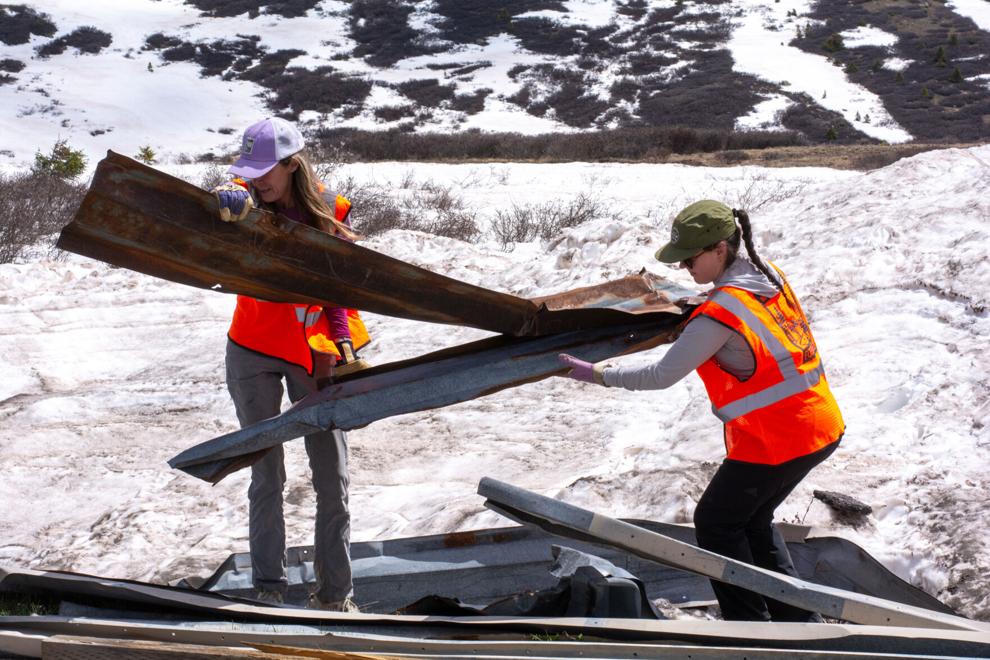
The thing I did not anticipate when I took this job is how much I loved working with an inmate work crew. That has been my absolute favorite part of the job. (Inmate crews used to work four days per week for the month of September on IPF projects, such as removing rebar from high peaks that was leftover from an abandoned Forest Service project to erect snow fences on the upper Pass. Teague said she met men from all walks of life from all across the country.)
I have not been able to work with them since COVID. This is the Buena Vista Correctional Complex, they are so understaffed that they can no longer spare a guard out with a crew.
ADN: Based on what you’ve seen over the last 10 years, how would you assess the environment and ecosystem on the Pass?
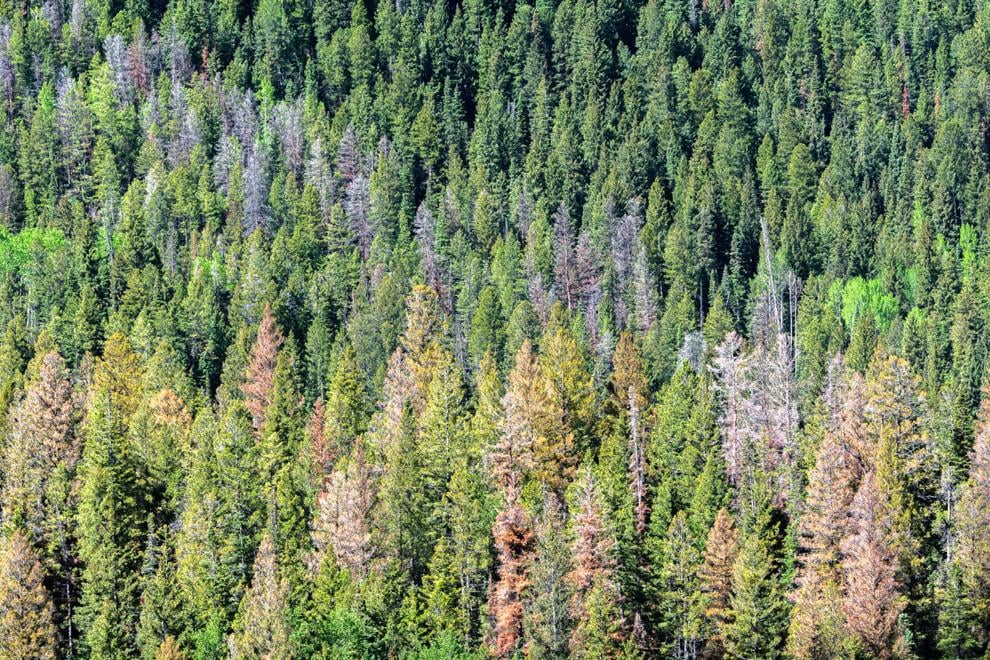
Teague: We’re so damned lucky, knock on wood, to date we have not seen a great deal of beetle kill, be it mountain pine beetle which really had its heyday, what, 12 years ago, but didn’t really hit the Pass in a meaningful way. We now have the spruce beetle moving from the south and the north and just devastating forests all over the state. That’s not to say it won’t happen up the Pass. It might and we’re watching that very carefully. So far, Independence Pass has really been spared and what that means is really a relatively healthy forest. It has a nice mix of younger and old growth forest, great habitat for wildlife. That’s really the good news.
There certainly is Douglas Fir kill lower down on the Pass. Doug Fir is really getting hammered throughout the Valley, throughout the state. But we don’t have a ton of Doug Fir other than at the base of the Pass. As you go higher, you get into lodgepole, spruce and fir, primarily.
We haven’t had a fire since 1980 up above Weller. Are we due? Probably. Do we feel fortunate that we haven’t had a catastrophic fire up there that would change the nature of the place pretty dramatically? We sure are. (The interview occurred prior to the wildfire that broke out at Twin Lakes on the east side of the Pass. It proved her point.)
Some of the harder news now is we’re seeing climate-change-related impacts to our waters, namely at Lincoln Creek where we’re seeing pretty severe contamination coming from the geology. There’s been a flurry of papers coming out recently explaining this phenomenon up in Alaska and throughout Colorado. In some of the areas where mining tended to happen are now places that are starting to leach copper, aluminum, iron and other types of minerals that are deadly to water-living creatures. So we now have a situation in Lincoln Creek where it won’t support life. It’s a dead creek. That’s a really hard thing to see and it’s starting to affect the Roaring Fork River. So that’s an area where Independence Pass Foundation is starting to spend a lot of time with a really fantastic group of partners from federal, state and local agencies and nonprofits, trying to get our arms around the nature and extent of the problem and trying to figure out what if anything can be done about it. Lincoln Creek is where a lot of people grew up fishing below the reservoir and there’s not a fish to be had, or a macro-invertebrate for that matter.
(Teague provided scientific information that shows the connection between leaching and climate change.)
ADN: Does IPF study what’s going on with the evolution of flowers and wildlife at the upper elevations of the Pass?
Teague: We sure do. This will be our fifth year of conducting a weekly phenology study at four transects along the Linkins Lake Trail, studying the timing of the bloom of wildflowers, their bloom time and their numbers. Once a week, myself and my summer intern go up to each transect and identify the flowers in bloom and we count the number of plants in bloom. I think over time it’s going to show some really interesting patterns. After five years there’s probably not a lot of conclusions you can draw. It’s a study I wish we would have started 35 years ago. I think we can start some hypotheses about what’s most important in terms of timing of bloom and how successful some plants are from year to year — a lot of it to do with how much rainfall we get or don’t get during the summer.
In terms of wildlife, for at least the last five years, we’ve been a partner in the Colorado Pica Project. We have eight sites up on Independence Pass that we visit every year to participate in that pica study. It involves going up and collecting data on the presence or absence of picas and if there are picas in that locale, and if there’s any fresh scat at the site that’s collected and sent into a lab. That scat can be analyzed for things such as stress hormones to help see how the pica are doing. That’s really the only dedicated wildlife study that we are involved in at this time.”
(She has not seen any signs of wolves on the Pass but a friend of hers did capture a picture of a lynx.)
ADN: How is the Pass holding up from human recreation?
Teague: We haven’t seen the numbers that we saw in 2020. Maybe that’s the good news because we saw a lot of use and I think you could see the impacts. The user experience was somewhat diminished with the crowds. It was hard to find parking. People were parking in places they shouldn’t be along the highway. The facilities were kind of overrun. The numbers are down from then but over time they have slowly, slowly been growing.
In terms of how it’s holding up, I think in many ways really well. What we try to do working with great partners like the Forest Service and Roaring Fork Outdoor Volunteers, we try to provide top-quality trails that encourage people to stay on them. That helps lessen the impacts. The Forest Service has done a good job along Lincoln Creek designating (camping) sites, putting in bear boxes and making that camping situation a really good one for all involved. Is there enough quality camping available up the Pass? Probably not anywhere in the whole valley. You do get people camping in areas where they shouldn’t be and that is not only impactful on the landscape and requires some garbage and other duty — it brings up wildfire concerns. That’s a big one, people having campfires when they shouldn’t be or where they shouldn't be.
The road is in good shape. A lot of the slopes have been stabilized to a fair degree and revegetated. There’s definitely work to be done on the lower Pass, for example, across from Difficult Campground. We are seeing a lot of erosion, a lot of rockfall there. We’re in partnership with CDOT looking at what could be done to help that situation.
But overall, we’re so damn lucky to have that place in our backyard.
ADN: Anyone that follows IPF on Facebook can see that you’ve gone to some pretty remarkable places. Over the 10 years, have you had a chance to get off the beaten path?
Teague: Oh gosh, yes. I am a wanderer at heart so I have done a fair amount of wandering. I like to feel that I should be familiar with my office. Most of us in the Roaring Fork Valley have probably spent a fair amount of time on the west side of Independence Pass, some of the classic hikes like Lost Man Loop or have gone up to Weller and Midway or ridden their bike to the summit. I think there is an extraordinary amount of beautiful and wild country over on the east side. There are a number of places I have yet to explore, but I’ve really enjoyed expanding my horizons.
ADN: What do you think over the last 10 years this job has done for you?
Teague: This job is my rock, totally. It took until 50 but I found my life’s work. I am passionate about the mountains and the alpine in particular. So to call taking care of Independence Pass my work is just such a privilege. Holy crow!