
ROARING FORK BROADCASTING COMPANY



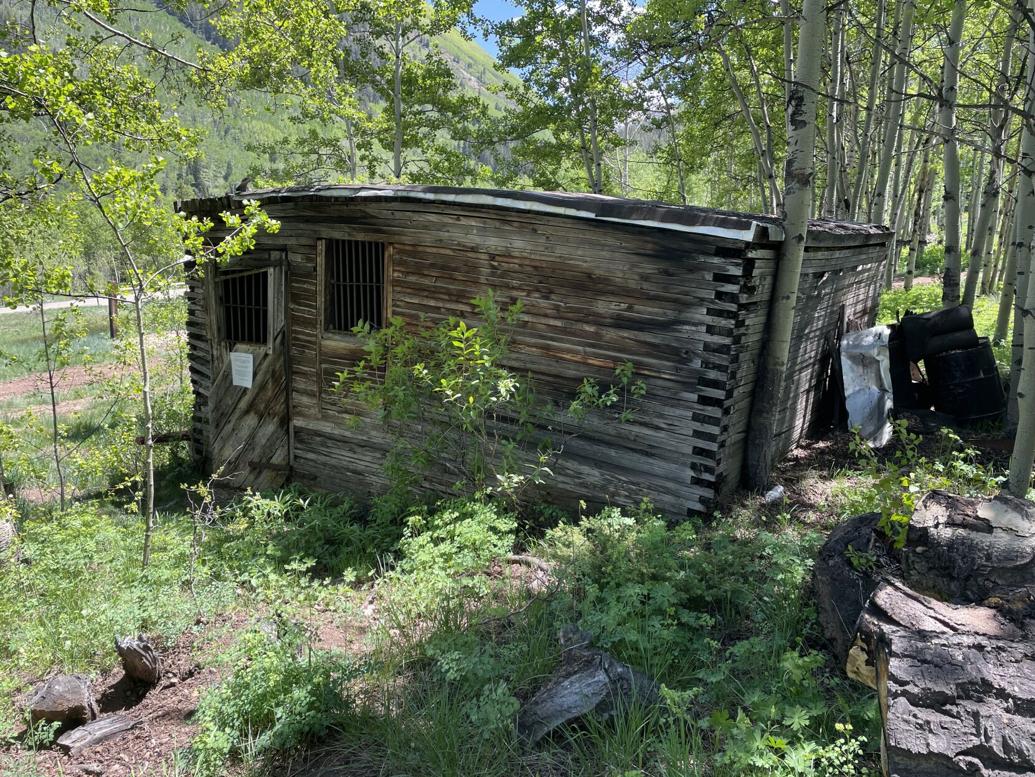
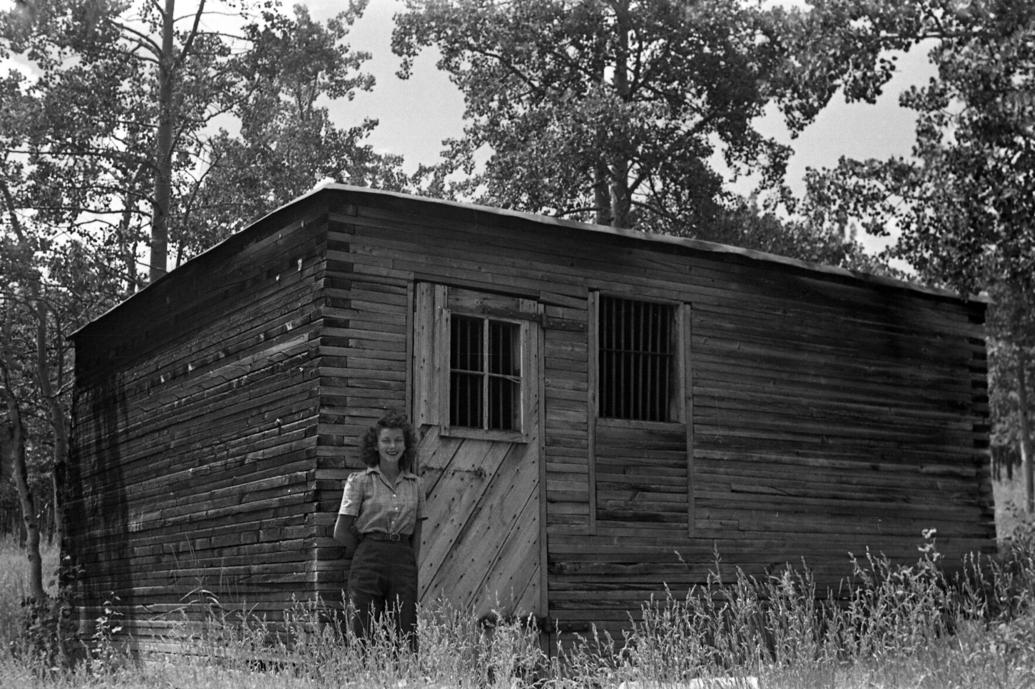
For the first time in roughly 140 years, people could be behind bars at Ashcroft again in the near future if Aspen Historical Society achieves one of its priorities.
The historical society wants to relocate the Ashcroft jail building from its obscure site west of Castle Creek Road to a site within the ghost town on the east side of the road, according to AHS President and CEO Kelly Murphy. The wooden structure is rotting at its current site. Moving it within the AHS permit area on the White River National Forest would allow the organization to oversee it better and undertake the costly effort needed to stabilize it, she said. AHS would raise the funds for the relocation and stabilization but approval is needed from the State Historical Preservation Office and the U.S. Forest Service.
The relocation of the jail comes as AHS is working on a reinterpretation of Ashcroft, the beloved ghost town 12 miles southwest of Aspen in the stunning Castle Creek Valley. AHS archivist Anna Scott said the digitization of records over the last decade or so has made historical research considerably easier than before. Old newspaper stories, Pitkin County tax records and other land information can now be searched using key words rather than paging through and looking for a needle in a haystack in musty old records.
Visitors to Ashcroft this summer will reap the benefits of the AHS staff’s toil. A new map has been created to show where current research indicates various structures were located and it helps bring clarity to the history of some of the existing buildings. New interpretative signs provide new tidbits of information — including big revelations about the ghost town’s signature structure. (More on that later.)
Scott said she, AHS curator Lisa Hancock and other colleagues spent months “scouring records and creating timelines to make sense of the quick boom and bust” of Ashcroft.
“We, as historians and researchers, have to let go of long-held beliefs about the town and be open to understanding the records and new stories as we uncover them,” she said.
AHS staffers are interested in the jail relocation for various reasons. First and foremost, it would be a shame to see the historic structure rot into the ground.
“It’s one of the oldest buildings in Pitkin County,” Murphy said.
Scott said Ashcroft was founded in 1880 and incorporated as a town two years later. The jail also was built in 1882.
“It was considered more of a holding cell, then (inmates) were transported down to Aspen (for court hearings),” Scott said.
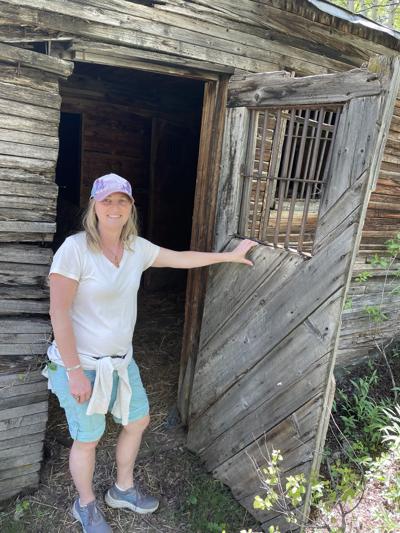
The wooden building has three holding cells. Bars remain on most of the windows and the door. A tin roof was added well after the structure was decommissioned and it prevented further deterioration.
The jail was initially located near a courthouse and school, which are no longer standing. Another establishment with the unusual name Little Church Around the Corner Saloon also was located nearby. That’s gone, so people no longer can use the excuse that they’re going to church when actually visiting a saloon.
Ashcroft peaked as a mining camp in 1882-83 but was in fast decline by 1885, Scott said. Ashcroft was on unsteady ground even before the repeal of the Sherman Silver Purchase Act delivered a blow to all silver mining areas in 1893.
“Ashcroft’s demise was more tied to the fact that the high-grade ore they initially found was quite shallow and played out very quickly except for a few mines like the Montezuma Mine up Montezuma Basin and along Richmond Ridge,” Scott said.
In addition, Ashcroft mine owners and backers never were able to get a railway line up Castle Creek Valley. Aspen secured two railroads, so its success attracted people from downvalley, Scott said.
Relocating the jail to the main part of the ghost town also would increase its visibility. The historical society leads organized tours of Ashcroft and recorded about 5,000 participants last year. Hundreds if not thousands of other visitors informally tour on their own.
Aspen Center for Environmental Studies also leads people through the ghost town. Scott said AHS has been loath to add the jail to its tour because it would require taking people across Castle Creek Road and dodging substantial bicycle and vehicle traffic.
Murphy said the jail would be a natural draw for people taking the tour. It doesn’t take much imagination to envision how popular it would be for kids and adults to have their pictures taken behind bars.
The jail would be relocated on Castle Avenue, the town’s primary street, though another was named Main Street. There are plenty of vacant lots along the avenue. Murphy said an interpretative sign would make it clear the jail was relocated. AHS first raised the idea of moving the jail five years ago. Time is of the essence because the more the building deteriorates, the more effort and money it will require to stabilize it, she said.
AHS doesn’t see the relocation as a betrayal of history. Several buildings from Ashcroft were relocated to Aspen, buildings from other sites were brought to Ashcroft and buildings were relocated within the town.
The move needs to be approved by the U.S. Forest Service. It hasn’t been able to start a review due to other priorities, but Murphy hopes the agency’s assessment could happen over the next year. The Colorado State Historical Preservation Office also will be consulted because of its designation of the jail as an archeological historic site.
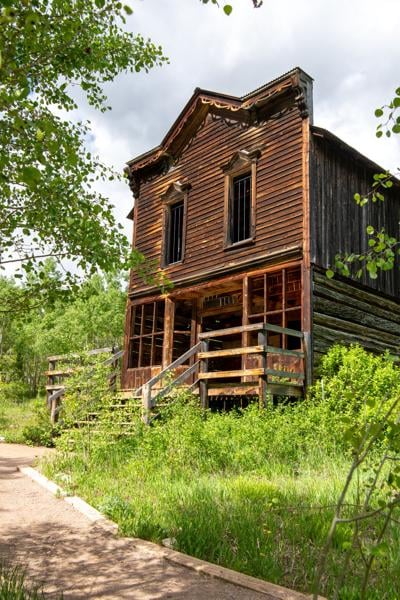
People familiar with Ashcroft’s history — or what was thought to be its history — might do a double-take when taking a tour of the ghost town this summer. A new interpretative sign will be erected to present a couple of possible versions of the roots of a two-story building with ornate woodwork on the exterior.
The building that stands like a sentinel on the south end of what was Castle Avenue was once known as the Hotel View. Scott said that tag was a bum steer that originated from a postcard for tourists that was sold in Aspen a century or so ago.
Amateur historian Peter Starck started raising questions about the structure’s builder and its past. The Wisconsin man dove headlong into the history of Ashcroft, which he had visited as a kid, when he retired a few years ago. He started the Facebook page “Finding Ashcroft” to share the fruits of his research.
Starck concluded after extensive research that Hotel View was possibly a hotel operated by Nellie Bird, who briefly lived in Ashcroft. He dubbed the structure The Bird House.
Starck’s questions about the structure inspired AHS curator Lisa Hancock and Scott to dig deeper into Ashcroft property records themselves.
“It’s fun. It’s a little like being a history detective,” Hancock said.
Their research added to the intrigue generated by Starck’s work. “Nellie Bird owned Lot 6, Block H on Castle Avenue, and was known to have erected a building sometime in 1882,” Scott and Hancock said in an email. “Perhaps it was this building, but there is no direct evidence. Other evidence suggests this structure was the home of The Ashcroft Journal and was built by Davis H. Waite during the spring of 1882.”
Hancock and Scott said it appears from old newspaper articles that the hotels in Ashcroft were opened with great fanfare. There was no record of a big party for the coming out of a Bird House. There was a newspaper advertisement indicating Waite was trying to sell a building he owned with the same dimensions of the Hotel View structure.
“I don’t think the research is conclusive one way or another,” Hancock said.
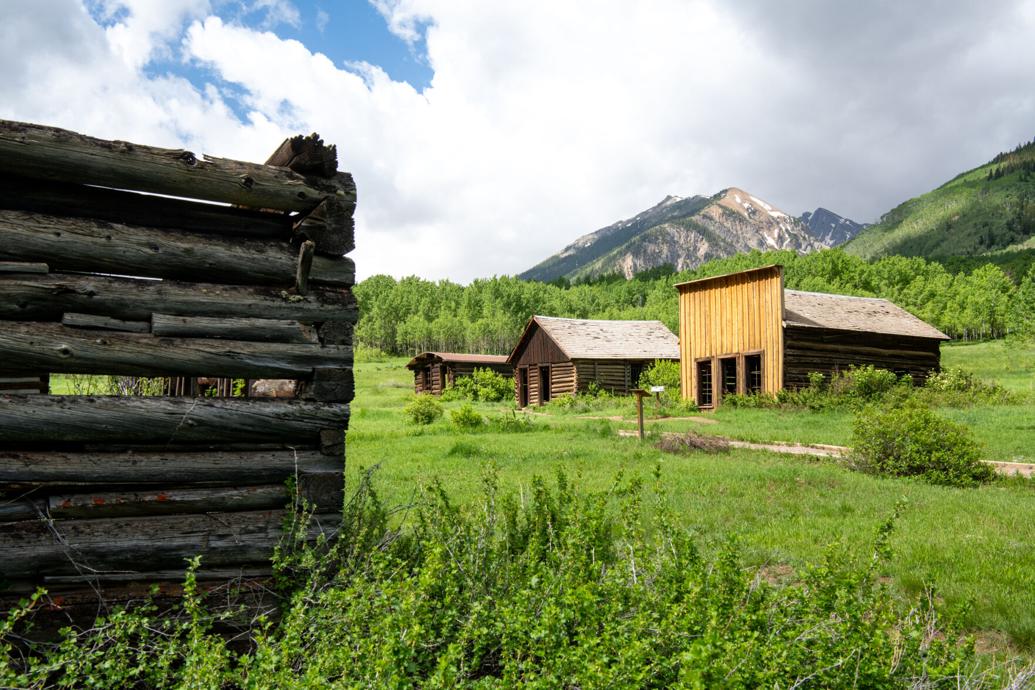
The new interpretative sign at the building will make the case for and against the building being Nellie Bird’s hotel and for Waite’s newspaper office.
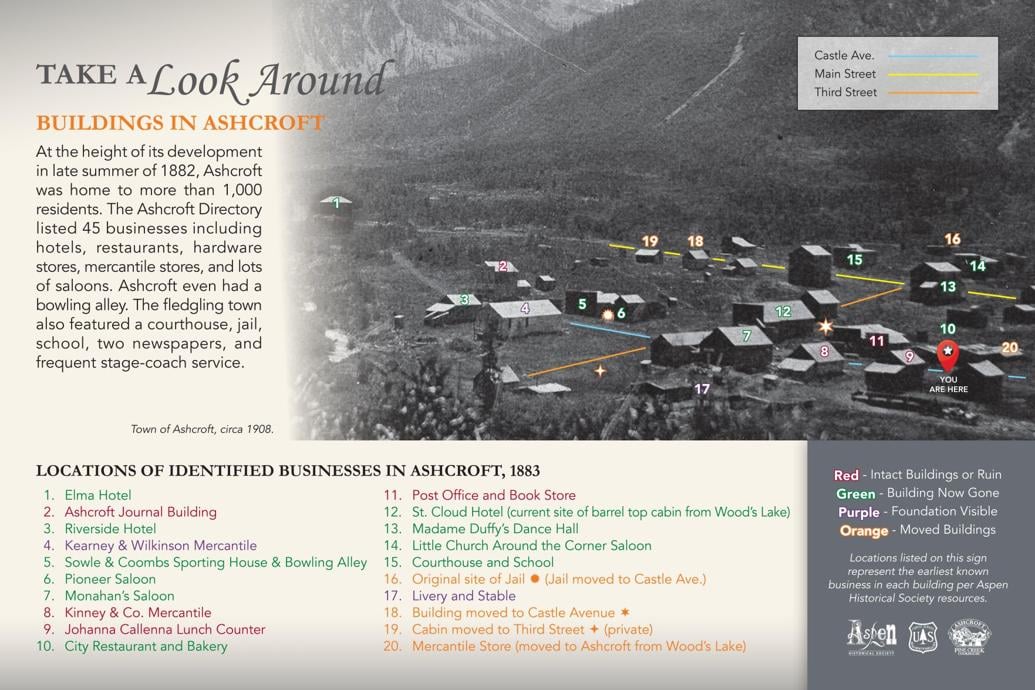
Research also convinced them that a building elsewhere on Castle Avenue long thought to be a saloon was actually a mercantile, with the saloon next door. All the research has led to updates to the signage that is sprinkled throughout Ashcroft. There’s a new sign, meticulously pieced together by Hancock, that includes a picture of the town from its heyday with the buildings numbered and identified. In many cases, the buildings are no longer standing, so it helps portray a picture of what Ashcroft used to be.
“As you walk through that town, I look and I see in my imagination where the buildings were,” Hancock said. “The town comes to life.”
She is eager to see the jail added to the main cluster of buildings.
“I think that the jail, other than the Aspen Journal building, is the most unique and amazing building,” she said.
Scott said the questions raised about Hotel View ended up leading to a more complete picture about Ashcroft.
“It gave us a great opportunity to revamp our signage and be more historically accurate about the town and the buildings that remain,” she said.