
ROARING FORK BROADCASTING COMPANY



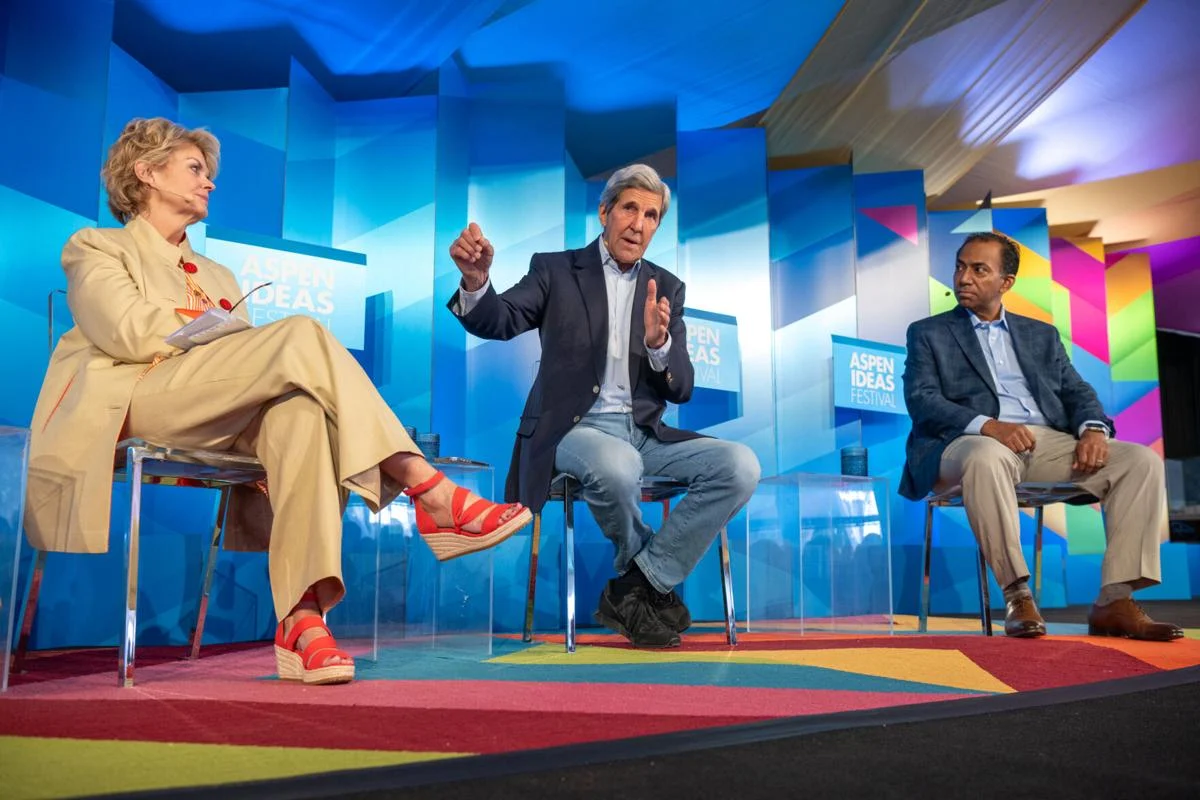
At the end of their panel at the Aspen Ideas Festival on Monday, moderator and journalist Stephanie Ruhle told three climate experts that they had laid out “the best possible solutions (to climate change), none of them political.”
“Every day I cover business and politics. No one has laid out how the CHIPS Act, how the Infrastructure Law or the Inflation Reduction Act helps the country and the globe like the three of you just have. Why not?” she asked.
“Because of politics,” responded former Senator John Kerry, who recently served as the Biden Administration’s presidential envoy on climate.
During their panel discussion, Kerry and his co-panelists described the high-level successes already playing out in climate action. Overwhelmingly, panelists argued that a global energy transition is not only feasible but likely — regardless of frictions in domestic or international politics.
All said they were optimistic about global efforts to combat climate change despite Kerry’s grim estimation that global warming is “a challenge unlike any that human beings have ever been asked to respond to.”
All three panelists pointed out that investment in clean energy in 2024 is on track to reach double the amount going to fossil fuels. These numbers are based on a report published by the International Energy Agency this month.
“The marketplace has made the decision to move in this direction,” Kerry said.
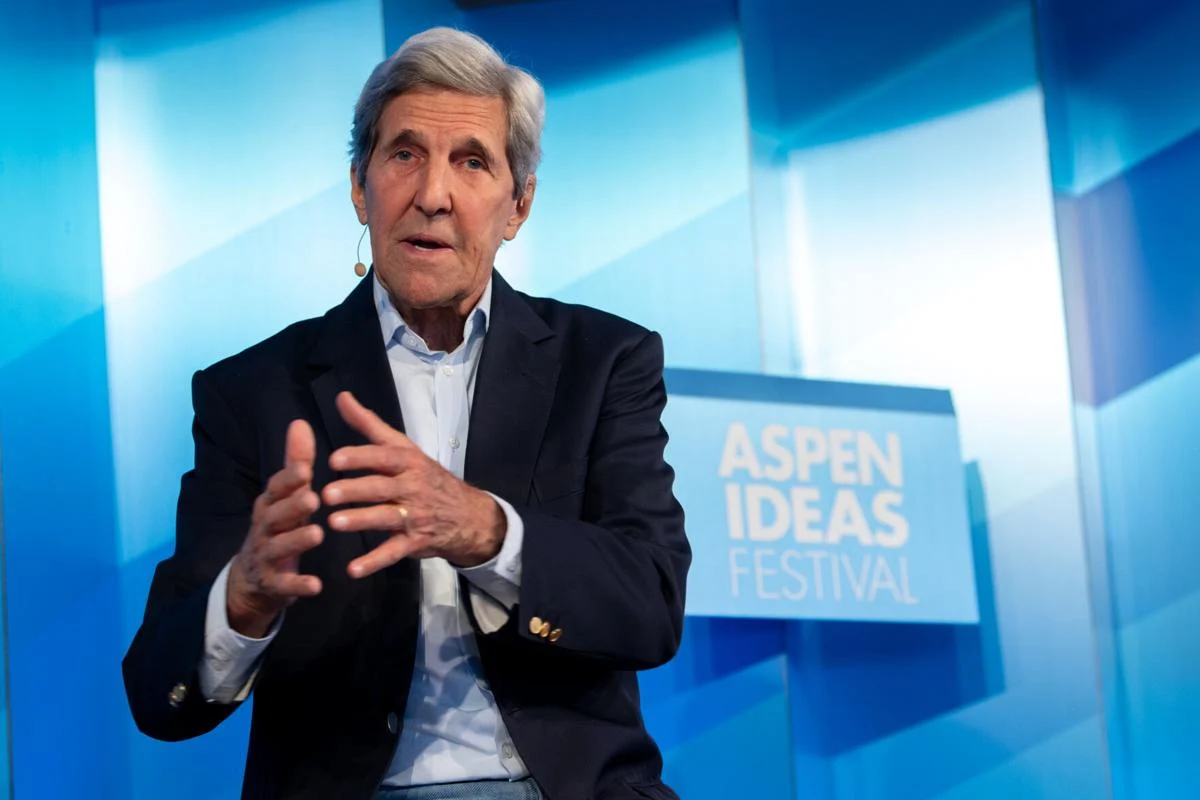
Panelists said global investment still had a long way to go, but that mechanisms for success are taking off.
Anne Finucane, senior advisor to San Francisco-based TPG Rise Climate Fund, argued that three massive funding bills passed under the Biden administration (the 2022 Inflation Reduction Act, the 2021 Bipartisan Infrastructure Law and the 2022 CHIPS Act) will ultimately revolutionize technological and financial developments necessary to decarbonize the U.S. economy. It may take time, Finucane argued, but ultimately the acts will provide developments in the climate space.
“There’s something that separates the U.S. from everybody else,” Finucane said. “We always talk about innovation, but it’s really innovation with capitalism.”
According to the U.S. Energy Information Administration, renewables (wind, solar, hydro, etc.) and nuclear each made up roughly 20% of the power produced in the United States in 2023, with that number continuing to grow. The remaining 60% came from fossil fuels (oil, natural gas, coal).
The U.S. remains the second-largest greenhouse gas emitter in the world (behind China) and the largest emitter per capita, according to the IEA.
Ruhle asked Kerry if he believed the nation’s large contributions to global emissions obligated it to help poor countries with the burden of decarbonizing their economies. Kerry said yes, but only because it was the right thing to do.
Decarbonizing non-industrialized countries, Kerry said, was not critical in combating global warming. He pointed out that the 48 countries in sub-Saharan Africa contribute 0.55% of the globe’s per capita greenhouse gas emissions. Those numbers appear in a report in the data journalism publication, “Our World in Data.”
On China, Kerry said collaboration on climate is more possible than the two countries’ tense relations may suggest.
“We can deal with China. I kept a dialogue going with China all through the last three years,” Kerry said.
Kerry celebrated China’s decision to join the U.S. and most of the roughly 200 other countries on Earth in signing a global pledge to transition away from fossil fuels.
Panelist Vijay Vaitheeswaran, the global energy and climate innovation editor at The Economist, argued that China is the biggest beneficiary of the clean energy economy, saying the country is doubling down on pursuing the transition. Vaitheeswaran noted that China manufactures most of the world’s solar panels and batteries used for the production of renewable energy.
“They want this transition to happen,” Vaitheeswaran said. “They’re doubling down on a world that invests more in clean energy.”
In addition to behemoth governments, panelists said major private sector players are also moving forward in spurring an energy transition.
Finucane said even risk-averse banks are discovering real returns from investing in climate-forward projects and moving to fund more of them.
“We are staring at the largest market the world has ever known — the energy market,” Kerry said. “Since it’s something you pay for, and you pay for water and transportation, that revenue is what’s going to support this transition.”
Even a second Trump presidency, panelists said, would not halt progress in fighting climate change. Shortly after entering office in 2017, Trump withdrew the U.S. from the historic climate-related Paris Agreement, signaling a general trend of antipathy toward global collaboration on climate issues.
Despite Trump’s previous actions, Vaitheeswaran said in his recent interviews with a slew of lobbyists and Washington, D.C., operatives, he has heard overwhelmingly that Republicans will not seek to repeal the Inflation Reduction Act if they gain control of the government, mostly because the act funds projects in scores of red districts and states. Other possible damages to clean energy investment, he said, would not be enough to dampen already significant global progress.
Altogether, Kerry argued the feasibility, methods and momentum to tackle climate change are out there. The question, he said, is whether we can deploy them fast enough to avoid catastrophe.
“We have to act like we are in a war,” Kerry said.
Without that effort, Kerry has argued the globe will spend more cleaning up the disastrous effects of climate change than it would spend preventing them by investing in a decarbonized economy.
Not all of that disaster-related cost, panelists noted, would be covered with money.
“Part of it will be paid in human suffering,” Vaitheeswaran said.