
ROARING FORK BROADCASTING COMPANY



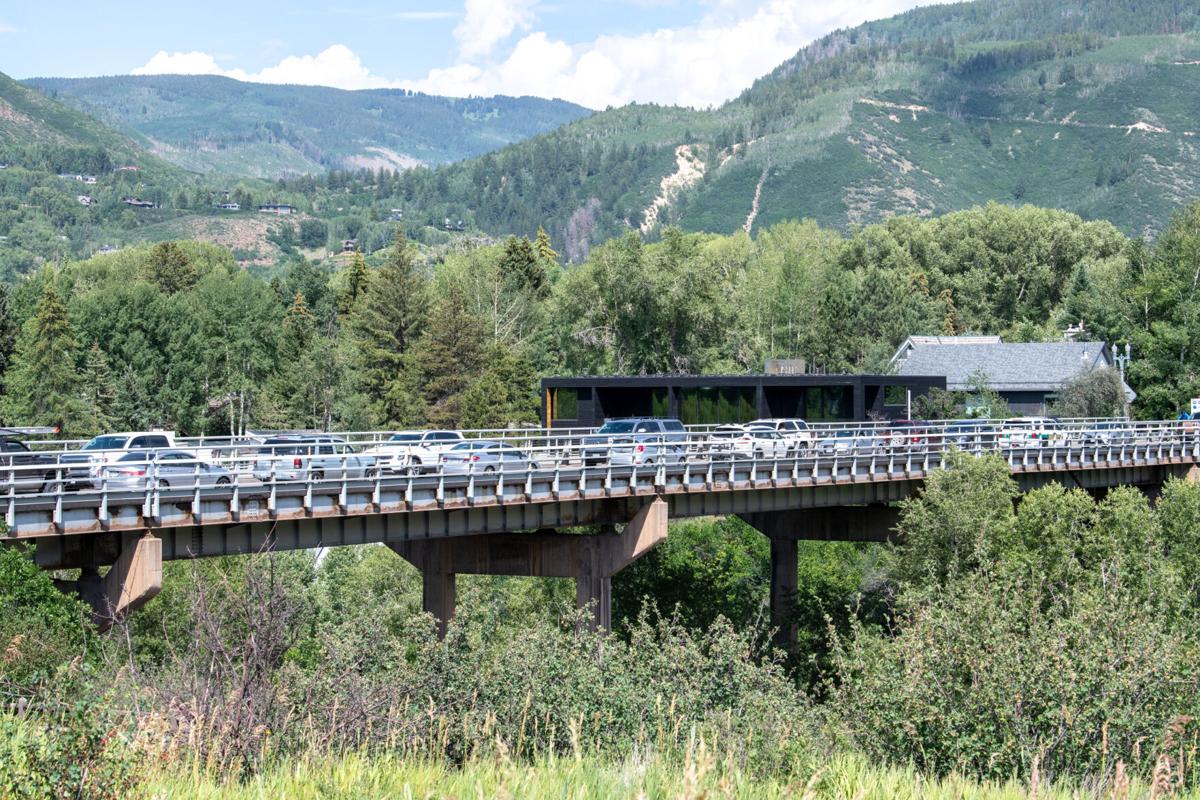
The city of Aspen cannot back out of, or go around, a federal administrative process required to replace the aging Castle Creek Bridge in its same location, according to a July 10 letter from the Colorado Department of Transportation.
Some Aspen officials have asked whether the city can exit a 1998 approval by federal and state partners (the “Record of Decision”) that would require construction of a new bridge in a different location. But CDOT’s letter states there is no way for the city to sideline the document.
The only way to replace the bridge in its current location, the letter says, is for Aspen to attempt to alter the approval through a federal process that could take two years. And even if it enters that process, there is no guarantee that Aspen will succeed in changing the fate of the bridge.
“We are not aware of a process which would allow the city to withdraw from the ROD (approval),” the letter says. “If the city wishes to pursue another alternative, it would have to be developed through the NEPA (National Environmental Policy Act) process.”
The Castle Creek Bridge is Aspen’s primary western access point. According to city data, roughly 22,000 cars used the bridge every day in June (a number about 3.5 times the size of Aspen’s year-round population). Aside from serving thousands of downvalley workers and visitors who help to maintain Aspen’s economy, the bridge is a critical evacuation route for emergencies.
Already a decade past its 50-year design life, the bridge is showing signs of decay, according to a report produced by global consulting firm Jacobs Engineering in April. If the bridge worsens much more, CDOT will replace or rehabilitate it unilaterally. CDOT has said it would replace the deteriorating bridge by constructing the “preferred alternative” laid out in the 1998 approval, which calls for a new bridge in a different location.
Under the preferred alternative, Highway 82 would follow a new alignment, cutting across part of the Marolt Open Space and crossing Castle Creek so that it merges directly with West Main Street, thus bypassing the S-curves that serve as the city’s current primary entrance.
Aspen Councilman Sam Rose has said he does not support the “preferred alternative” out of concern for the open space, which some Aspenites commonly use for recreation. Rose called the open space “sacred” in an April meeting.
Councilman Bill Guth, who also opposes the “preferred alternative,” asked in the same meeting if the city could keep the bridge in its current location and avoid the onerous federal process by paying for the replacement unilaterally and foregoing federal funding.
But CDOT has said that likely won’t be possible. In its July 10 letter, the state agency said that any improvements would need to correspond with the “preferred alternative.” CDOT has already said that replacing the bridge in its current location deviates from the “preferred alternative.”
CDOT’s letter directly contradicts an analysis submitted by attorney William Eubanks of Washington, D.C.-based Eubanks & Associates in June. Eubanks, who was hired by the Aspen nonprofit Friends of Marolt Park and Open Space, argued that Aspen would not need to reopen the old approval to replace the bridge in its current location.
Eubanks said that because the Castle Creek Bridge remains within the “preferred alternative” area (alongside the potential spot of a newly relocated bridge), replacing it would not deviate from the approval.
Pete Rice, director of parking and transportation at the city, said in an interview on Wednesday that while the current Castle Creek Bridge is part of the “preferred alternative,” it exists there as a connection between Cemetery Lane and downtown Aspen, not as a route for the highway. The resources needed to replace the bridge as a highway route are more than what the state expects to spend maintaining it for the reduced use envisioned as a connection with Cemetery Lane.
Rice said city staff are still reviewing CDOT’s July letter and will present their conclusions to council at a work session later this summer. Council is expected to decide whether to pursue the “preferred alternative” or seek a different option in August.