
ROARING FORK BROADCASTING COMPANY



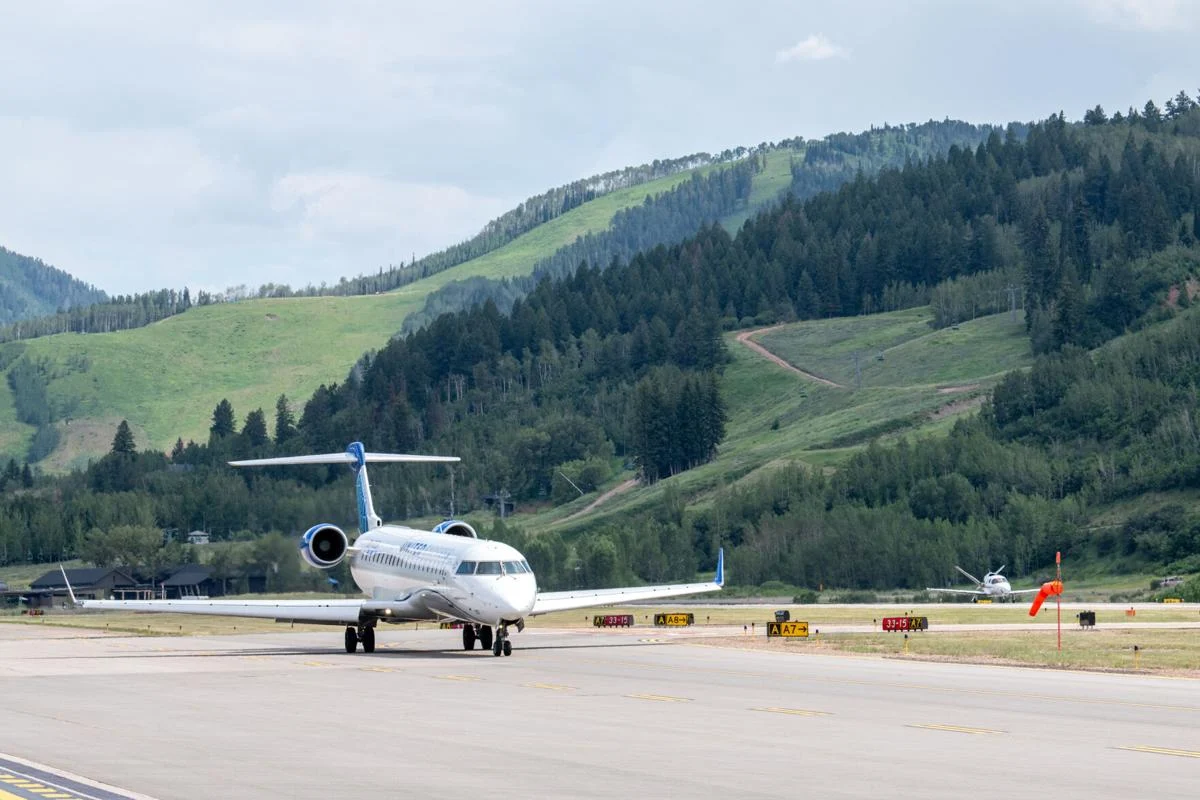
A county-authored report examining a June 4 equipment fire on the Aspen-Pitkin County Airport runway calls out multiple shortcomings among county and airport staff.
The after-action report, finalized July 12 and obtained by the Aspen Daily News via CORA request, outlined the actions and “corrective actions” for dispatch, the airport and communications departments when a runway closure marker, or RCM, caught fire at the southern end of the runway around 11:30 p.m. on June 4.
The report is supplemented by two mutual aid investigations of the incident completed by Aspen Fire Protection District Deputy Fire Marshal Ben Smith and Roaring Fork Fire Rescue Assistant Fire Marshal Jim Pidcock.
The fire and subsequent runway damage prompted closure of the airport at approximately 8 a.m. June 5. Some inbound flights were allowed to land until approximately 11 a.m. and departures were permitted until 5 p.m. June 5, taking off from further down on the runway.
The airport remained closed until June 7, when operations resumed as normal in the morning.
Around 11 p.m. on June 4, airport personnel set up two RCMs at either end of the runway during pavement repair work. The electronic signs with a large red “X” are required by the Federal Aviation Administration when runway work is underway.
According to the AFPD report, the airport employee who set up the RCM at the southern end of the runway mistakenly placed a weather cover on a heater in the machine. The cover ignited and the fire continued to burn using fixtures inside the machine.
“It is the opinion of Aspen Fire Protection District and Deputy Fire Marshal Smith that the fire was accidental and not suspicious,” the report says.
The report estimates that the fire fully engulfed the RCM around 11:50 p.m. Then, the Pitkin County Regional Emergency Dispatch Center received a call from a resident in the Starwood neighborhood about a fire at the airport at approximately 12:13 a.m.
Dispatchers called airport operations staff and the airport’s Sardy Field Fire Department, known as ARFF, from 12:15 a.m. to 12:18 a.m., but the calls went unanswered.
The report then estimates that the fire began to decay by 12:18 a.m. A minute later, the on-duty ARFF firefighter returned the call after experiencing dropped calls. He confirmed that he would investigate at 12:19 a.m.
After walking out of the station and not deploying any apparatus, the ARFF firefighter returned a call to dispatch at 12:29 a.m. and reported, “No fire.”
With the report of no fire, airport operations crews returned to the runway to retrieve the RCM and discovered the burned equipment and damaged runway.
By 8 a.m., airport management made the decision to close the airport due to the need for runway repairs. Stakeholders, such as the commercial airlines serving the airport, the Federal Aviation Administration and Atlantic Aviation, which serves private aircraft, were informed by 8:21 a.m.
The Pitkin County communications department was notified by 8:31 a.m., and a social media post and news release sent out by 10 a.m. Then the communications team initiated an “unsuccessful phone call” to emergency dispatchers to send out a Pitkin County Alert to the public at 10:52 a.m., followed by an email to dispatchers requesting the alert. The alert was sent at approximately 11:30 a.m. At 11:48 a.m. ARFF Captain Andrew Treat requested the mutual aid investigation.
The report states that dispatchers veered from Standard Operating Procedure by calling ARFF after the call from the Starwood resident due to a “lack of clarity” over whether the fire was part of the triennial exercise, a FAA-mandated emergency simulation to test emergency response. (The airport posted a sign off Highway 82’s eastbound lanes warning passersby not to call 911 due to exercise activities.)
“The practice of calling agencies before paging is used occasionally when there are many unknowns, especially when verifying locations when called in from another address or area some distance from the report,” the report said.
Dispatchers used three different numbers in an attempt to reach ARFF, only one of which turned out to be the correct number — which subsequently went unanswered. According to the report, airport staff did notify dispatchers of the highway sign and gave triennial exercise details, but that information did not get passed to the late-night shift.
For ARFF, the report states, “The on-duty ARFF employee did not adhere to the policies, follow training protocol and did not meet expectations of Aircraft Rescue Captain.”
The communications team response “lagged beyond desired expectations” to issue a Pitkin County Alert, which was not sent out until over three hours after the closure.
The report details a number of areas of improvement for each department, largely centering around improved communication between departments and a faster response time.
For the RCMs, updated signage on the correct storage method of the weather covers has been added.
The corrective action for ARFF includes reconsidering their shift model and evaluating “the need for additional coverage or adjustments to additional coverage with ARFF support during the hours of 11 p.m and 5:30 a.m.,” and improved internal alert methods during sleeping hours.
Generally, only one ARFF employee is on duty at any given time. They work in 48-hour shifts.
Dan Bartholomew, airport director, confirmed Thursday that both the airport employee who first installed the RCM and the ARFF firefighter are still employed, but personnel action was taken.
Repair costs totaled $46,000 for external services and $36,650 from Pitkin County Public Works, according to the report. In total, 88 flights were canceled or diverted due to the nearly two-day closure.
Rich Englehart, deputy county manager, said he is overseeing a checklist for implementing the identified corrective actions in the report.
“We have committed as an organization and take a look at those,” he said. “We have an internal document that is set up and is continually tracked to make sure that isn't something that's just done and put on a shelf and ignored.”
Airport Advisory Board member Andrew Doremus has requested a formal update on the progress of the corrective actions, to which Englehart consented.