
ROARING FORK BROADCASTING COMPANY



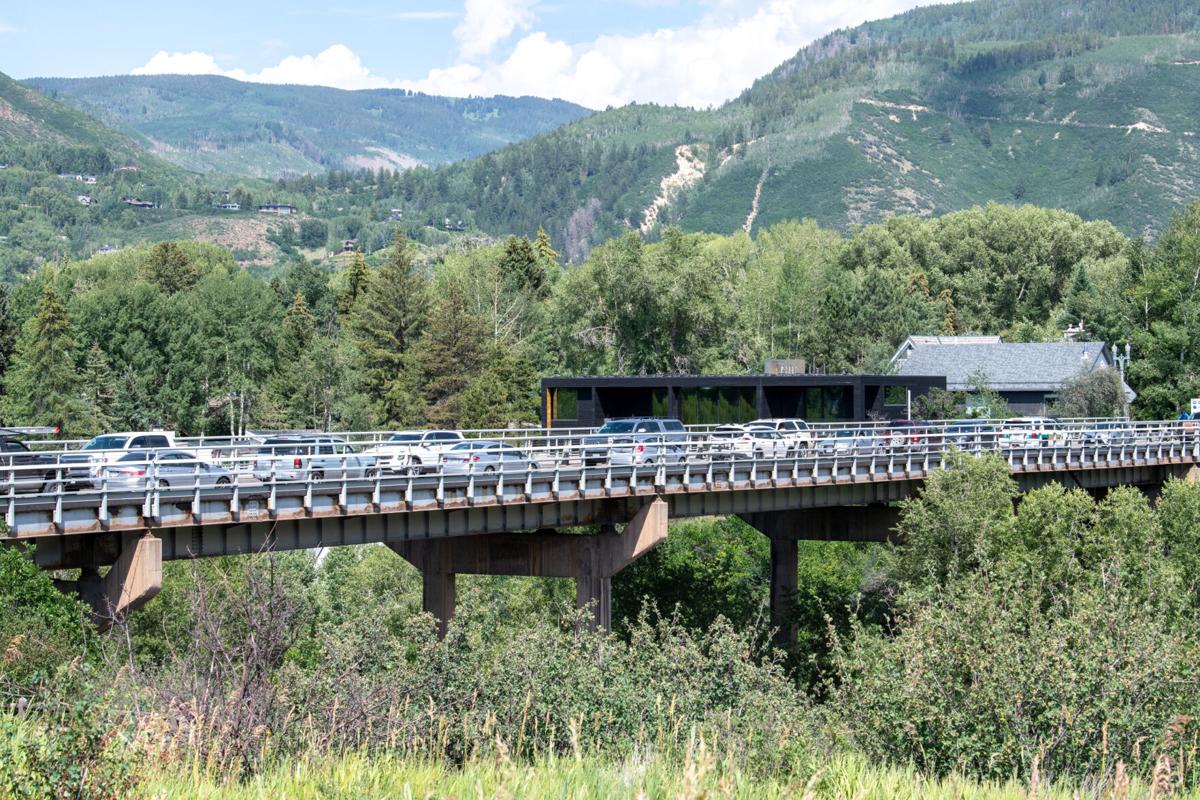
While the Colorado Department of Transportation has said that Aspen cannot back out of a 1998 federal approval that calls for the relocation of Highway 82’s western approach to town, the state agency has confirmed that Aspen can replace the deteriorating Castle Creek Bridge in its current location without altering the approval.
In responses submitted to the Aspen Daily News, CDOT was clear in its statements about replacing Castle Creek Bridge with a two-lane structure. CDOT said replacing the bridge with another two-lane bridge in the same location would not require a lengthy process to reevaluate the 1998 Record of Decision.
"In this instance, a reevaluation could be performed without reopening the ROD," a CDOT spokesperson told the Aspen Daily News.
A two-lane bridge, meant to serve as a connection between Cemetery Lane and downtown Aspen, is included as part of the “preferred alternative” approved in the ROD.
CDOT was more vague in its comments regarding a three-lane bridge replacement. To replace the Castle Creek Bridge — which currently has two lanes — with a three-lane bridge, CDOT said a "proper evaluation" would be necessary. Advocacy group Friends of Marolt Park and Open Space has promoted a three-lane replacement.
ADN asked CDOT if the Castle Creek Bridge could be replaced without reopening the ROD by seeking a categorical exclusion — an approval that doesn’t.
CDOT answered: “If the proposal were to include more lanes than was previously analyzed and approved as part of the Preferred Alternative (in the 1998 ROD), then the new proposal would need to be properly evaluated.”
Washington, D.C.-based attorney Bill Eubanks, hired by Friends of Marolt, has argued that Federal Highway Administration regulations should allow it and CDOT to replace the aging bridge with a three-lane structure in its same location without reopening the ROD and submitting a new “environmental impact statement,” an onerous administrative process that could take more than two years.
“Nothing in (the Council on Environmental Quality)’s or FHWA’s regulations suggests that merely replacing a bridge (even with one additional lane) warrants a protracted EIS process,” Eubanks wrote in a June letter.
Whether agencies reopen the ROD and submit an environmental impact statement could affect the time and expense required to replace the bridge. If the city and transportation agencies reopen the ROD and seek to alter it through a new EIS, the process could take two years. That process would also not allow Aspen to predetermine its desired outcome, meaning the new ROD could look much like the existing one.
Eubanks has argued that the city and other agencies could seek a categorical exclusion or an environmental assessment rather than an EIS. These processes, Eubanks argued, could be at least a year shorter than obtaining an EIS.
Eubanks has also argued that even if CDOT and FHWA went forward with the “preferred alternative” in the ROD, it would trigger a lengthy reevaluation of the ROD and the submission of a new EIS to ensure that the document remains relevant.
Eubanks and Friends of Marolt have argued for a three-lane bridge because it would allow contractors to replace the bridge while minimizing traffic delays and avoiding detour routes. A two-lane bridge, as well as some three-lane bridge construction options, would require detours through the West End (over Power Plant Road) and/or through the Marolt Open Space (requiring a temporary road and bridge). FOM and Eubanks have advocated specifically for the three-lane option that would not require a detour — it is also one of the more affordable options (projected cost of $81 million).
Both Eubanks and CDOT agree that rebuilding the bridge in its current location will not alter the long-term intention of building the "preferred alternative."
"If the existing bridge were to be replaced with a two-lane bridge, it could conceivably carry SH 82 traffic on a temporary basis until the realignment of SH 82 is constructed, at which time it would be modified to connect to Cemetery Lane as a local access bridge," CDOT said.
CDOT did not specify when it may build the highway realignment and new bridge approved in the "preferred alternative.” The state agency has previously stated that when the aging bridge requires replacement (possibly within the next few years), “the ROD Preferred Alternative will be constructed,” but it has not clarified which components of the “preferred alternative” that entails or when that construction would take place.
A previous article in the Aspen Daily News stated that a July 10 letter from CDOT "directly contradicted" a June letter by Eubanks. After seeking further clarification from CDOT and reviewing the letters, the Aspen Daily News has agreed that this description was not accurate.
Friends of Marolt hired Eubanks, along with Carbondale-based public relations and media strategist Allyn Harvey, as it continues to oppose the "preferred alternative" approved in the ROD. That alternative, if constructed, would create a new highway alignment across the Marolt Open Space, bypassing the S-curves and meeting directly with W Main Street.
Proponents of the “preferred alternative” support its benefits for public transit. Whereas the existing Castle Creek Bridge temporarily eliminates bus lanes, the ROD would allow for continuous bus lanes in and out of town. Much of Aspen’s workforce commutes into town using Roaring Fork Transportation Authority buses, sometimes traveling from as far as Rifle and Parachute. Much of Aspen’s affordable housing developments, home to many of its workers, are also located across the Castle Creek Bridge.
Aspen City Council will hear the summary of a new report created by global engineering firm Jacobs Engineering in its Monday, Aug. 5 meeting. At least two council members, Sam Rose and Bill Guth, have come out openly against the “preferred alternative.” Rose has called the Marolt Open Space “sacred” and Guth has said the “preferred alternative” is not right for Aspen. Guth also lives a block away from where the new highway alignment would enter town under the "preferred alternative.”
To construct the new highway alignment in the “preferred alternative,” the city would need to hold a vote among its citizens to change the use of its open space. It is unclear how that vote would interact with the 1998 ROD.
The question of whether to pursue the "preferred alternative" or preserve the existing highway alignment has come to a head this year as the Castle Creek Bridge has deteriorated to the point that state and federal agencies may need to replace or repair it in the next few years, according to an April report by Jacobs Engineering.
Readers can find the Aspen Daily News’s questions to CDOT, and corresponding answers, in the online version of this article.
Following are ADN’s questions to CDOT and corresponding answers.
Aspen Daily News: In CDOT's July 10 letter to the city of Aspen, Mr. Smith states, "... for improvements to SH 82 that the City may be interested in funding, SH 82 is a CDOT asset, and any improvements to the highway would require coordination with CDOT and FHWA. Further, considering the ROD remains in effect, the City would need to provide FHWA and CDOT with documentation regarding how the proposed SH 82 improvements relate to the PA and explain how the improvements would not deviate from the PA and its intent."
In CDOT's March 20, 2023 letter to the city, Mr. Smith states that replacing the Castle Creek Bridge in its current location would require a new EIS and ROD. Does that mean that if the city attempted to self-fund the replacement of the Castle Creek Bridge in its current location, it would require a new EIS and ROD?
Colorado Department of Transportation: Please refer to our responses provided in the previous two letters addressed to the City of Aspen in this regard. Yes, replacing the Castle Creek Bridge with a wider bridge in its current location instead of the Preferred Alternative (SH 82 crossing the Marolt Open Space) would require a new EIS and ROD.
ADN: The ROD includes the continued existence of the Castle Creek Bridge. Why does replacing the bridge in its same location require a new EIS and ROD if the bridge is included in the existing ROD? Is it because of the number of lanes?
CDOT: To clarify, CDOT has not officially received a new proposal at this time. If the proposal were to include more lanes than was previously analyzed and approved as part of the Preferred Alternative, then the new proposal would need to be properly evaluated.
ADN: The Castle Creek Bridge is deteriorating --- at some point, it will need to be replaced. Can that ever occur without deviating from the ROD?
CDOT: Yes, because as noted above in our Response to Question #2 the Castle Creek Bridge can be replaced as a two-lane bridge, consistent with its proposed use as a local road connection in the Preferred Alternative.
ADN: Could Aspen replace the Castle Creek Bridge with a three-lane bridge largely within its existing right of way without re-opening the 1998 ROD by seeking a categorical exclusion?
CDOT: If the proposal were to include more lanes than was previously analyzed and approved as part of the Preferred Alternative, then the new proposal would need to be properly evaluated.
ADN: If the city submitted a proposal to replace the existing bridge with a two-lane bridge in the same location, with the highway still running over that bridge, could that proposal feasibly be approved under a categorical exclusion without re-opening the 1998 ROD?
CDOT: In this instance, a Reevaluation could be performed without reopening the ROD.
ADN: In his March 20 letter to Mayor Torre, Director Smith wrote that when the existing Castle Creek Bridge needs to be replaced, "the ROD Preferred Alternative will be constructed." If the city received a categorical exclusion to rebuild the bridge in the same location with two lanes and the highway still running across it, would CDOT then pursue that option for replacement of the bridge instead of the Preferred Alternative?
CDOT: No, that would reopen the ROD. Rebuilding the bridge with two lanes at the current location doesn't change the Preferred Alternative. The local access bridge as indicated in the FEIS would be on the current alignment connecting Hallman St to Cemetery Lane. So if the existing bridge were to be replaced with a 2 lane bridge, it could conceivably carry SH 82 traffic on a temporary basis until the realignment of SH 82 is constructed, at which time it would be modified to connect to Cemetery Lane as a local access bridge.