
ROARING FORK BROADCASTING COMPANY



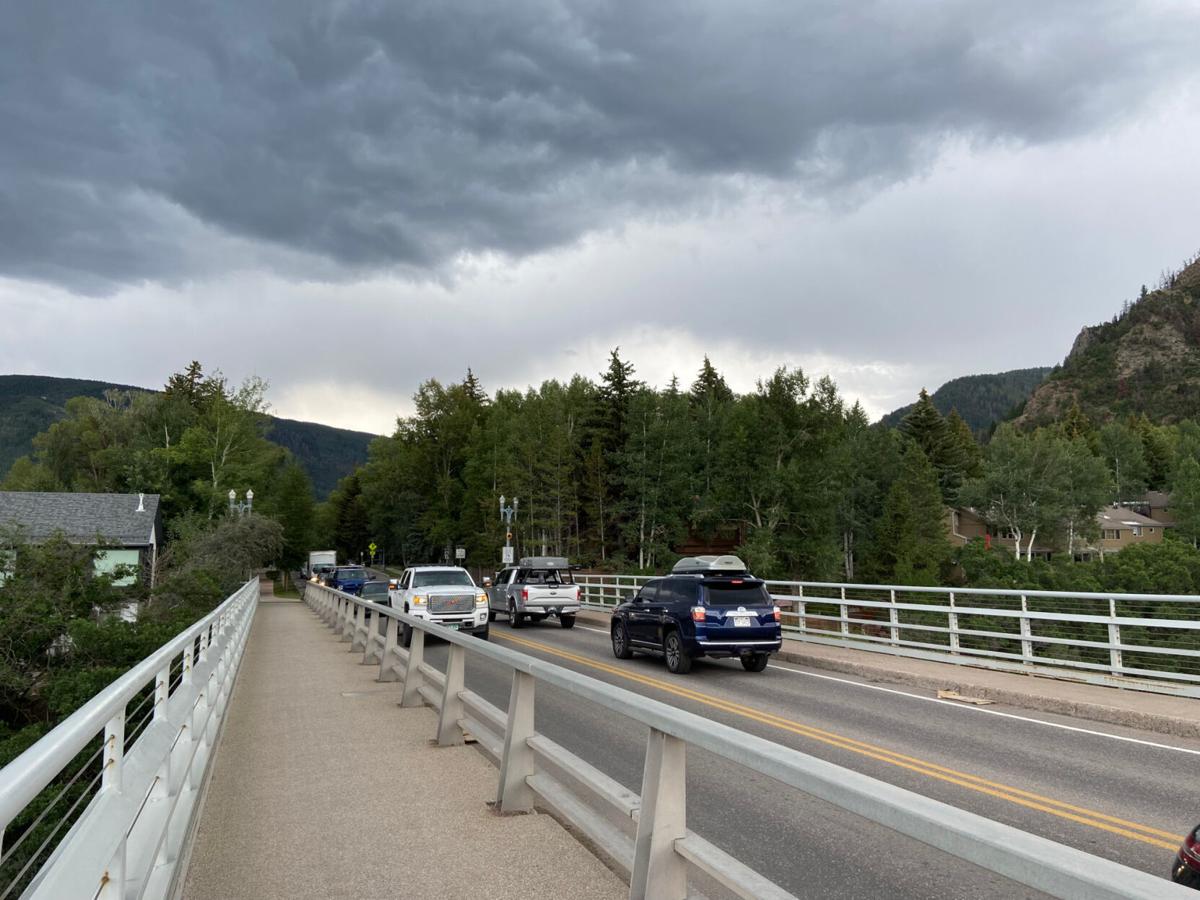
After months of study and discussion, Aspen council members hope to make a decision about replacing the aging Castle Creek Bridge at a work session on Aug. 12.
Consultants from global engineering firm Jacobs Engineering presented reports on replacement options for the bridge during a work session on Monday. Jacobs is scheduled to present additional information at the Aug. 12 work session, after which council will deliberate on how to move forward.
The bridge, which is more than 10 years past its 50-year design life, is approaching the point where it will require replacement or rehabilitation under state law. According to an earlier report from Jacobs, a full replacement would be the most effective way to address the bridge. Jacobs has presented several options for constructing that replacement, including options for three-lane and two-lane bridges with different construction timelines and possible detour routes.
The bridge is Aspen’s primary entry point from downvalley and its most important route for emergency evacuation. Around 22,000 individual cars cross the bridge and six bus routes use the bridge each day in the summer.
Citing the importance of the bridge, Councilman Bill Guth urged fellow council members to give city staff “clear direction” on replacing the bridge during the upcoming work session.
“I implore you to be prepared to make a decision,” Guth said during Monday’s work session. “This is the most critical decision that the five of us will ever have to make on this council.”
Councilman Ward Hauenstein said he agreed with Guth’s urgency during the work session. Councilmen Sam Rose and John Doyle confirmed after the meeting that they also hope council will come to a decision.
“It’s long overdue,” Rose said in a text message.
During the meeting, Guth said he doesn’t want council to have the “proverbial and, God forbid, literal blood” on its hands if it doesn’t act to replace the bridge.
Guth and Doyle both mentioned the recent closure of the Blue Mesa Middle Bridge on U.S. Highway 50. The bridge, a critical connection for the Montrose and Gunnison areas, closed suddenly in April after the state discovered dangerous cracks in its steel. The bridge is now open for an alternating single lane of traffic.
Doyle said he had recently sat in over an hour of traffic when he used the bridge while driving through the Gunnison region.
Guth said he didn’t know if Aspen could “recover” if the same were to happen to the Castle Creek Bridge.
Mayor Torre, however, bristled at the use of possible “doomsday” scenarios to pressure council.
“I don’t need any prodding, I don’t need any threats and I don’t need anybody telling me about worst-case scenarios,” Torre said.
Torre said council members have received emails from community members with “strong” and “kind of threatening” language pushing them to make a decision.
“I proudly sit here as the mayor running these meetings and this process. If we are doing nothing but coming to a decision point, that is what we’re doing,” Torre said. “We are on a good path here. I’m glad we’re here together.”
Replacing the bridge involves a complex balance of legal, financial and technical components. In their decision-making process, council members will consider potential impacts on private property, traffic impacts during construction, project duration and possible implications for a 1998 federal approval that restricts permanent alignments for Highway 82 (which crosses over the bridge).
Although work sessions typically do not include times for public comment, next week’s work session will allow three-minute comment periods for community members who wish to attend.
Council members also hope to release a confidential memorandum from City Attorney Jim True regarding Guth’s possible conflicts of interest regarding the entrance to Aspen. Guth lives a block away from where the new highway alignment would enter town under one entrance to Aspen alternative approved in a 1998 federal document that is still in effect. According to Guth, True has found that the councilman does not have a conflict of interest due to his residence. True nodded affirmatively after Guth described the content of the memo. Guth, along with all other council members, supported releasing the memo.
Because Aug. 12 is scheduled to be a work session, the council can’t make any official actions. The council can, however, direct staff to begin work in different policy directions.