
ROARING FORK BROADCASTING COMPANY


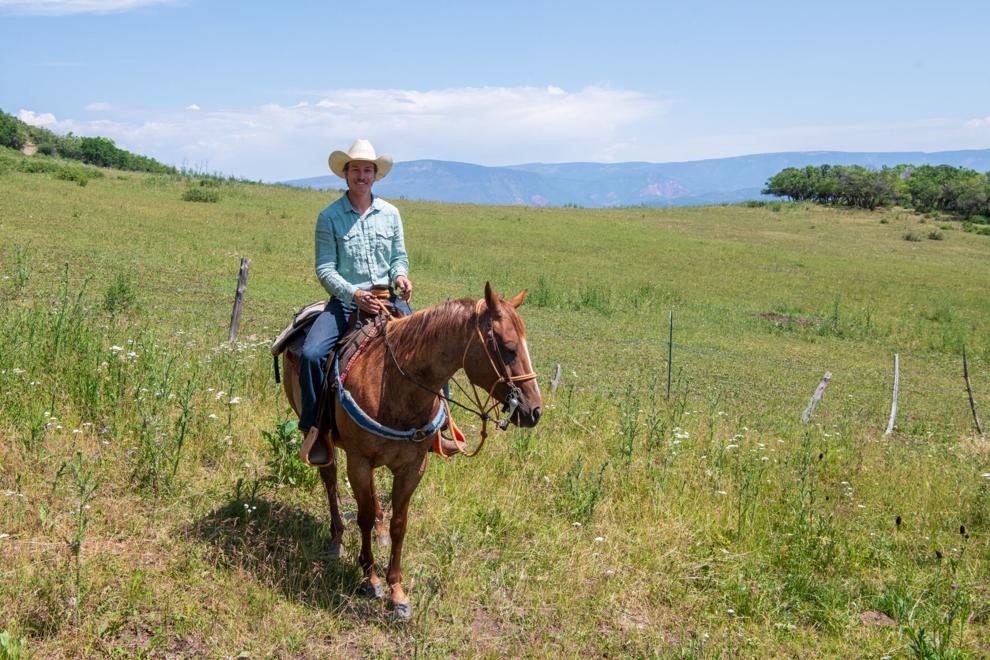
In a muddy straw hat and a $10 button-up shirt, the mustachioed Ted Benge looks as if he sprouted up from the mountain terrain — a species of local fauna relatively new to Rocky Mountain history, but familiar enough after generations of ranchers and recreationists forged homes here.
In a way, he is just that. Benge, 30, was born and raised in Carbondale. After college on the East Coast, he spent his 20s in the rat race chasing profit and learning how to build a successful business.
When he bought Capitol Peak Outfitters in the spring, it inked a homecoming that Benge always saw coming.
“I always knew I wanted to come back to find a way to work outside and work in the mountains,” he said. “I didn't know when or how it would come around, but I knew that it was my long-term goal.”
Benge had been on the lookout for a local business to buy, and his girlfriend spotted the outfitting business listing.
Capitol Peak Outfitters offers trail rides, multi-day pack trips and guided wilderness hunting trips for bighorn sheep, mountain goats, elk, deer and even bears — should the opportunity present itself and the client hold a tag.
After negotiations with previous owner John Howe, Benge found himself the owner of an outfitting company, returning to the activities of his youth and gearing up to turn a profit on them.
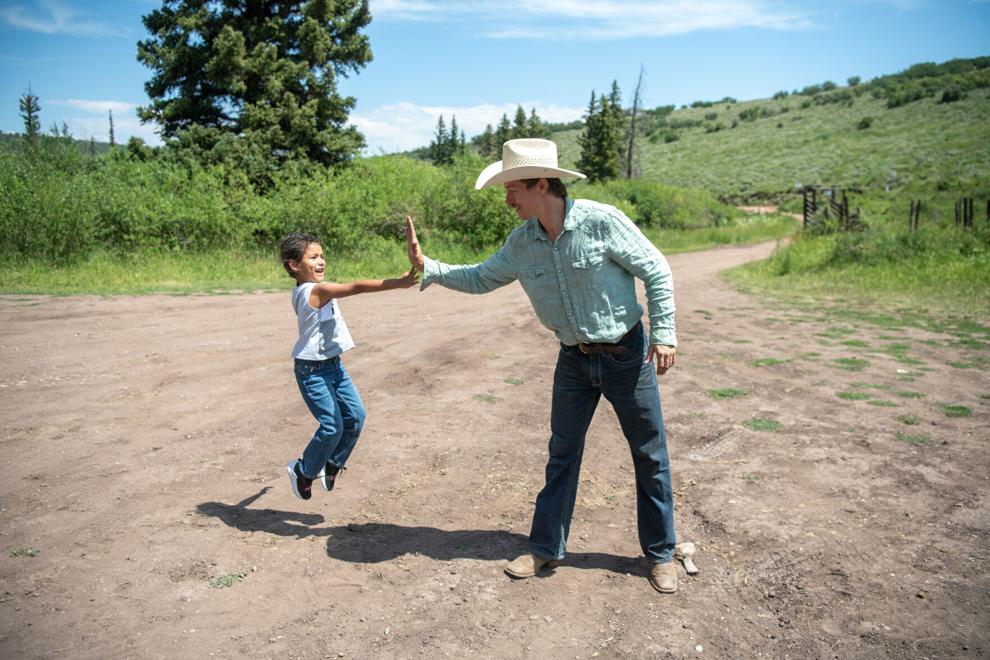
Growing up, Benge spent a lot of time outside with his family. His dad taught both him and his brother how to hunt, and respect for the animal and the habitat in which it lives came with that education, Benge said.
“[Hunting] was always something that was super important to us in how our family ate,” he said. “We grew up skiing, mountain biking, played high school sports, and we just played a lot.”
He spent summers as a ranchhand on Cap-K Ranch up the Fryingpan River with his best friend, Carson Gilchrist. Over time, Benge worked his way up from a day or two a week to six days of work per week in his summers.
“To be cut loose and be driving tractors and riding horses and running chainsaws up in the high country and watching all the elk and deer move through there … it was just such an ideal way to make money as a young kid,” he said.
Benge and his fellow hands rode horses up into the high country to round up cattle, operate heavy machinery and dig holes, along with dirtier tasks.
“You're digging out poop and you’re talking about the shitty job,” Benge said, laughing. “It’s a classic joke.”
Jokes aside, Benge credits the eight or nine summers of work alongside seasoned ranchhands with solidifying his work ethic.
“It changed my perspective from work being something that you had to do to being something that you were proud of and that you did because you wanted to,” he said. “It was a reflection of yourself and the work.”
Benge attended Middlebury College in Vermont, meeting a totally different swath of people than what he’d known in the Roaring Fork Valley. After graduation, he moved to New York City for a job in investment banking, the “most intense thing” he could find.
“I’m glad I did it, but it was really an exhausting experience. I'd be working 80 to 100 hours a week, every week in a suit in front of Excel on no sleep, living in New York,” he said. “Eventually I recognized that I was coming to the end of that experience that I’d enjoyed, but I was ready to do something else.”
He spent time in London working for the same company as in New York, which eventually got derailed by the pandemic. After some time in Carbondale, he worked for a mobility startup in Barcelona, coming back home after a year of polishing his Spanish.
“Doing your best and taking pride in your work was something that really was the difference between the good days and the bad days,” Benge said. “I learned that so much of what happens in the world is just based on how people interact with each other.”
He returned to Carbondale in 2023, looking for a remote job or a corporate agriculture role — something to further his career that also would allow him to connect to his valley roots.
Eventually he met Howe, and the two hit it off right away.
“As the conversations developed, I just got more and more excited about what it could mean for my life,” Benge said of the early conversations about purchasing Capitol Peak Outfitters.
John Howe bought Capitol Peak Outfitters from original owners Steve and Sandy Rieser 21 years ago. Howe and his three sons ran the guided tours together, building a client base of mostly upvalley tourists and some locals.
As time passed and running the business got more demanding with age, Howe said selling the business made sense for his family and him. His sons work as outfitters in South Africa, and Howe intends to join them.
Howe said Benge reminds him of himself at that age. With three grown kids of his own, Howe said he knew he was ready to hand off the business.
“You can't do that forever. It's one of those things, it's a young guy’s deal and Ted is going to be really good. He's pretty gung-ho,” Howe said. “You've got to have a bit of grit. There's a lot of things that happen out in the backcountry that you've never seen.”
After signing the deal, Howe took Benge to Texas for a livestock show to teach him how to buy horses — what to look for, what to reject, what to pay.
Howe has been giving advice to Benge nearly every day since the sale.
“I came in understanding that I had to put my ego aside and be open to learning and understand that I'm going to make a lot of mistakes,” Benge said. “There’ve been times when I just felt the imposter syndrome coming on really strong and felt like, ‘I'm not the guy, I shouldn't be doing this. I don't know what I'm doing.’ And I just had to find a way to work through it.”
Benge said some days he feels nothing but joy in his decision to buy the business, trading in a tie for a belt buckle, and Oxfords for boots. Other days, he doubts himself. Howe said he’s never felt that doubt in his decision to sell to Benge.
Permits to operate on U.S. Forest Service land carry with the company. When Howe met Benge, he said he told his agent that’s who he trusts with the permit.
“He's just got a big drive and it seems like nothing worries him too much,” Howe said. “He works his butt off trying to figure it all out.”
In the back seat of Benge’s truck, paperwork, extra tack and veterinary equipment obscure any evidence that people could have ever sat there. Horses are the beginning and the end of the operation, and the vehicular satellite office is reflective of that.
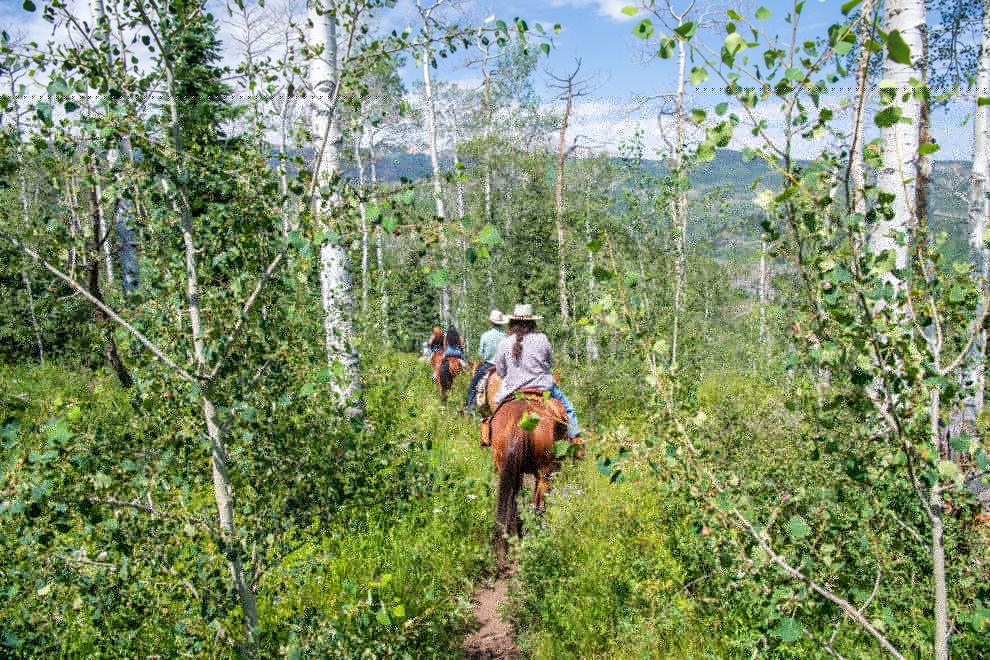
Benge said the company brings out most, if not all, of their tack for every trail ride, making sure every rider is comfortable on their horse. After a quick safety talk on how to guide the horses, Benge takes off with one of his guides leading the group and himself bringing up the rear. He hired three guides for the summer who help him with the trail rides.
On the trail, he shares mountain trivia — like the powder off the trunk of an Aspen tree can be used as a mild SPF. For clients from North Carolina, it was a revelation.
Benge rarely raised his voice above a low speaking tone on the trail. It’s a matter of consideration for the wildlife, he later explained.
Capitol Peak Outfitters holds a permit with the White River National Forest that allows them access to Aspen-Sopris Ranger District lands, inherited from Howe’s ownership and newly signed by the U.S. Forest Service on May 24.
Their access is vast, covering much of the district with camping allowed at six different locations. On their website, customers can inquire about partial day rides, mostly around Capitol Peak.
Use of public land is integral to Capitol Peak Outfitters business model. Existing on public land comes with impact, from the first step on a trail. Benge said the company leases stable space from Lazy O Ranch off Capitol Creek Road, but horses, riders and camps in the wilderness are the core of the business.
Recreation often runs in direct opposition to habitat conservation, as trail fragmentation of wildlands can impose impacts far beyond the width of the trail. It’s something that Benge wrestles with, but says he’s had to make peace with to move forward with his business.
“I think recreation is super important. It's the future of the state. But we have to be really, really mindful about how we develop that infrastructure. There's just inherent value to wildlife and wild places existing in and of themselves,” Benge said. “When we put a mountain bike trail right through critical elk habitat, it creates fragmentation and it dramatically reduces their ability to circulate through important areas.”
A trail traversed by bikers versus horses face different impacts, but impacts all the same. Benge acknowledged that each horse’s footfall, any sound and every trip through the wilderness impacts the wildlife surrounding them.
“I try to offset [my impact] by doing the other work,” Benge said. “I respect closures, I stay on the trail, I try to follow the rules. And then I try to do the other work to keep the places where we don't have trails, where we don't have access pristine.”
He said that the main difference between outfitters like himself versus mountain biker groups is an “unending desire for more trails.”
Seeking out more trail mileage is a result of the mindset that wild places are going to waste without maximizing their recreation potential, in Benge’s opinion.
Benge said his identity as a hunter has made him acutely aware of the importance of habitat protection for elk and deer. Colorado Parks and Wildlife has warned that rapidly increasing development — recreational, residential, and mineral mining — is calamitous for Western Slope elk herds.
“I love elk, not because it's an opportunity for me to hunt, but because I've been around them and I've interacted with them so intimately. They fed my family and they've built my body,” Benge said. “Seeing all the pressure that they're under in this area is something that I'm trying to work to fix.”
Benge is the president of Western Slope Wildlife Advocates whose mission is to preserve wildlife habitat and populations in the Western Slope. He’s submitted some editorial writing on wilderness issues and appeared on a podcast to highlight his concerns.
As a business owner, he still has to think about growth and scale. Benge said he’ll take things slow, benefitting from a wide-reaching permit with the Forest Service.
“The nature of where I am now is that [the business] will probably remain fairly small, fairly intimate. I'll still get to be out here every day, actually riding instead of just administering a larger business, and that's totally fine with me,” he said.