
ROARING FORK BROADCASTING COMPANY



A decision by the district attorney’s office to press charges against a South Florida man for a misdemeanor assault, going against recommendations by Aspen Police, stirred up a courtroom debate Tuesday over the exchange of evidence between prosecutors and the defense team.
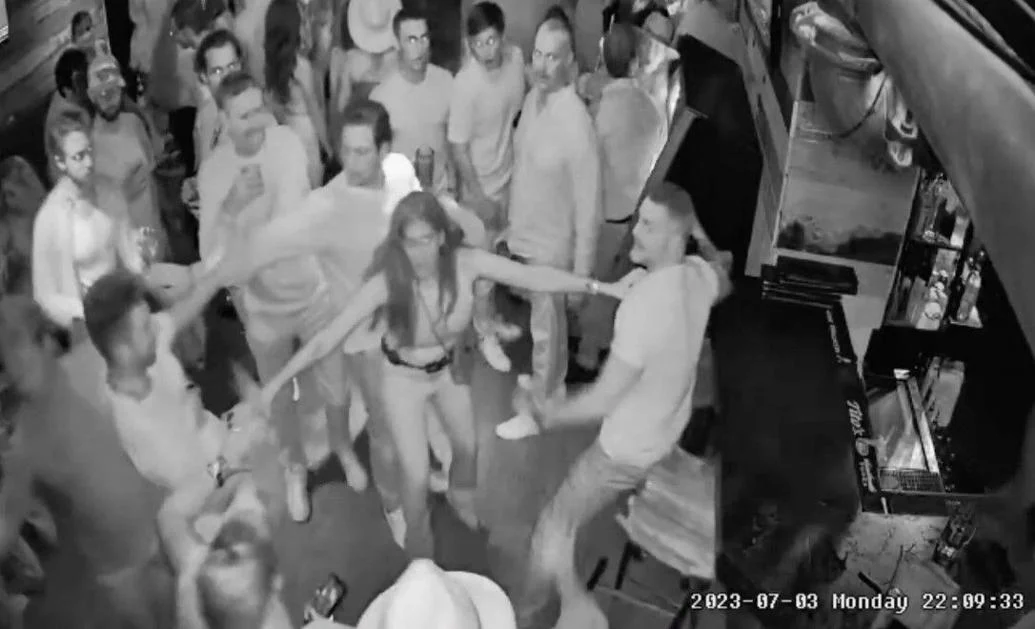
The argument stemmed from the prosecution’s initial decision not to file charges over a disturbance at a downtown Aspen nightclub that allegedly occurred on July 3, 2023. Police also concluded then that criminal charges were not warranted.
On March 12, however, the Pitkin County branch of the 9th Judicial District Attorney’s Office filed a class-one misdemeanor count of third-degree assault against Michael Internoscia, a Miami-based real estate broker and lender who pleaded not guilty to the charge Tuesday.
The charge came after Denver lawyer Abraham Hutt, representing the alleged victim in the fight, filed a court motion in late December requesting the district attorney’s office to press charges against Internoscia. The motion was supplemented with video surveillance from the nightclub, showing who appeared to be Internoscia landing one punch on Hutt’s client’s cheek and jaw area, and a less powerful shot to his chest and arm area.
“Also accompanying this motion and the affidavits are body-worn camera recordings which provide additional evidence to support Mr. Internoscia’s prosecution both for the assault itself and for making deliberately false statements to the police with the intent to influence their decision about whether or not to prosecute the case,” the motion said. “Those false statements also support a finding that the District Attorney’s failure to prosecute is unlawful …”
Meanwhile, during the court proceedings, the defendant’s lawyer Scott Troxell lobbied Pitkin County Judge Ashley Andrewsfor the release of emails between the district attorney’s office and lawyers representing the alleged victim of Internoscia’s assault and another person who was at the scene. Troxell called the case “odd,” noting APD’s lead officer on the case and other police who reviewed the Silver City Aspen bar’s surveillance footage from the incident determined Internoscia was not the primary aggressor in the scuffle.
“It’s unclear … because this case was not originally charged,” Troxell said. “It was later charged, apparently over the objection of the Aspen Police Department and at the discretion of the district attorney’s office.”
Troxell suggested lawyers who were not a direct party to the case influenced the district attorney’s office to press charges, even though there was exculpatory evidence favorable to Internoscia’s defense.
“I am honestly confused at some point why the district attorney’s office is unwilling to say, ‘Here are the officers who don’t believe your client is guilty based on their personal observations, possibly,” Troxell said.
Deputy District Attorney Max Klein was initially unreceptive to Troxell’s request to review emails but relaxed that position after hearing from Judge Andrews, who asked: “How would an officer’s review of the surveillance video and their determination that this particular defendant was, in fact, not guilty of assault or they couldn’t prove their case, or he was not the initial aggressor, or was acting in self-defense. I don’t know what their determination was, but wouldn’t that be relevant to prove Mr. Internoscia’s innocence?”
Andrews ruled for the prosecution’s disclosure of emails it received but not ones it sent.
“I’m going to order that all emails to the district attorney’s office from counsel for any witness, victim or emails directly from any counsel or witness about that party’s position on whether or not the district attorney should file charges are certainly relevant and exculpatory and should be provided to the defense,” she said. “Whether those can be admitted at trial is a different story but for purposes of discovery, those should be discovered to defense counsel.”
The judge also wanted to understand why it appeared that the prosecution unilaterally reversed course and charged Internoscia.
“Because now, frankly, I’m curious: Why, if this many people reviewed video from law enforcement that they shouldn’t press charges, why would they make that determination on their own?” she said.
The December motion filed by Hutt alleged, “Michael Internoscia intentionally, or knowingly, or recklessly caused bodily injury to (name redacted). He can be seen doing so by punching (name redacted) with the closed fist of his right hand two times. … The first punch hit (name redacted) very hard on the left side of his head. A second punch hit Mr. Zebersky on his arm and body. Both punches caused (name redacted) pain. Michael Internoscia then made deliberately false statements to the Aspen Police Officers dispatched to the scene of the assault with the intent to influence their decision about whether or not he should be prosecuted for the assault he committed.”
Hutt withdrew the motion after the district attorney’s office indicated that it “has decided to file a criminal case against Michael Internoscia based on the information contained in … the Motion to Require Prosecution, filed in this case.”
Andrews reserved April 7-11 for the trial. The defense agreed to waive Internoscia’s right to a speedy trial within six months from when a not-guilty plea is entered. Internoscia appeared virtually for this week’s hearing but will be required to appear in person for the trial.
Troxell said he expects to subpoena roughly 20 witnesses to the incident. They’ll travel to Aspen from out of state to testify at trial, he said.
“My request is to set it out as late as possible in part to get past the bulk of ski season,” he said. “Many of the possible 20 witnesses live out of state. The district attorney’s office apparently is willing to prosecute but perhaps not willing to fly these witnesses to town for their case, so we may be bearing the brunt of those costs.”
Troxell and Klein could not be reached for follow-up comment on Tuesday.