
ROARING FORK BROADCASTING COMPANY



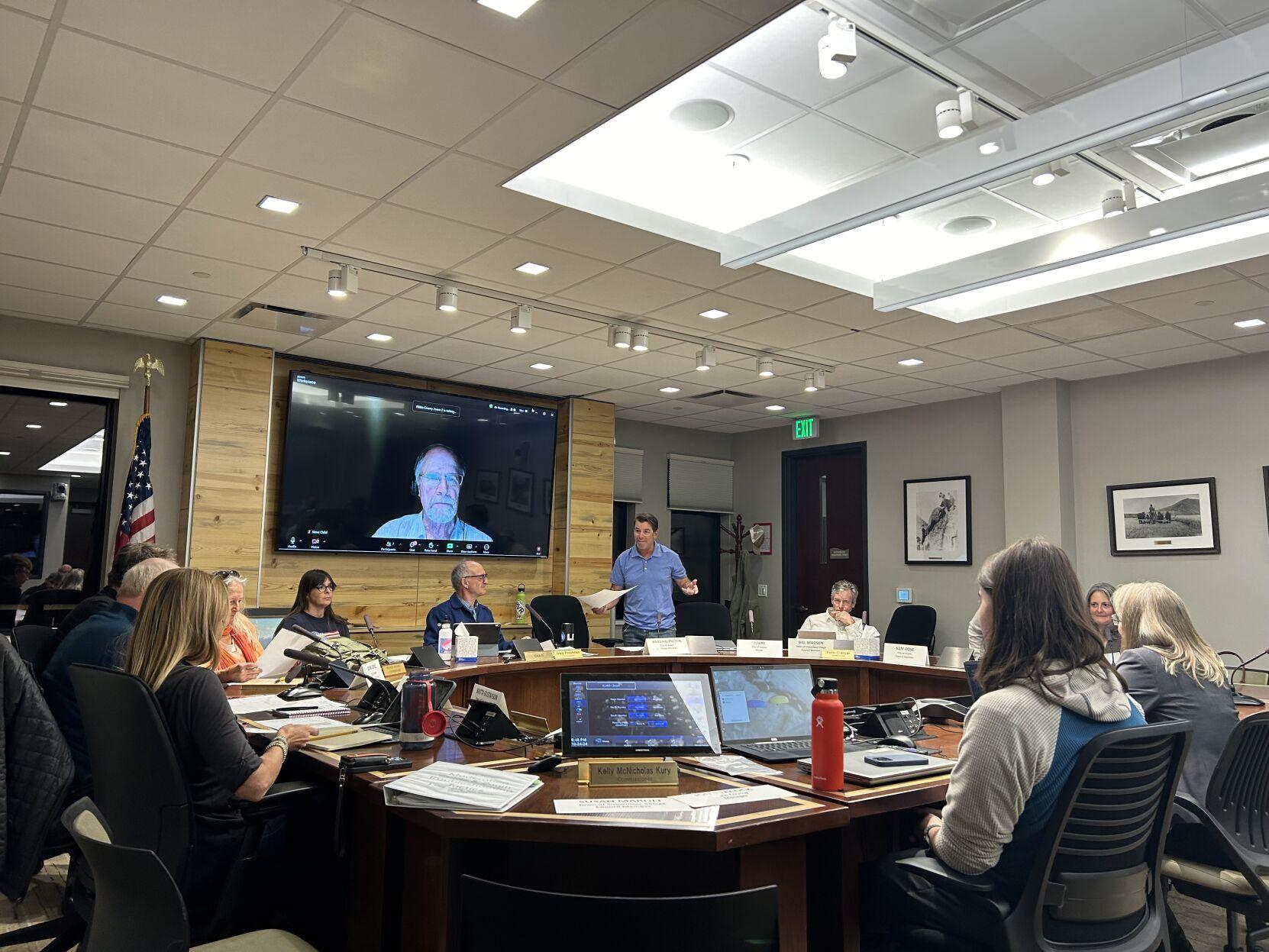
The Elected Officials Transportation Committee wants to engage more stakeholders in the entrance to Aspen debate.
Members of the EOTC had their first discussion as a committee about the entrance to Aspen since the debate about how to replace the aging Castle Creek Bridge has ramped back up at the city level this year. The conversation came after the Aspen City Council gave clearer direction to Aspen city staff in September on how it wanted to proceed with the Castle Creek Bridge and after the Colorado Department of Transportation clarified what the city’s options are for next steps.
But as the city is weighing engaging a new federal process to explore bridge replacement options and moving forward with polling its community, some members of the EOTC — which comprises the elected officials of the Pitkin County Board of Commissioners, the Aspen City Council and the Snowmass Village Town Council — wanted to include their constituents in the conversation.
“It’s really hard to have the city of Aspen constituency have some sort of important voices over the thousands that are impacted on this corridor,” said County Commissioner Kelly McNicholas Kury during the EOTC meeting Thursday.
The city council has discussed options to replace the Castle Creek Bridge for months. In April, global engineering firm Jacobs Engineering presented four options for replacing the bridge to council members. One option presented was the preferred alternative, a design that would reroute Highway 82 over the Marolt Open Space and link it directly to Main Street. The preferred alternative was identified in a 1998 approval by federal and state partners (the record of decision) as the best alternative for replacing the Castle Creek Bridge, which is more than a decade past its 50-year design life.
Implementing the preferred alternative would require a city of Aspen vote to allow the use of bus lanes over city open space. The design as it stands currently includes lanes for light rail instead of buses. Council members went back and forth for weeks about adding the question to the November ballot, but instead decided to wait and directed city staff to engage with community polling about the entrance.
The city put out a request for proposal for polling firms and anticipates results from polling in mid-December, Aspen Senior Project Manager Jen Ooton told the EOTC.
County Commissioner Francie Jacober said it would be beneficial to do similar polling or hold conversations with community members outside of Aspen, some of whom have to drive over the Castle Creek Bridge every day. Aspen Mayor Torre said while Aspen is not going to “direct this single-handedly,” views from people commuting to town might not reflect the views of Aspen residents and a vote on the use of open space will only be required of Aspen voters.
“We need to keep in mind, we’re talking about one-third of a mile from the roundabout to Main Street,” Torre said. “The issue that I have with taking, let’s say, Glenwood Springs commuters and their view, and they say, ‘You know what we want, we want a four-lane highway, that’s what we want.’ Well, that doesn’t mesh up with the goals and the values of this end of the valley, and that’s not something that meets the criteria of what we’re trying to do here.”
The city council also directed staff in September to begin work on a new environmental impact statement for entrance to Aspen alternatives, including two- or three-lane replacements where the current bridge sits and a split-shot that would route one lane of traffic over the Marolt Open Space and keep another on Castle Creek Bridge. In a September letter to city council, CDOT said options outside of the preferred alternative would require a new environmental impact statement.
Part of engaging with a new NEPA process for a new EIS would include a scoping process that would reassess project needs and intents and community goals. It would also include participation from several stakeholder groups. The city anticipates the stakeholder group to be much larger than it was in the 1990s, when the 1998 ROD was crafted, said City Manager Sara Ott.
The city has presented updates about the Castle Creek Bridge to member bodies of the EOTC several times throughout the year. But McNicholas Kury said the conversation at the EOTC (which meets once a year) was several steps behind what was happening at the Aspen City Council.
“To say it’s just a third of a mile of concrete is not reflective of the hours lost to people in our community, or the fear of being able to get to work when the construction project happens,” she said. “It’s so much bigger and broader I think than figuring out how to run a road across a field, so I would really look forward to this getting to be a more expanded conversation.”
But the Aspen City Council is considering whether to commit $2-3 million to a new NEPA process for an option council members feel they don’t have sufficient community input on yet, Ott said. As the primary funder of the project, city council should be able to take those preliminary steps before engaging other communities, she added.
Ott said she anticipated requesting at least $1 million or more from the EOTC budget to support a new NEPA process.
An official NEPA process takes 24 months, but with preliminary work to prepare, the city is anticipating at least a three-year process.
As the city begins exploring options other than the preferred alternative, it is awaiting results from a routine CDOT inspection of the bridge.
CDOT completed an inspection of the bridge on Sept. 25 and expects a report to be ready by November, a CDOT spokesperson told the Aspen Daily News. The last CDOT inspection in 2022 gave the bridge a 50.3/100 rating. If the rating falls below that mark, it will be rated as “poor” and could be subject to weight restrictions or other measures. A “poor” rating does not mean the bridge is failing, it places the bridge on a CDOT watchlist for work.
“When your score starts dropping lower and lower … you’re going to have more frequent evaluation, you’re going to start to do superstructure improvements, not necessarily replacement, but potentially,” Ott said. “Quite frankly, in my view, looking over what the list is and the bridges across the state, we won’t be the first one.”
CDOT has said if the bridge fails it would implement the preferred alternative. It also told the city council in its September letter that a two-lane bridge replacement (which would not require reopening the ROD) would be an interim solution.