
ROARING FORK BROADCASTING COMPANY



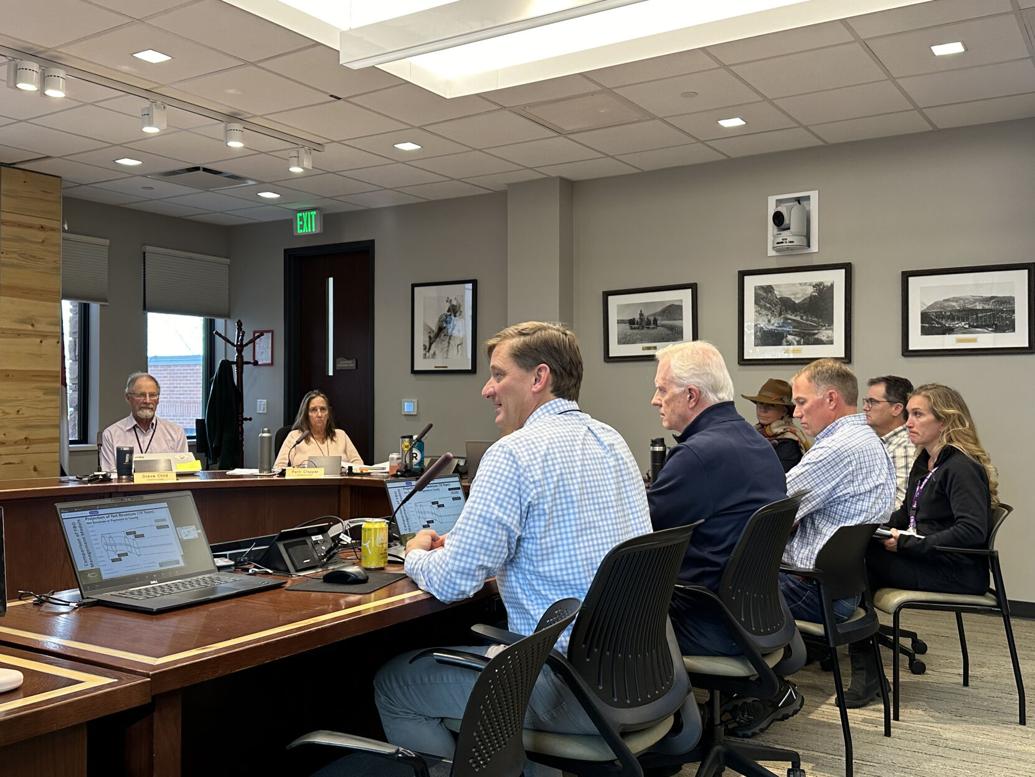
Pitkin County and Atlantic Aviation on Wednesday finalized their 30-year lease agreement for the fixed-based operator role, closing in on a financial boon to the Aspen-Pitkin County Airport through fees and charges on general aviation services.
County staff and representatives fro
The total financial contribution from Atlantic Aviation to the county over the lease term is $1.15 billion — $136.5 million in capital projects and $879 million in estimated payments of rents, fees and charges.
The county will receive a base ground rent of $3 million, which will increase annually at the greater of 4% or Denver-Aurora-Lakewood Consumer Price Index (CPI).
In the tenth year of lease, and over future five-year increments, the parties can agree upon a new market rate for the lease rent or seek an outside appraisal
There is also a supplemental operating fee of $2 million a year that adjusts under the same terms as the ground rent.
The county will receive a 26% share of most FBO revenues, including put-through aviation fuel, retail sale of aviation fuel and aircraft servicing fees. The county will receive 86% of the patio shelter rental fees, as the county will manage the rentals after Atlantic Aviation funds and constructs them.
The minimum annual guarantee, or MAG, will start at $14 million and graduate at a 1.5% rate for years one through four of the lease. After that, the MAG will increase to $16 million and grow at a 1.5% rate. The MAG shall not decrease below the applicable base MAG for the applicable lease year.
Atlantic Aviation also agreed to finance an eastside FBO facility reconstruction and reconfiguration, plus aircraft apron/ramp pavement and the installation of a geothermal snowmelt system under a portion of the main FBO apron. They will maintain the eastside facility and/or construct a new westside facility, which they will hand over to the county upon completion.
It will include a 1,500-square-foot building for uses like flight academy offices; patio shelter and tie-down infrastructure; all aircraft and vehicle pavement; solar infrastructure; and self-service fuel amenities.
The capital improvement plans will be subject to review by the airport director and Airport Advisory Board, then the BOCC.
The MAG is subject to adjustment for certain instances like a 30-day or longer runway closure, a second FBO or another factor that would lead to the extended closure or capacity at the airport. If a situation qualifies for a MAG reduction under the lease, the MAG will be reduced proportionally to the impact on the tenant's gross receipts.
“It is very important to understand that in those events there is a proportional adjustment, and that would also show up in the gross receipts fee,” Peacock said. “It does not affect the lease revenues.”
Major climate features and requirements are written into the lease, including net-zero, LEED zero, waste platinum (for new construction) standards, alignment with Aspen’s water integrated resource plan, geothermal infrastructure, sustainable aviation fuel requirements and more.
Atlantic Aviation has also committed $20 million over the lease term for community initiatives like affordable housing and other climate friendly infrastructure.
Clive Lowe, executive vice president at Atlantic Aviation, highlighted the contract’s importance to the company. County staff have noted that the contract is more than a financial agreement, but important to Atlantic Aviation for the power of the Aspen brand.
“This airport is very important to our portfolio. It’s very important to our network. It’s very important to our culture,” he said. “I think the agreement that we have in front of us enshrines all of that and strives to achieve everything.”
The board voted 4-0 to approve the lease on first reading. Commissioner Greg Poschman recused himself. Public comment will be accepted at the second reading on Nov. 20 and through the county website for written online comment.
The new terms are a major change from the last FBO lease terms, which had a $120,000 MAG over its 30 years that did not change.
“I think one of the best benefits of the lease that has come out of lessons learned in our former lease is to build in the escalators over time and a recognition of the potential changes in value for the community over time,” Commissioner Kelly McNicholas Kury said.
Fixed-base operators provide aeronautical services like fueling and also attend to private aircraft. At the Aspen airport, private aircraft, or general aviation, makes up a majority of air traffic.
Air traffic activity system data shows that in 2023, 72% of itinerant operations at the airport were general aviation or air taxi. Air carrier operations were 27.5%, and the rest fell to military operations. Itinerant operations are aircraft operations that arrive from or depart an airport outside of the traffic pattern.
County officials have said this funding can be used to help fund the hundreds of millions needed to renovate the airport terminal to meet local climate goals.
The county, as the airport’s sponsor, controls airport finances through an enterprise fund, meaning that it is supported entirely by fees and charges.
Airport Director Dan Bartholomew said that the facility can only use the revenue for airport-related purposes, like airfield pavement and building work.
Deputy Director Diane Jackson added that initiatives like noise, emissions and wind studies could also be funded with that revenue.
“As long as it has a nexus to the airport, the funds can be applied to it,” Bartholomew said.
Atlantic Aviation acquired the original lease holder, Trajen Flight Support LP, and assumed the rights and responsibilities of the current FBO agreement.
The temporary lease extension under which Atlantic Aviation is currently operating expires at the end of the month.