
ROARING FORK BROADCASTING COMPANY



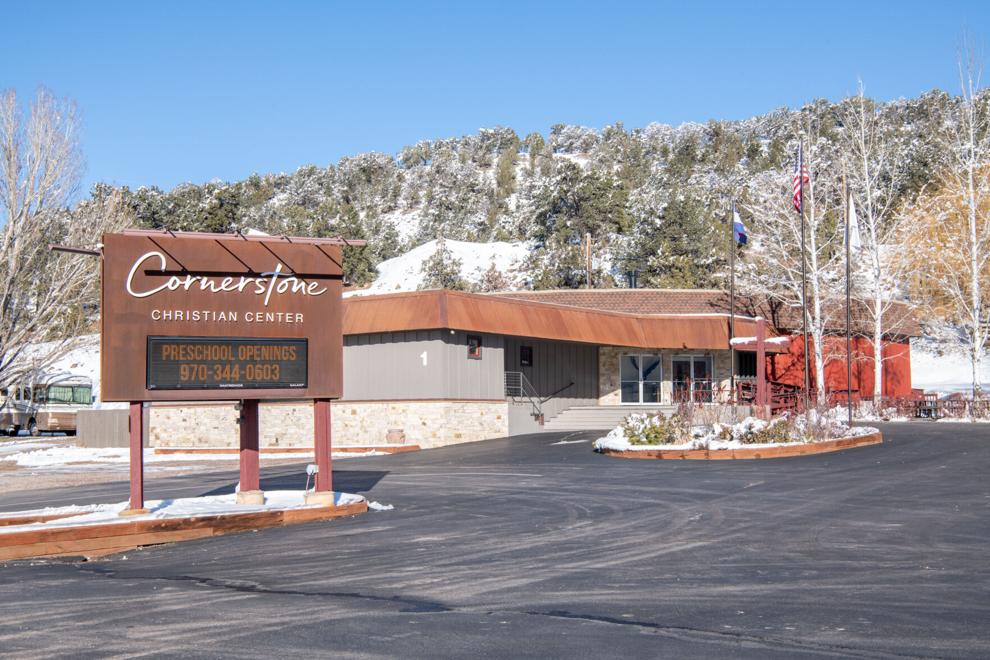
Cornerstone Christian Center wants to expand their worship and education facilities without meeting Eagle County’s affordable housing requirements, teeing up a legal fight over exemptions for faith-based organizations.
The church and school, located near Willits Town Center at 0351 Highway 82 in unincorporated Eagle County, claims it is exempt from including affordable housing in its plan under the Religious Land Use and Institutionalized Persons Act (RLUIPA) and the “other public benefits” that Cornerstone provides to the community.
The county is considering the application and if denied, as Eagle County has signaled it would in earlier points of the process, counsel for Cornerstone said they would pursue legal action.
“We are prepared to file a lawsuit in federal district court in Denver,” said Andrew Nussbaum, a partner with Colorado Springs-based law firm First & Fourteenth PLLC, which is representing Cornerstone, via phone on Friday.
Nussbaum said they would sue in consultation with the Alliance Defending Freedom, the national conservative Christian legal advocacy group.
Cornerstone first filed an application for a zone change and sketch and preliminary plans for PUD, or planned unit development, in the fall of 2022. They own four separate parcels that sit on 4.47 acres, with school and worship facilities, with about 100 students enrolled in pre-K through eighth grade, said Nussbaum.
They want to update their zoning and get a PUD to be more in line with their use of the property.
The church hopes to expand its facilities by about 46,000 square feet with up to six “multifamily dwelling units for Church minister/employee housing.” In Cornerstone’s application, they say that the church and school have outgrown the existing facilities and many buildings are beyond their useful life.
The application requests a maximum 97,459 building square footage and up to 225 student enrollment at the school. Nussbaum said that the church and the school are experiencing demand to warrant planning for the expansion.
The county and Cornerstone have gone back and forth for nearly two years over the affordable housing requirements required by the land-use code. The county’s affordable housing guidelines lay out affordable housing mitigation requirements for proposed development based on factors like jobs generation.
On Nov. 20, Cornerstone withdrew their appeal of county staff’s denial of their application based on a lack of affordable housing. They resubmitted an affordable housing plan that enumerates their rationale for exemption.
Cornerstone argues that only four-and-a-half full-time jobs will be generated by the full PUD due to the “seasonal” nature of school teacher positions, as the school is closed in the summer.
County staff has stated in past documents that they disagree with the assertion that teachers are a seasonal position and that five-and-a-half full-time employees are a more appropriate figure for anticipated job generation.
Still, the application would warrant one affordable housing unit through the county affordable housing guidelines.
Cornerstone stated in their application that a single affordable housing unit would cost between $700,000 to $750,000, which they call “burdensome.”
The guidelines permit the Board of County Commissioners authority to exempt some applicants from the affordable housing requirements for offering “other public benefits,” which Cornerstone argues they offer.
“We do think we meet the spirit of the guidelines without having to build affordable housing ourselves,” Nussbaum said.
They pointed to church programs like drug-and-alcohol addiction recovery support group Celebrate Recovery, monies distributed through the church benevolence fund for those in need, and more as public benefits that could replace the need for affordable housing mitigation.
The guidelines state “no more than 30% of recommended Affordable Housing mitigation may be offset by Other Public Benefits.”
Nussbaum also pointed to the 2000 RLUIPA as protection for Cornerstone. According to the Civil Rights Division of the Department of Justice, RLUIPA “prohibits zoning and landmarking laws that substantially burden the religious exercise of churches or other religious assemblies or institutions absent the least restrictive means of furthering a compelling governmental interest.”
Cornerstone says the PUD is a “long-term, multi-year vision” and not a proposal for immediate construction in their updated affordable housing plan.
The application is now in a referral period while local and state agencies and service districts comment on the file, up to 21 days for sketch and preliminary plans for PUD, per Eagle County land-use code.
The Eagle County Attorney’s Office did not respond to a request for comment by press time due to the Thanksgiving holiday.
Cornerstone courted controversy during the height of the COVID-19 pandemic, when Pastor Jim Tarr criticized mask mandates on a conservative social media personality’s page and the Cornerstone Christian School clashed with Eagle County over the indoor mask mandate for schools.
The church has hosted political events with ultraconservative firebrand U.S. Rep. Lauren Boebert multiple times. Boebert will represent the 4th Congressional District after winning in the November election; she switched from the 3rd Congressional District, where she’s currently the incumbent representative, after narrowly defeating Aspen Democrat Adam Frisch in 2022.
In June 2022, the church hosted right-wing extremist pastor David Barton as its guest speaker, pushing “biblical” values in politics.